
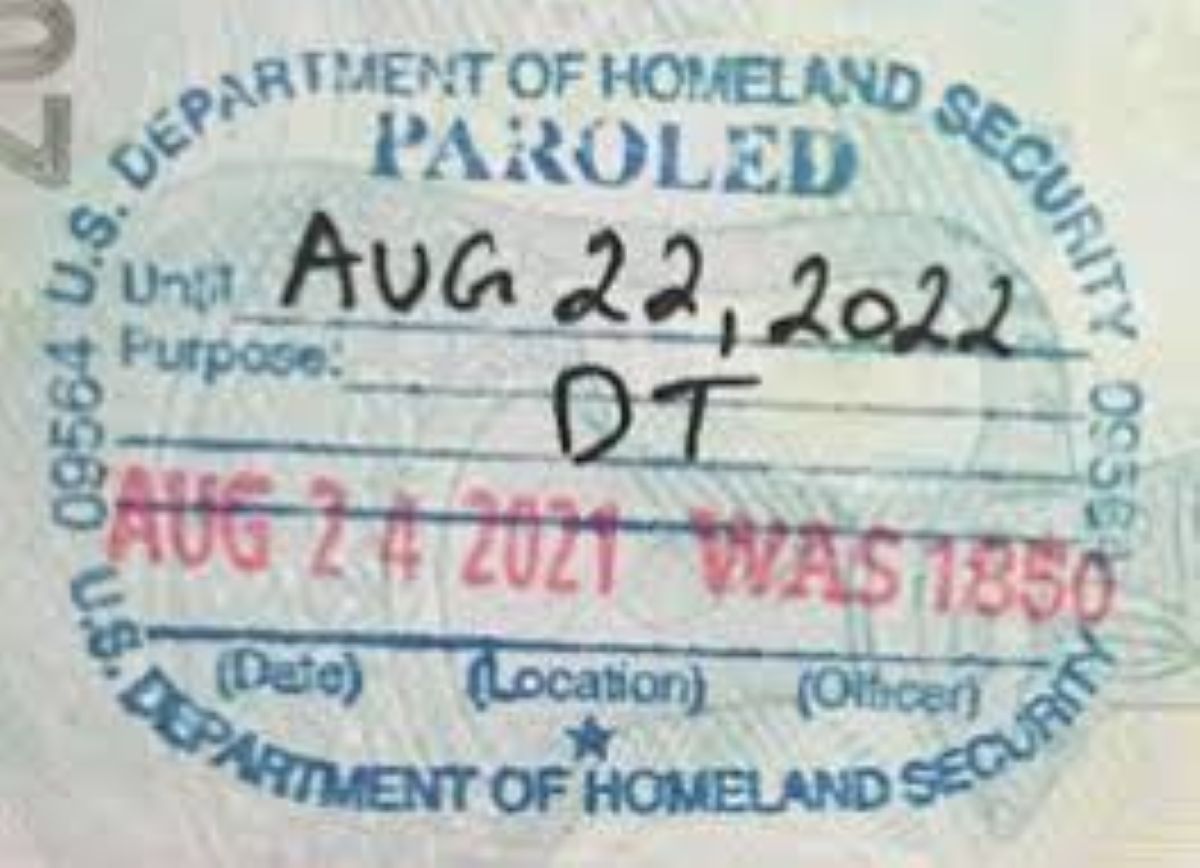
In September 2021, before most in the media discovered there was a “crisis” at the Southwest border, then-Florida Attorney General (now Sen.) Ashley Moody (R) filed a complaint seeking to block one of the most egregious immigration abuses of the Biden administration: the release of hundreds of thousands of illegal entrants on “parole”. The resulting order exposed an assembly line of alien border apprehensions and quick releases that drove more new illicit migration, but the litigation has now reached its conclusion, with Trump II taking a page out of its predecessors’ playbook and entering into a “consent decree” to ensure the “catch-and-release” parole conveyor belt is shut down until 2041.
Prologue: “Parole”
Congress, in section 212(d)(5)(A) of the Immigration and Nationality Act (INA), gave the DHS secretary discretionary authority to “parole into the United States temporarily under such conditions as he may prescribe only on a case-by-case basis for urgent humanitarian reasons or significant public benefit any alien applying for admission to the United States”. (Emphasis added.)
As my colleague George Fishman and I have explained, Congress added those highlighted clauses to the parole provision because prior administrations had abused that power to permit the entry to tens of thousands of facially inadmissible aliens over and above the limits Congress had placed on lawful immigrant admissions.
And as Fishman and I made clear, those clauses have meaning. “Urgent humanitarian reasons” equates to a need for the alien to seek emergency medical treatment, while “significant public benefit” means there’s a need for the alien to appear in judicial proceedings in this country, sometimes as a witness but more often as a defendant.
DOJ paid lip service to those requirements when it hurriedly published regulations interpreting the parole provision under Reagan, but the meanings were lost and the administrative rules were written more expansively than the legislative grant of parole authority.
Or, as we say in the law, the regulation was ultra vires, but nobody complained at the time.
Worse, when Congress tightened the parole provision in 1996, the Clinton administration failed (or refused) to fix those regulations to reflect the more narrowly constrained legislative intent.
Again, few noticed, and no one who did had the right to sue to fix the issue.
Consequently, the implementing regulation at 8 C.F.R. § 212.5(b)(5) provides DHS expansive power to parole from custody any alien “whose continued detention is not in the public interest” — the exact opposite of what section 212(d)(5)(A) permits.
That defective parole regulation became a whopping loophole the Biden administration exploited to usher (by my count) more than 2.86 million aliens into the United States — all of whom lacked proper admission documents or any real right to be in the United States.
That was especially problematic because those 2.86 million parolees have access to benefits other aliens released under the INA don’t, including the ability to adjust status, seek public benefits, apply for work authorization, and even obtain a firearm.
Act I: Florida I
Early on, Moody saw that Biden was releasing tens of thousands of illegal migrants at the Southwest border monthly (imposing increasing fiscal costs on Florida and other states) and resolved to slow the flow.
In September 2021, she filed a complaint in Florida v. U.S. (Florida I), alleging Biden’s DHS was “ignoring” congressional detention mandates in section 235(b) of the INA by releasing illegal entrants it was required to detain.
The case was filed in the U.S. District Court for the Northern District of Florida (N.D. Fla.) and assigned to Judge T. Kent Wetherell II, and in early March 2023, Judge Wetherell issued an opinion largely agreeing with the state’s claims.
Most directly, Judge Wetherell vacated a DHS policy Florida uncovered called “Parole+ATD”, which directed Border Patrol to release illegal migrants on “parole” under section 212(d)(5)(A) of the INA with “alternatives to detention” (ATD), all without issuing them Notices to Appear (“NTAs”) — the charging documents in removal proceedings — and thus without placing them into removal proceedings.
Why did the Biden administration direct agents to release aliens on parole without NTAs? As the court found, issuing NTAs takes up to 2.5 hours, while parole releases can be done in 30 minutes.
The administration wanted to get those aliens out of custody as quickly as possible, partly because (as Judge Wetherell found) Biden didn’t want to detain illegal migrants, and partly to alleviate the burden on the agents who were forced to deal thousands of migrants entering daily to take advantage of the administration’s non-detention policies.
In other words, like “Lucy in the chocolate factory”, Mayorkas’s DHS had lost control of the border and simply allowed the migrant conveyor belt to move aliens into the United States in the hope ICE could deal with them some other day.
In fact, Border Patrol had released so many aliens without NTAs that, according to NBC News, 588,000 of them were awaiting ICE call-in appointments as of February 2023, and according to the New York Post, by March 2023, the New York City ICE office was “fully booked” for such interviews until October 2032.
Keep those facts in mind as you watch “Border Czar” Tom Homan’s attempts to clean up the mess he was left.
Act II: Florida II
Judge Wetherell’s order shut down Border Patrol’s parole releases, but only until May 10, 2023, the day before Title 42 ended.
That day, then-Border Patrol Chief Raul Ortiz issued a memo directing his agents to implement a new policy called “Parole with Conditions” (PWC), purportedly to reduce feared overcrowding at Border Patrol processing facilities.
Under PWC, Border Patrol was again directed to release aliens in its custody on parole without issuing them NTAs and court dates, or as that memo put it “in advance of the issuance of an NTA”.
That sent Moody back to court, filing a new complaint in a case captioned Florida v. Mayorkas (Florida II) to stop PWC in its tracks.
Based on what little information it had about that policy (the memo hadn’t been publicly released), Florida argued that the latest policy “may violate” the court’s March 8 vacatur of Parole+ATD in Florida I.
The state continued, noting: “But it is unquestionably cynical [and] in bad faith. ... It is also, unfortunately, consistent with the game of whack-a-mole DHS has been playing with Florida and this court for almost two years.”
On these grounds, Moody’s team requested a temporary restraining order (TRO) stopping PWC releases.
Florida II was also assigned to Judge Wetherell, who concluded on May 11 that a TRO was appropriate given:
the challenged policy appears to be materially indistinguishable from the Parole+ATD policy vacated in [Florida I] — both in its purpose (reducing overcrowding at border patrol facilities) and manner of operation (releasing aliens into the country without first issuing a charging document placing them in immigration proceedings and simply directing the aliens to report to ICE within a specified period for further processing).
Not that the Biden administration detained any of the migrants who subsequently entered, but at least: (1) it wasn’t able to grant them parole, with all the attendant benefits; and (2) it issued them NTAs before they were released, instead of adding them to ICE’s burgeoning processing backload.
Act III: “Consent Decree”
Omitted from the facts above is DHS’s failure to immediately implement Judge Wetherell’s TRO in Florida II, which resulted in 2,576 illegal entrants who were covered by that order being released the morning after the court had ruled. What subsequently happened to those aliens is a warning for another day.
In any event, Biden’s DOJ asked the U.S. Court of Appeals for the 11th Circuit to halt Judge Wetherell’s orders in Florida I and Florida II, but that June, the circuit court refused to do so. Consequently, Florida II continued, and still continues to this day.
Donald Trump won the 2024 presidential election in large part based on his promise to undo Biden’s border policies, and Trump II’s U.S. Attorney General (and Moody’s predecessor as Florida AG) Pam Bondi has taken a very different view of the INA than the Biden administration did.
Bondi’s litigation posture is guided by Executive Order (EO) 14165, “Securing Our Borders”, which the president issued on Inauguration Day, January 20, 2025.
In section 5 of EO 14165, Trump directed the DHS secretary to:
propose regulations regarding the appropriate and consistent use of lawful detention authority under the INA, including the termination of the practice commonly known as "catch-and-release," whereby illegal aliens are routinely released into the United States shortly after their apprehension for violations of immigration law.
Parole, as alluded to above, was a major component of Biden’s migrant “catch-and-release” regime, but to date DHS hasn’t amended the ultra vires parole regulation the prior administration used.
On January 26, however, my colleague Elizabeth Jacobs filed a petition on behalf of the Center for Immigration Studies with DHS asking it to amend that regulation to conform it with the department’s statutory authority in section 212(d)(5)(A) of the INA.
We’ll see whether and how DHS responds, but the Center’s request has support in a different provision, section 7(c) of EO 14165, wherein Trump directed the department to, “Align all policies and operations at the southern border of the United States to be consistent with the policy” in the EO “and ensure that all future parole determinations fully comply with this order and with applicable law.”
Which brings me to the proposed consent decree that the state of Florida and DOJ jointly filed with Judge Wetherell in (the still ongoing) Florida II on February 4, which directly references those two sections of EO 14165.
That consent decree asks the N.D. Fla. to “declare” PWC “unlawful” and set it aside, and to bind DHS for the next 15 years from “implementing or enforcing the PWC memorandum, Parole+ATD memoranda, and any materially indistinguishable policy” — that is, from flipping the “on switch” to restart the Biden-era parole border conveyor belt until at least 2041.
Epilogue: Copying the Democratic Playbook
Such consent decrees are not uncommon in immigration law, but usually they are entered into between Democratic administrations and their allies in the “immigrant advocate” community to bar the executive branch from taking some action otherwise permitted (if not mandated) under the INA.
The classic and most notable example is the stipulated settlement agreement President Clinton’s attorney general, Janet Reno, agreed to in Flores v. Reno.
On its face, that “Flores settlement agreement” governs the conditions of detention and release of unaccompanied alien children (UACs) in then-Immigration and Naturalization Service (INS) and now-DHS custody, but in 2015, the district court judge overseeing the FSA treated it like a contract that requires DHS to release migrant children who entered illegally with adults in “family units” within 20 days.
That 2015 FSA order and a subsequent 2016 Ninth Circuit affirmance triggered a 2019 “humanitarian catastrophe” involving “a flood of families and unaccompanied children, who ... cannot receive efficient adjudication and, in most cases, will never be removed from the United States even if they are here unlawfully”.
The district court judge and Ninth Circuit couldn’t have cared less: a deal’s a deal, even if it was struck by a prior administration.
Then, there’s the October 2023 settlement agreement between Biden’s DHS, migrants, and advocates in Ms. L v. U.S. ICE.
As I explained at the time, that one protects most previously deported aliens from being prosecuted for illegal reentry under sections 275 and 276 of the INA (both felonies), provided they bring a child with them.
To be fair, the Ms. L settlement agreement does exempt aliens with pre-existing felonies, sex offenders, stalkers, child abusers, drug dealers, and a handful of other miscreants from its scope, but regardless both that agreement and the FSA should be considered contra bonos mores because they reward illegal migrants for exposing children to the unconscionable dangers associated with illegal entry.
Regardless, the Ms. L settlement will remain in effect until at least 2031, while the Flores agreement will continue to stymie enforcement until the district court judge overseeing it is satisfied that DHS has crafted UAC regulations that suit her procrustean tastes.
As the Flores agreement judge blithely noted while nixing a Trump I attempt to issue such regulations in September 2019: “The blessing or the curse — depending on one's vantage point — of a binding contract is its certitude. The [Flores agreement] is a binding contract and a consent decree.”
The consent decree in Florida II will be a “binding contract” that bars future administrations from turning the limited parole authority Congress has given DHS in truly exceptional cases into a border-release machine — 2.8 million-plus releases too late, but with the gloss of legal “certitude”. At the border as in life, what goes around comes around.