
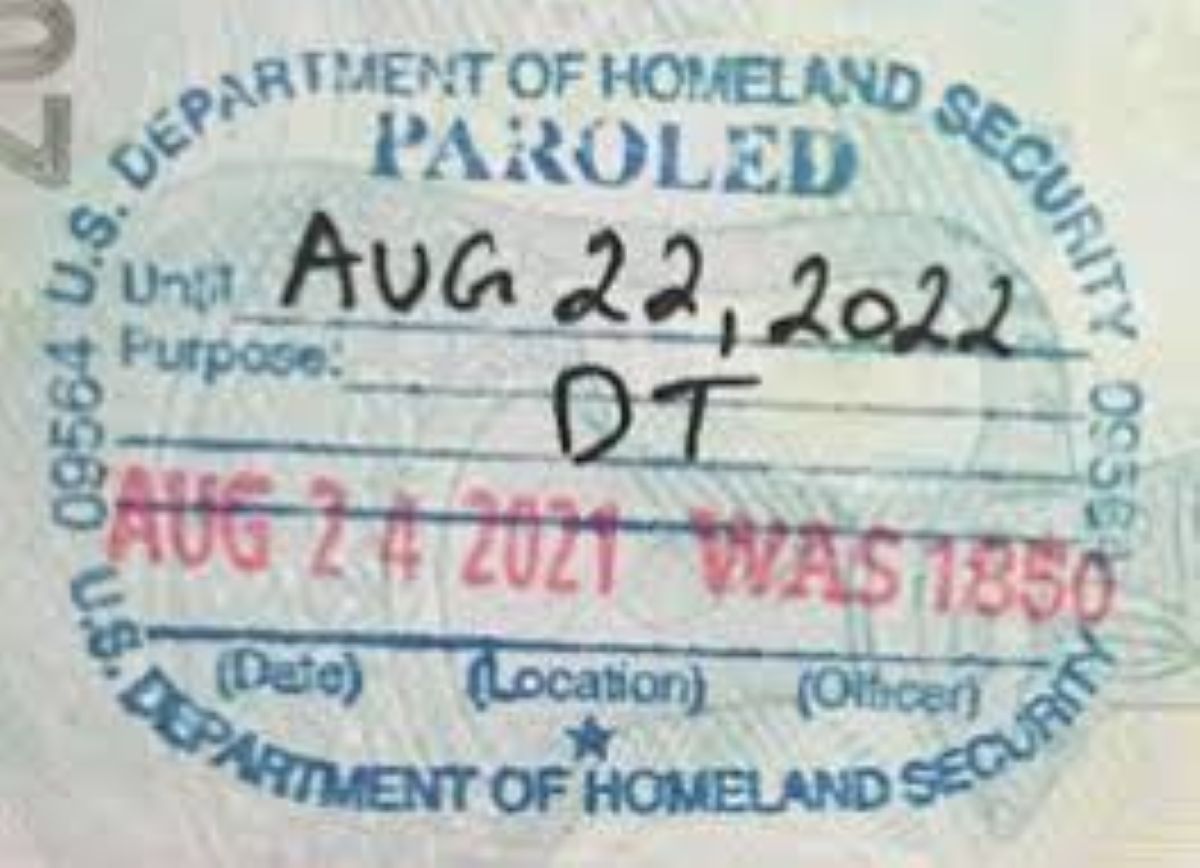
The Center for Immigration Studies (CIS) submitted a petition for rulemaking on January 26, 2026, asking the U.S. Department of Homeland Security (DHS) to amend its regulations governing parole. The current text of the parole regulations complies with an old version of the parole statute, dating back to the early 1980s, but is inconsistent with contemporary legal requirements.
Petition for Rulemaking
A petition for rulemaking is a formal request submitted by an individual or organization asking a federal agency to issue, amend, or repeal a regulation. The right to petition for rulemaking is grounded in the Administrative Procedure Act, which requires agencies to give interested persons the opportunity to request regulatory action and to consider those requests in a reasoned manner.
With a petition, stakeholders can present legal arguments, policy justifications, and supporting evidence to explain why regulatory change is warranted. Although agencies are not required to grant a petition, they must generally respond, and a denial can be subject to judicial review if it is arbitrary, capricious, or otherwise inconsistent with law. As a result, petitions for rulemaking can be an important mechanism for shaping federal policy and prompting agencies to address regulatory gaps, outdated rules, or new policy issues.
DHS’s Parole Regulation Is Out of Date
Congress requires DHS to inspect arriving aliens and certain aliens present in the United States who have not been admitted, and to detain aliens determined to be inadmissible to the United States, subject to narrow exceptions. DHS must either place inadmissible arriving aliens who lack valid entry documents or committed fraud or misrepresentation (with limited exceptions) in expedited removal or section 240 removal proceedings.
Federal law requires nearly all aliens covered by this section to be detained pending completion of their immigration proceedings unless DHS opts to return them to a contiguous country, consistent with INA § 235(b)(2)(C). If inadmissible arriving aliens covered by INA § 235(b) do not wish to withdraw their applications and depart the United States, generally the only exception to detention is through the exercise of the government’s parole authority under INA § 212(d)(5).
In our petition, CIS explained that DHS must amend 8 C.F.R. § 212.5(b) (governing parole) to comply with INA § 212(d)(5). The current language of the regulation creates a lower standard for parole than is permitted by statute. The current language of the regulation allows an alien to be granted parole if an immigration officer determines that the alien’s “continued detention is not in the public interest”. INA § 212(d)(5), however, only permits DHS to parole aliens (1) on a case-by- case basis; (2) for urgent humanitarian reasons or significant public benefit; or (3) to accomplish a specific and temporary purpose. Moreover, INA § 212(d)(5) requires that when “the purposes of such parole … have been served” that the alien be “returned to the custody from which he was paroled” and thereafter their case “shall continue to be dealt with in the same manner as that of any other applicant for admission to the United States”. Accordingly, CIS suggested replacing the existing regulatory language to reflect the narrow nature of DHS’s authority.
Second, CIS explained how the conflict between the regulation and its authorizing statute makes DHS vulnerable to judicial challenges under the Laken Riley Act. This law, which was passed in January 2025, gives state attorneys general and other state officials standing to sue DHS for violations of INA § 235(b)’s detention requirements. Amending the regulation to comply with the current statutory requirements is necessary to improve the legal and financial posture of the agency.
Finally, CIS explained how DHS can amend 8 C.F.R. § 212.5 to facilitate the department’s compliance with INA § 212(d)(5), which requires its officers to “[return] parolees to the custody from which [they were] paroled” at the end of many aliens’ parole periods. A recent DHS Office of Inspect General report showed that DHS has not issued adequate guidance or policies to enable its components to carry out this function. CIS, therefore, proposed language to require DHS to document the specific, temporary purpose triggering an alien’s parole eligibility and the end date of that parole in both the alien’s A-file and in an electronic database accessible by immigration officers and judges. This is a necessary, first step to allow DHS to carry out its “end of parole” responsibilities.