
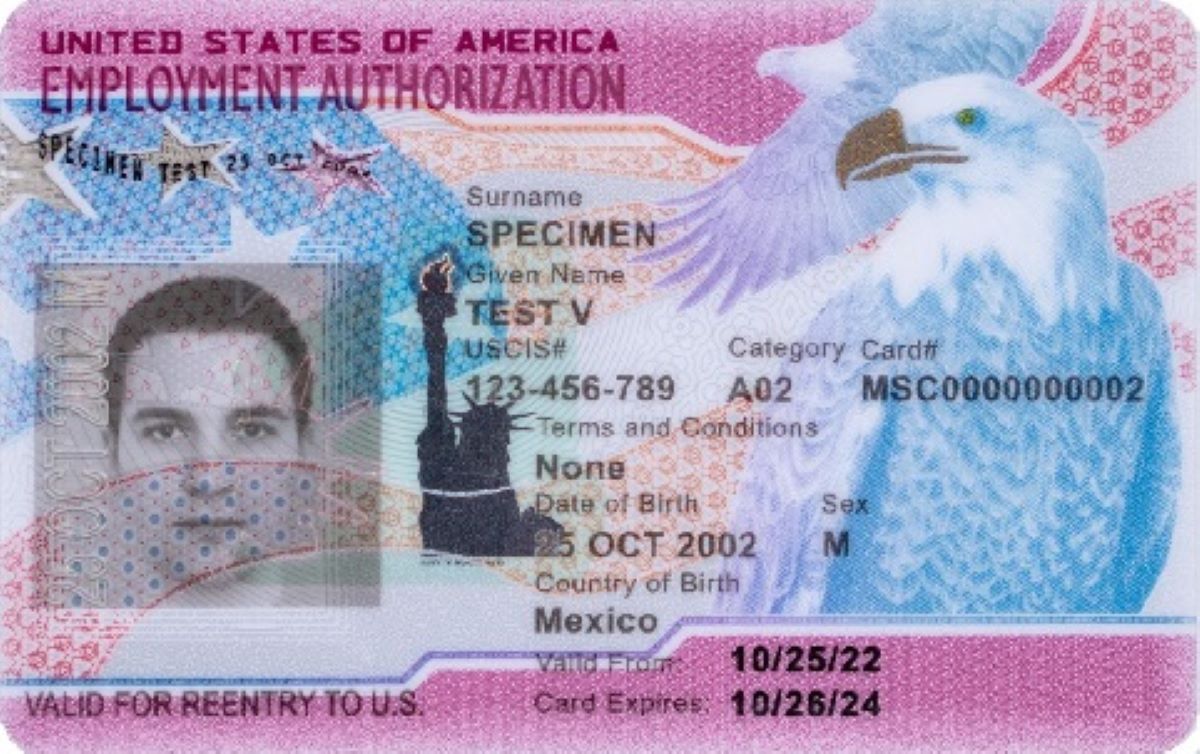
The U.S. Department of Homeland Security (DHS) has published a new regulatory proposal to limit or restrict employment authorization eligibility from certain classes of aliens that are generally present in the country without any lawful immigration status. The new rule will impact aliens with parole, aliens with deferred action (not including Deferred Action for Childhood Arrival (DACA) recipients or applicants for T visas and their relatives), aliens who have been released but have received final orders of removal, and certain aliens with criminal histories.
Specifically, the rule will limit employment authorization eligibility for aliens paroled into the United States temporarily and for aliens granted deferred action. To raise the standard for employment authorization eligibility, the rule will require these classes to demonstrate that they must work as a matter of economic necessity and that they warrant a positive grant of discretion by a USCIS officer before they can receive employment authorization. Economic necessity is not a new requirement for aliens with deferred action or with final orders of removal, but this rule will result in consistency for aliens granted parole.
The rule goes farther, however, to limit employment authorization for these categories to one year. After one year, the alien must reapply or seek a renewal. This rule will also require that employment authorization renewal applicants demonstrate that they are working for an employer that is enrolled in E-Verify or at least trying to work for a participating employer.
These changes could impact a large number of aliens in the United States under these classifications. USCIS data shows that between FYs 2021 and 2024, USCIS granted 1,211,447 (initial and renewal) work permit applications to aliens with parole. Moreover, data obtained by the Center for Immigration Studies shows that USCIS approved 3,772,382 work permit applications between January 2021 and January 2025 to aliens with pending asylum applications and approved 366,843 work permit applications to aliens with deferred action. Generally, aliens in these classifications lack lawful immigration statuses. (While asylum applicants include recent border-crossers, this classification could also include aliens who applied affirmatively for asylum with USCIS while in a lawful immigration status.)
These changes will not apply to aliens granted DACA or granted deferred action as an applicant for T nonimmigrant status and eligible family members, who have pending and bona fide applications. DHS’s authority to implement the DACA program is currently being litigated in the federal courts, and T nonimmigrant visas’ work authorization is governed by statute.
Additionally, DHS is proposing to eliminate employment authorization eligibility entirely for aliens against whom a final order of deportation or removal exists and who are temporarily released from custody on an order of supervision. This restriction will not apply to aliens for whom DHS has determined that their removal from the United States is impracticable because “all countries from which DHS has requested travel documents have failed to issue such documents”. DHS explained that, “Providing employment authorization to aliens who do not fall within this exception undermines the integrity of the immigration system by incentivizing aliens with a final order of removal to remain in the United States instead of complying with their orders of removal, obtaining travel documents in a timely manner, and departing the United States.”
The rule would also add biometric requirements for any alien applying for employment authorization under 8 C.F.R. § 274a.12(c) (governing aliens who must apply for a discretionary work permit) and would require USCIS officers to deny a work permit application, as a matter of discretion, if it becomes known that the alien has been arrested, indicted, or convicted of any criminal act; admitted to committing a violent or dangerous crime; or if evidence exists that the alien is a member of a gang or terrorist organization. The rule preserves officer discretion to grant the application if “significant countervailing public interests” exist, such as the need for the alien to assist law enforcement activity in the United States.
Finally, the rule would add automatic termination conditions for employment authorization with triggering events. Under this rule, employment authorization would automatically terminate when an alien receives an administratively final order of removal under any removal provision (e.g., INA §§ 217, 235, 238, 240) or when the underlying basis for the work permit (e.g., parole or a pending asylum application) is terminated or denied. Aliens who believe that they have a separate basis for employment authorization will be required to reapply.
DHS explained that the agency is issuing this regulatory proposal is, in part, because DHS is recognizing the need to minimize the potential risk of disadvantaging American workers. Moreover, DHS stated that it intends this rule to “significantly restrict employment authorization that might incentivize aliens to remain in the United States after receiving a final order of removal and to strengthen protection for American workers”.
Public Participation Opportunity
Anyone can take part in this rulemaking process by submitting a public comment. The comment period for this proposed rule will be close on August 4, 2026. Until then, any member of the public can submit feedback, including support, opposition, or relevant policy alternatives, through regulations.gov by searching “DHS Docket No. USCIS-2026-0067”. Generally, all comments are publicly available for review, and agencies must review and respond to all relevant comments before they can finalize the regulation.