




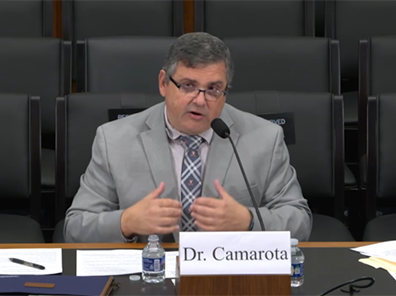




Sanctuary Jurisdiction Policies and Federalism

U.S. Senate Committee on the Judiciary Subcommittee on the Constitution

Sanctuary policies are a significant hindrance to immigration enforcement. Besides undermining the law, sanctuary policies bring significant costs to the community – both the needless human cost of new victimizations at the hands of criminal aliens and the considerable fiscal costs associated with providing services to illegal migrants.

Panel: Can Democracies Deport Millions?

Livestreamed Panel Examines Law, Politics, and Reality

At a moment when calls for large-scale deportations are reshaping politics on both sides of the Atlantic, an International Network for Immigration Research (INIR) panel asks a difficult question: Can democracies actually deport large numbers of people, and what happens if they try?

Can Foreign-Born Citizens Be Denaturalized for Post-Naturalization Behavior and Beliefs?

This report examines a question at the center of current policy debates: under what circumstances can the federal government revoke the citizenship of naturalized Americans based on actions or statements made after they become citizens. The analysis, which provides both legal and historical context, comes as the Trump administration prioritizes denaturalization proceedings “in all cases permitted by law and supported by the evidence.”

Non-Citizen Use of Welfare by Region and Country of Birth

A new report finds that welfare use among non-citizens in the United States varies significantly depending on their country of birth and region of origin. 

The analysis uses data from the federal government’s Current Population Survey Annual Social and Economic Supplement and shows that non-citizens from Latin America, Sub-Saharan Africa, and the Middle East have the highest rates of welfare use, while non-citizens from Asia and Europe have the lowest.

Immigration Newsmaker: A Conversation with Rep. Brandon Gill

The Center for Immigration Studies hosted another in its Immigration Newsmaker series with a conversation with Rep. Brandon Gill.

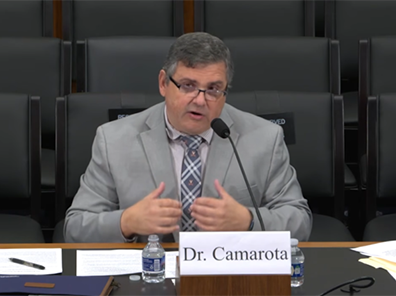
Sanctuary Jurisdiction Policies and Federalism
Panel: Can Democracies Deport Millions?
When can Foreign-Born Citizens Be Denaturalized?
Non-Citizen Use of Welfare by Region and Country of Birth
A Conversation with Rep. Brandon Gill

U.S. Senate Committee on the Judiciary Subcommittee on the Constitution

Sanctuary policies are a significant hindrance to immigration enforcement. Besides undermining the law, sanctuary policies bring significant costs to the community – both the needless human cost of new victimizations at the hands of criminal aliens and the considerable fiscal costs associated with providing services to illegal migrants.

Livestreamed Panel Examines Law, Politics, and Reality

At a moment when calls for large-scale deportations are reshaping politics on both sides of the Atlantic, an International Network for Immigration Research (INIR) panel asks a difficult question: Can democracies actually deport large numbers of people, and what happens if they try?

This report examines a question at the center of current policy debates: under what circumstances can the federal government revoke the citizenship of naturalized Americans based on actions or statements made after they become citizens. The analysis, which provides both legal and historical context, comes as the Trump administration prioritizes denaturalization proceedings “in all cases permitted by law and supported by the evidence.”

A new report finds that welfare use among non-citizens in the United States varies significantly depending on their country of birth and region of origin. 

The analysis uses data from the federal government’s Current Population Survey Annual Social and Economic Supplement and shows that non-citizens from Latin America, Sub-Saharan Africa, and the Middle East have the highest rates of welfare use, while non-citizens from Asia and Europe have the lowest.

The Center for Immigration Studies hosted another in its Immigration Newsmaker series with a conversation with Rep. Brandon Gill.

Home

Using Existing Immigration Regulations to Vet for Cultural Compatibility

Immigration adjudications already require officers to determine whether a marriage is valid both where it was celebrated and under U.S. public policy. When a state would consider a close-relative marriage void or criminal, that determination provides a clear benchmark for adjudicators without requiring new statutory tests or subjective cultural judgments. Applying those standards consistently would provide a practical measure of cultural compatibility.

Senate Passes an (Almost) DHS Funding Bill

ICE and CBP are left out, forcing more legislative legerdemain to keep immigration enforcement funded

Likely the worst aspect of the deal is the dangerous precedent it sets: Representatives who wish to abolish immigration enforcement — and risk political backlash — can simply starve it of needed funding instead, now that congressional Republicans have separated ICE and CBP out from other DHS funding.

USCIS Toughens Its Enforcement Policies after New AAO Decision

Withdrawing a fraudulent application doesn’t get you off the hook

The decision makes clear that withdrawing a petition does not negate a party’s illegal conduct or insulate the party from an adverse finding. USCIS may still document fraud or willful misrepresentation findings, and those findings can follow the beneficiary or petitioner (depending on the culpable actor) into future filings, admissibility determinations, and even enforcement contexts.

The Somali Clans of Minnesota

An impediment to assimilation?

The Somali clan system cannot be demolished overnight. To some extent, it could provide a short-term safety net for community members. Yet, in many cases the clan system serves as a solid base for political manipulation and inciting hatred between Somali groups.

Could One State AG End 18,000 Alien Habeas Suits?

The unexplored implications of the underutilized Laken Riley Act

The Laken Riley Act is the most important immigration-related legislation Congress has passed in the last two decades, and yet it’s largely underutilized. State AGs may want to review the act, because it gives them more power than they could have imagined over immigration — and likely the opportunity to shut down 18,000 alien-release cases that are overwhelming DOJ.