
Speaking in Mount Pocono, Pa., on December 9, 2025, President Trump said:
I've also announced a permanent pause on Third World migration, including from hellholes like Afghanistan, Haiti, Somalia and many other countries. … Why can't we have some people from Norway, Sweden — just a few — let us have a few from Denmark.
Trump’s words were fully consistent with his laser focus on preventing individuals who pose a threat to national security and to public safety, and who would bring their cultures of corruption with them, from entering the United States. The permanent pause is necessary because it is not possible to thoroughly vet individuals coming from these countries in order to assess their soundness and integrity before allowing them to enter the United States.
Executive Order and Presidential Proclamations Target World’s Most Corrupt Countries
One of the president’s first acts in office was to sign Executive Order (EO) 14161, “Protecting the United States from Foreign Terrorists and Other National Security and Public Safety Threats”. That EO was followed by two presidential proclamations that implemented key portions of it — Proclamation 10949 and Proclamation 10998. (The EO and proclamations are summarized in a White House Fact Sheet issued on December 16, 2025.)
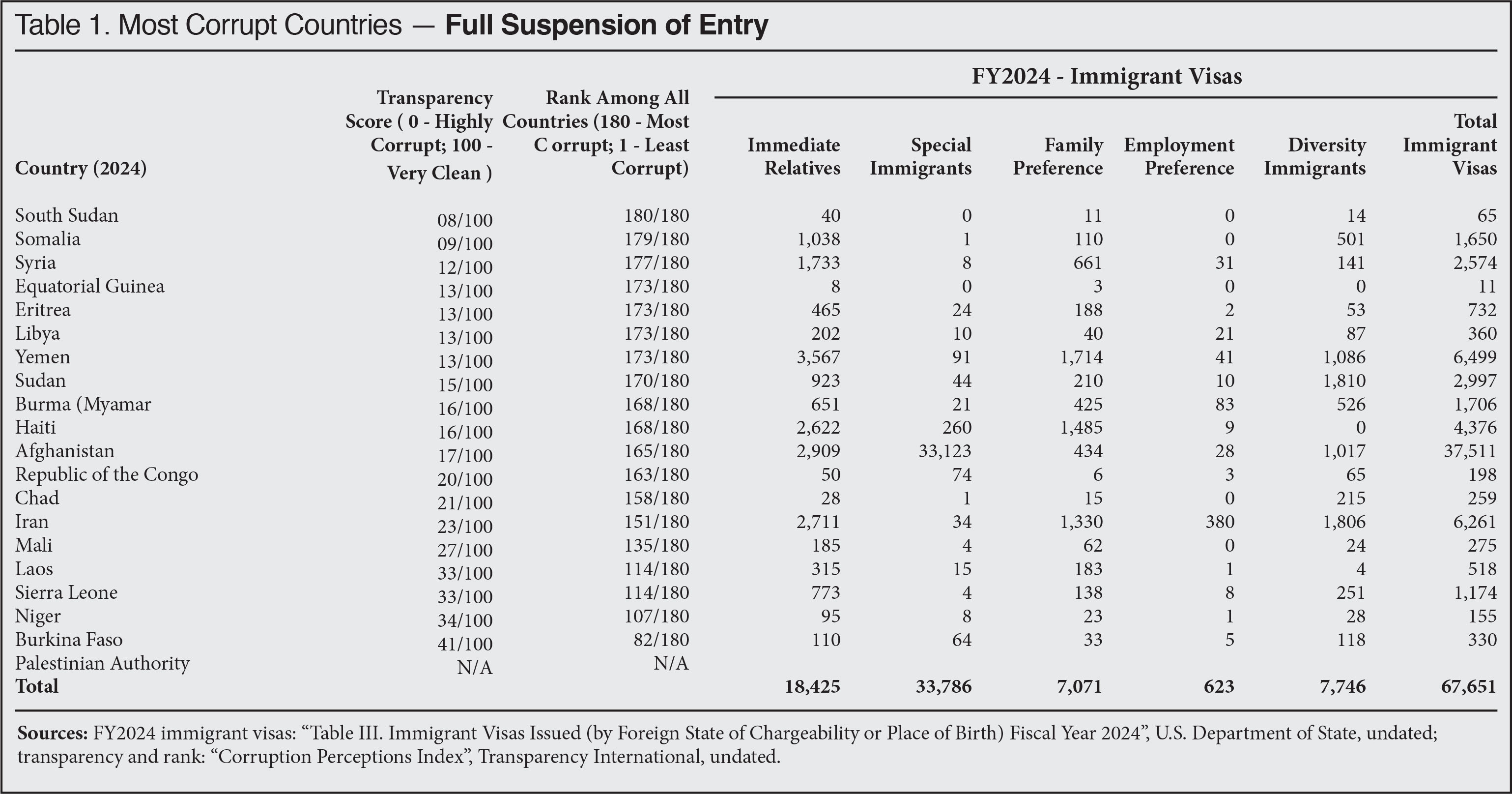
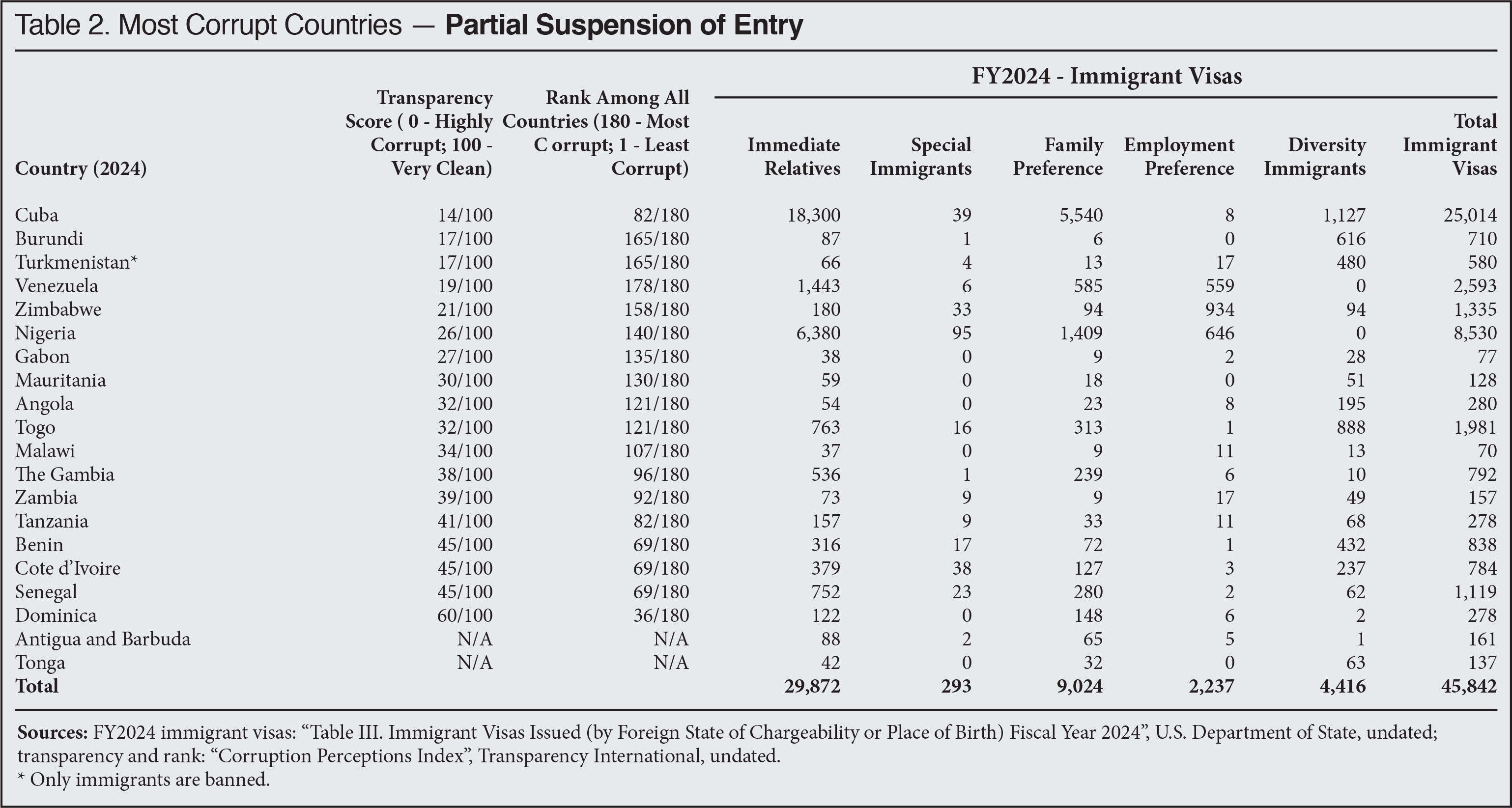
Collectively the EO and proclamations target countries where cultures of corruption reign and where reliable vetting is not possible (Tables 1 and 2).
 |
 |
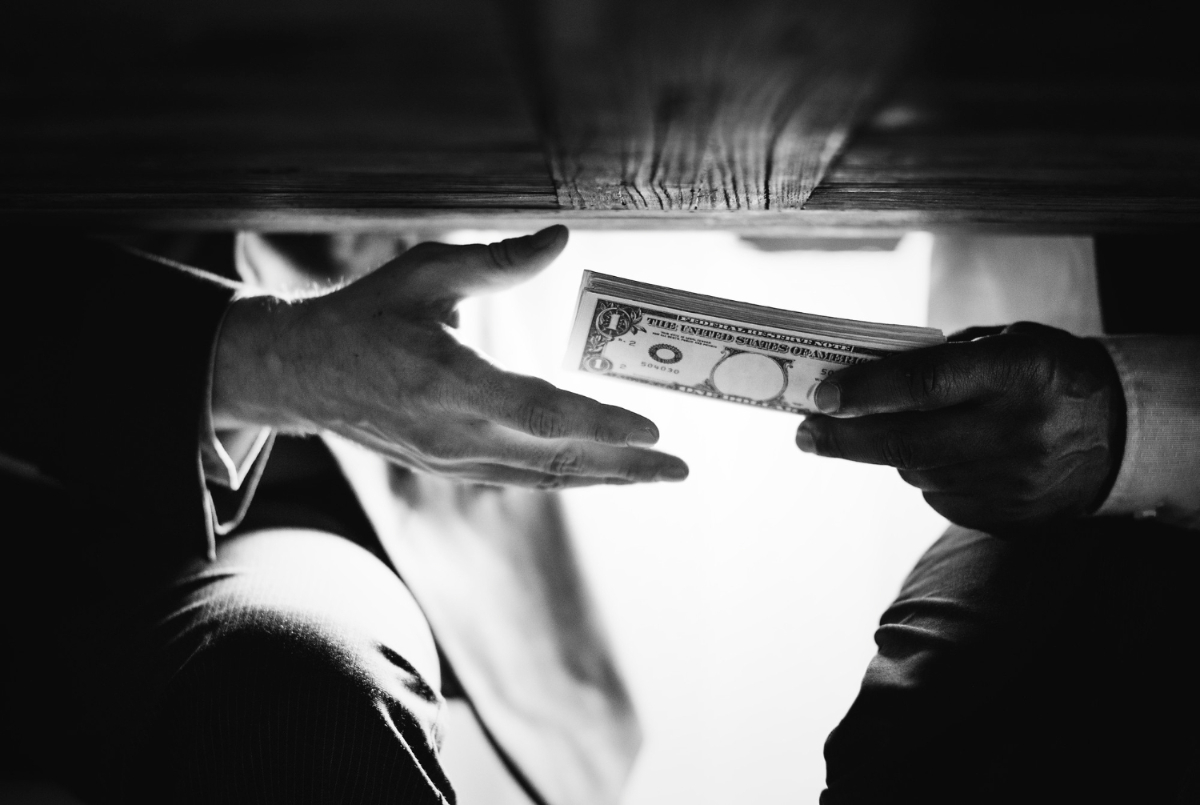
In these countries there can be no assurance that the documents available to vet individuals applying for admittance into the United States are valid or accurate due to a combination of incompetence, poor or no recordkeeping, fraud, bribery, and personal dishonesty. For the payment of a bribe, a citizen of these countries, and in some cases even a non-citizen, can obtain the official documents necessary to apply for entry into the United States — a fake birth certificate, doctored law enforcement records, a phony diploma, a forged passport, fictitious bank statements, and all other documents normally used by U.S. officials to vet individuals before they are allowed to enter the United States.
Individuals from the countries covered by President Trump’s EO and proclamations are fully conversant with the corruption in their home countries and likely to see it as “normal”. They have little or no experience with the rule of law and a neutral bureaucracy staffed by ethical civil servants. Bribery, the availability of forged documents, and corrupt governing classes that plunder their countries are the norm. Governments are the source of many benefits, for those who are able to obtain them, and since those in government are corrupt, the citizens often see no reason that they shouldn’t defraud their governments in order to get what is due them.
Despite this, the Biden administration made it possible for millions of people from the most corrupt countries in the world to enter the United States through a variety of pathways. These included, but were not limited to, the worldwide CBP One app and the CHNV program, which largely ignored any vetting of individuals being paroled into the United States.
The CBP One app was used by people from the majority of the world’s corrupt countries while the CHNV program was limited to Cubans, Haitians, Nicaraguans, and Venezuelans. Individuals released into the United States through these programs underwent only the most minimal, if any, vetting.
By the end of 2024/early 2025, prior to President Trump’s inauguration, an estimated 800,000–900,000 individuals had used the CBP One app to schedule appointments at ports of entry, with a high percentage — often in the range of 96 percent — being paroled into the U.S. The Biden administration did not provide consistent or authoritative breakdowns of those using the CBP One app by country; however, top nationalities mentioned in CBP updates included Venezuelan, Cuban, Mexican, and Haitian (in varying orders). In addition, three of the four top nationalities benefiting from the CBP One app also benefited from the CHNV program.
In all, CBP One entrants came from over 100 countries, including many from the most corrupt nations in the world. An unknown number of those admitted were from countries of national security concern that pose serious terrorist threats — Iran, Lebanon, Jordan, Egypt, Yemen, Indonesia, and Afghanistan. According to a Center for Immigration Studies report in 2023, others entering through the CBP One app came from special interest nations, including 3,852 Kyrgyzstanis, 1,843 Uzbekistanis, 780 Tajikistanis, 339 Kazakhstanis, and 29 from Turkmenistan, as well as from terror-plagued African countries.
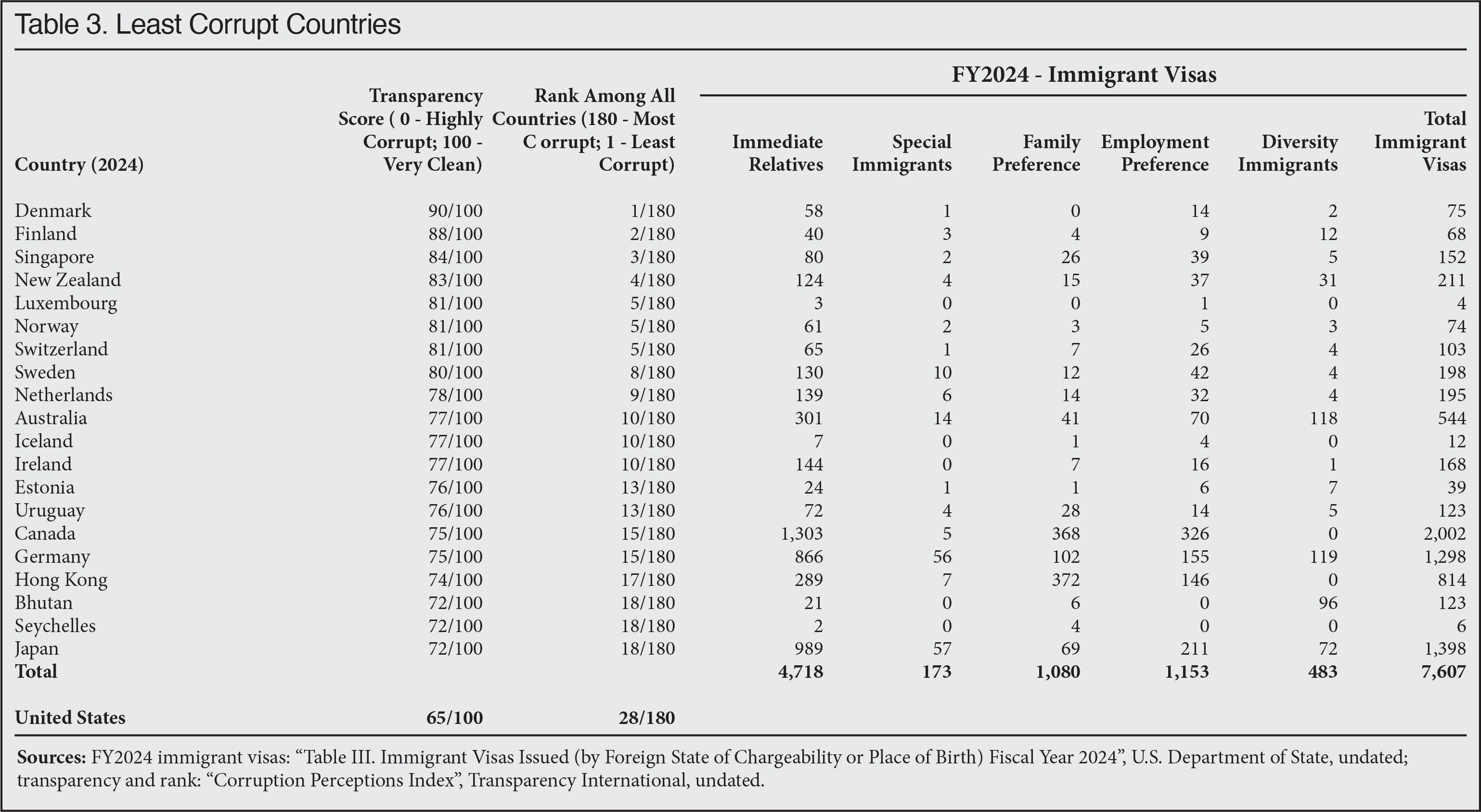
At the same time that millions of individuals from highly corrupt countries were being paroled into the United States without proper vetting, the Biden administration continued to issue immigrant visas to individuals from those same countries — without proper vetting. (See Tables 1 and 2.) In 2024 alone, 67,651 immigrant visas were issued to individuals from the countries where the Trump administration has now fully suspended all entry, along with another 45,842 from countries subject to partial entry restrictions. During that same period, only 7,607 immigrant visas were issued to individuals from the top 20 least corrupt countries (Table 3) — 89 percent less than the number of immigrant visas issued to those on the fully suspended list and 83 percent less than the number of immigrant visas granted to individuals from countries on the partially suspended list.
 |
Millions of Unvetted Immigrants from Corrupt Nations Are Now in the United States
It is clear that the Biden administration allowed millions of people into the United States from countries where no effective vetting is possible. This built on decades of the United States welcoming refugees from cultures where corruption is the rule, and taken together this has contributed to increasing levels of corruption in the United States, as well as a growing disrespect for the rule of law. One has to look no further than the Somali corruption in Minnesota and Maine to see the impact this has had in real terms.
In addition to national security and public safety concerns, high levels of corruption are associated with other negative factors in the countries subject to entry restrictions. For example, elections are often corrupt and coups d’etat frequently occur in West Africa and in other areas. Failed elections and coups all too often result in civil unrest that breaks along tribal, clan, gang, or cartel lines and sometimes this discord turns into full-blown civil war. The associated trauma and hatreds resulting from these conflicts, along with tribalism and clannism, are brought to the United States by individuals from those countries when they are not properly vetted. This means that the cost of dealing with these imported hatreds and traumas falls directly on American taxpayers through costly public assistance programs, increased medical costs, and higher funding for law enforcement at the federal, state, and local levels.
In addition, education levels in most of the countries included in the presidential proclamations are extremely low. In Somalia, the mean for years of education is just 1.9. Throughout West Africa the mean education level is well below the 6th grade level and in almost all other countries impacted by the president’s EO and proclamations, the mean level is below the high school graduation level. This, combined with a lack of English skills, puts pressure on American schools, increases property and other taxes used to fund public education, and reduces the quality of education available to American students. Furthermore, low education levels relegate migrants to low paying jobs and/or to public assistance.
Furthermore, education may also have been used as a tool to radicalize students in their home countries. For example, a review of Palestinian textbooks by IMPACT-se following the October 7, 2023, attack on Israel found that the textbooks “incorporate a systematic insertion of violence, martyrdom, and jihad across all grades and subjects”. Adults from these countries bring their levels of education and learning experiences with them and even if they are carefully vetted it is impossible to fully know what is in a person’s heart.
If that weren’t enough, many countries covered by the proclamations rank high on the Global Slavery Index, where modern slavery covers a set of specific legal concepts including forced labor, debt bondage, forced marriage, other slavery and slavery-like practices, and human trafficking. Four of the top 10 countries on the Slavery Index are covered by the proclamations — Eritrea (No. 2), Mauritania (No. 3), Tajikistan (No. 6), and Afghanistan (No. 9). Seven of the top 10 counties identified as being most vulnerable to modern slavery are also covered — South Sudan (No. 1), Somalia (No. 2), Democratic Republic of the Congo (No. 4), Afghanistan (No. 6), Chad (No. 7), Syria (No. 8), and Sudan (No. 9).
How Does the U.S. Government Vet Individuals Coming from Cultures of Corruption?
So, given the high levels of corruption in so many countries, how does the United States government effectively vet any individual from those countries?
- Can a U.S. official ever be certain that the person they are vetting is who they say they are when documents can be obtained by bribing officials or through forgery to show the person as whomever they choose to be?
- How does a U.S. official check criminal, terrorist, and other records when records may not even exist or when for a small financial consideration, a record can be lost or a clean record can be obtained?
- How does a U.S. official vet someone to determine if they are an agent of a terrorist group, a transnational gang, or a cartel when the group, gang, or cartel can create better documents than the country’s government can and when the government can’t verify whether it issued the documents or not because of corruption?
- How does a U.S. official identify those people in highly corrupt countries who will leave the corruption behind and adopt American values once they are in the United States rather than blending into the large communities of individuals who have brought their cultures of corruption with them?
- How does a U.S. official know that tribal, clan, gang, and cartel affiliations won’t immediately reappear in the United States?
- How does a U.S. official determine if an individual is coming to the United States because of a desire for freedom and to assimilate or if they are only coming to benefit from the goodness and riches of the United States — or to do harm to the American people?
- How can a U.S. consular officer determine if an individual from a highly corrupt society, who is applying for a non-immigrant visa for temporary admittance to the United States, will respect the terms of the visa and leave the United States as required?
- How does a U.S. official determine if an individual coming from a conflict area and who has suffered serious trauma will be able to become a fully functioning member of American society rather than becoming a burden on the American taxpayer?
The short answer to all of these questions is that adequate vetting is simply not possible for individuals residing in areas where a culture of corruption exists.
Conclusion
Given the above, President Trump was left with no option other than to suspend entry from highly corrupt countries in order to prevent the further importation of cultures of corruption, since effective vetting is not possible. Unfortunately, his actions only address a small fraction of the corrupt countries in the world. More remains to be done in order to ensure that future migrants are fully vetted, that they only come from the world’s least corrupt nations, and that they fully assimilate and build up the United States.