
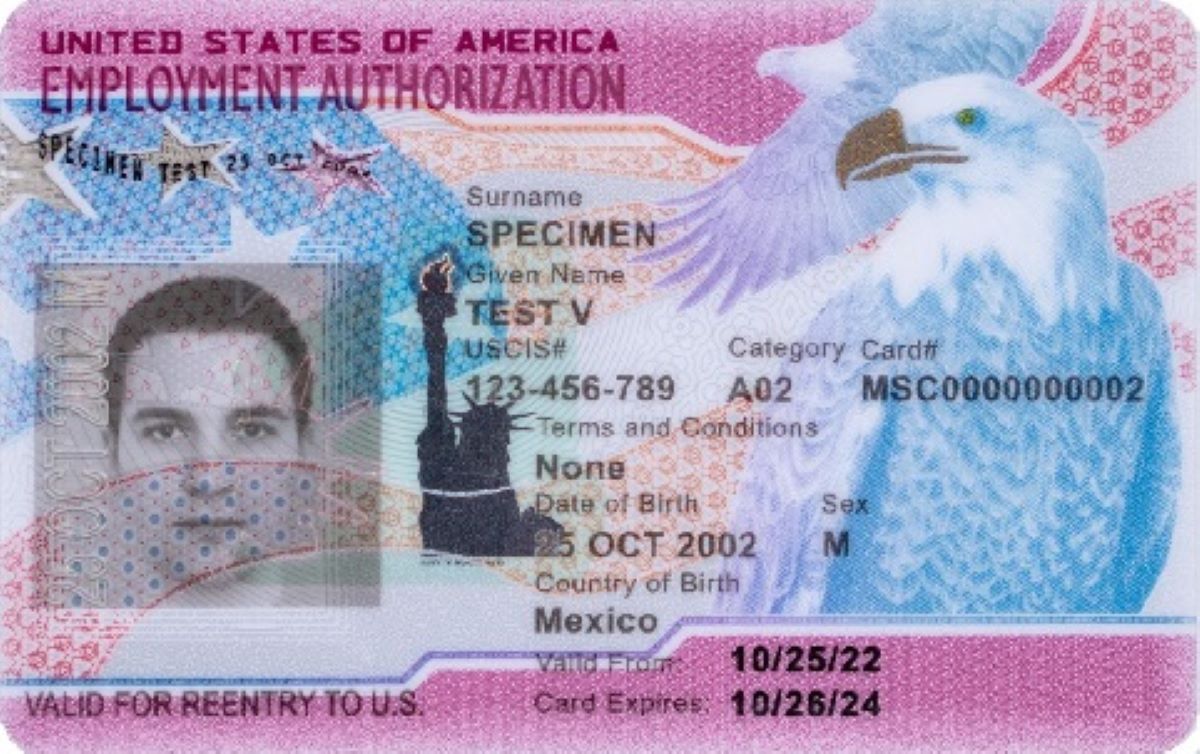
The U.S. Department of Homeland Security (DHS) recently proposed reforms governing discretionary employment authorization for several categories of aliens, including parolees, deferred-action recipients, and aliens released from immigration custody under orders of supervision (OSUP). The proposed rule represents an important step toward restoring integrity to the employment authorization system, protecting American workers, and reducing incentives for illegal immigration.
Background
Under federal law, an alien may not work in the United States unless Congress has expressly authorized their employment or DHS grants them employment authorization pursuant to its discretionary authority. In recent years, however, discretionary employment authorization has become increasingly available to aliens who have no permanent lawful immigration status and, in some cases, are already subject to final orders of removal.
Employment authorization is not a minor administrative benefit. It gives an alien access to the U.S. labor market and a Social Security number, and can make remaining in the country without a lawful immigration status considerably more attractive. DHS should therefore ensure that discretionary employment authorization is limited, temporary, and closely connected to the alien’s continued eligibility.
DHS’s Proposal
First, the rule would raise the eligibility standards for aliens paroled into the United States temporarily and for aliens granted deferred action to obtain employment authorization. The proposal would require these classes to demonstrate that they must work as a matter of economic necessity and that they warrant a positive grant of discretion by a USCIS officer so they can receive employment authorization. Economic necessity is not a new requirement for aliens with deferred action or with final orders of removal, but this rule will result in consistency for aliens granted parole.
Second, DHS proposed to eliminate employment authorization eligibility almost entirely for aliens against whom a final order of deportation or removal has been entered and who are temporarily released from custody on an order of supervision. This restriction, however, will not apply to aliens for whom DHS has determined that their removal from the United States is impracticable because “all countries from which DHS has requested travel documents have failed to issue such documents”. DHS explained that, “Providing employment authorization to aliens who do not fall within this exception undermines the integrity of the immigration system by incentivizing aliens with a final order of removal to remain in the United States instead of complying with their orders of removal, obtaining travel documents in a timely manner, and departing the United States.”
Third, the rule would also add biometric requirements for any alien applying for employment authorization under 8 C.F.R. § 274a.12(c) (governing aliens who must apply for a discretionary work permit), including renewal applicants. Moreover, the rule would require USCIS officers to deny a work permit application, as a matter of discretion, if it becomes known that the alien has been arrested, indicted, or convicted of any criminal act; admitted to committing a violent or dangerous crime; or if evidence exists that the alien is a member of a gang or terrorist organization. The rule preserves officer discretion to grant the application if “significant countervailing public interests” exist, such as the need for the alien to assist law enforcement activity in the United States.
Fourth, DHS is proposing to amend its regulations to require USCIS to automatically terminate an alien’s employment authorization if the alien receives a final order of removal or if the underlying basis for which the employment authorization was granted (parole or a pending asylum application, for example) was denied, expired, or rescinded. Under this framework, aliens who believe that they have a separate basis for employment authorization would be required to reapply.
Finally, DHS is proposing to limit EAD validity periods issued under these categories to one year. After one year, the alien must reapply or seek a renewal. This rule will also require that employment authorization renewal applicants demonstrate that they are working for an employer that is enrolled in E-Verify or at least trying to work for a participating employer.
CIS’s Comment
CIS’s comment generally supports the proposal, but also urged DHS to rescind employment authorization eligibility based solely on a grant of parole. Congress authorized parole as a temporary, case-by-case mechanism to allow aliens to enter the United States for urgent humanitarian reasons or a significant public benefit. The Immigration and Nationality Act requires that DHS return a parolee to the custody from which they were paroled after the purpose of their parole has been completed.
Accordingly, parole is expressly not an immigration status or a statutory pathway into the U.S. labor market. In fact, parolees have no statutory right to employment authorization. DHS has historically granted parolees employment authorization as an exercise of its discretionary authority.
DHS’s current parole regulations, however, helped fuel the unprecedented levels of illegal immigration experienced during the Biden administration. Providing released parolees with a relatively direct path to employment authorization predictably increased the rewards associated with illegal entry into the United States. CIS recommends that DHS eliminate this incentive, consistent with parole’s statutory purpose, by making clear that release on parole is merely a temporary authorization to enter the country, not an employment-based immigration program. You can read our comment here.