
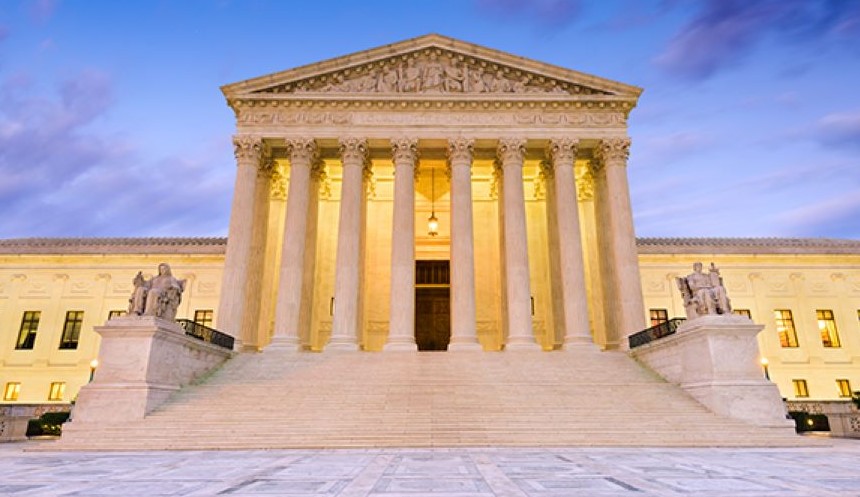
When I hear Baltimore v. Texas, I usually think of a series at Camden Yards. Here, however, it’s the new name of a lawsuit brought by three cities (Baltimore, Md., New Haven, Conn., and Columbus, Ohio) and one NGO to restore a key tool — “administrative closure” — the Biden administration used in support of what staff at the House Judiciary Committee termed its “Quiet Amnesty” benefitting removable aliens in the United States. And last week, the Supreme Court refused to reinstate it.
“Administrative Closure”
The Board of Immigration Appeals (BIA) — the DOJ tribunal that reviews immigration decisions — has described administrative closure as “a procedural tool created for the convenience of the Immigration Courts and the Board” that:
is available to an Immigration Judge and the Board ... to temporarily remove a case from an Immigration Judge's active calendar or from the Board's docket. In general, administrative closure may be appropriate to await an action or event that is relevant to immigration proceedings but is outside the control of the parties or the court and may not occur for a significant or undetermined period of time.
Don’t search the Immigration and Nationality Act (INA) for that “procedural tool”, however. It’s a thing immigration judges (IJs) and the BIA crafted all by themselves, and it wasn’t until late in the Biden administration that it received much attention in the implementing regulations.
Note that the Supreme Court maintains there’s a “strong public interest” in bringing immigration cases “to a close as promptly as is consistent with the interest in giving the adversaries a fair opportunity to develop and present their respective cases”, and when the justices said “to a close”, they didn’t mean administrative closure — they meant real closure, with a final order for the government or alien.
Moreover, there’s little doubt that this “procedural tool” has been repeatedly misused and abused over the years, even before the Biden administration.
In its 1988 opinion in Matter of Amico, the BIA reversed an IJ closure of a deportation hearing at which the respondent failed to appear, concluding: “When a case is administratively closed, the respondent is allowed, by simply failing to appear, to avoid an order regarding his deportability, and the consequences an order of deportation could bring.”
Trump I Attorney General (AG) Jeff Sessions tried to end administrative closure, issuing a May 2018 opinion in Matter of Castro-Tum barring its use except where required by regulation or under settlement agreements.
Advocates were displeased, and in September 2018, 18 senators sent a letter to Sessions and then-DHS Secretary Kirstjen Nielsen to “express” their “concerns” that reopening those closed cases would “undeniably overwhelm the already flooded immigration court backlog” (which by that point stood at roughly 1.1 million-plus pending cases).
They didn’t just send letters; aliens and advocates filed numerous lawsuits to block Matter of Castro-Tum and continue the practice of administratively closing pending removal cases.
In one of those challenges, Morales v. Barr, then-Judge (now Supreme Court Justice) Amy Coney Barrett writing for a unanimous Seventh Circuit panel effectively overruled AG Sessions, holding “immigration judges are not precluded from administratively closing cases when appropriate”.
The Biden Administration Reverses Sessions and Expands Administrative Closure
The Biden administration was quick to resurrect administrative closure, even in circuits that hadn’t nixed Matter of Castro-Tum.
First, in July 2021, Attorney General Merrick Garland issued an opinion, Matter of Cruz-Valdez, overruling Sessions’s opinion “in its entirety” and restoring prior BIA opinions that had supported the practice.
“Prosecutorial discretion” was the Biden administration’s go-to excuse for not enforcing the INA, and “prioritization” of certain cases (to the detriment of most others) was the tool it used to achieve it, so it’s noteworthy Garland there argued that administrative closure:
has served to facilitate the exercise of prosecutorial discretion, allowing government counsel to request that certain low-priority cases be removed from immigration judges’ active calendars or the Board’s docket, thereby allowing adjudicators to focus on higher-priority cases. [Emphasis added.]
Finally, in late May 2024, Garland’s DOJ published an administrative closure rule, which among other things amended a prior regulation first implemented in 1997 and later recodified at 8 C.F.R. § 1003.18, which had previously exclusively governed the scheduling of cases — not their closure or termination.
That amending rule (with the disingenuous title “Efficient Case and Docket Management in Immigration Proceedings”) expanded the ability of respondents and DHS to seek closure, while at the same time limiting the power of IJs and the BIA to deny such requests.
“Quiet Amnesty”
Later, in October 2024, House Judiciary Committee staff issued a report, “Quiet Amnesty: How the Biden-Harris Administration Uses the Nation’s Immigration Courts to Advance An Open-Borders Agenda”.
As the committee report explained: “Under the Biden-Harris Administration, more than 700,000 illegal aliens have had their cases dismissed, terminated, or administratively closed, allowing those aliens to stay in the country indefinitely without facing immigration consequences.”
Note that by the time that interim staff report appeared, the immigration court backlog stood at more than 3.9 million, double-plus what it had been when Biden took office in FY 2021.
The last administration’s “catch-and-release” border policies drove nearly all of that increase, but if you add the purported 700,000-plus “dismissed, terminated, or administratively closed cases” identified by House Judiciary staff, the backlog would have topped 4.6 million — a virtually insurmountable backlog that could have ended the immigration court’s ability to function.
I say “purported”, because as bad as that report sounded, the actual statistics were worse. DOJ reported in July that nearly a million cases had either been terminated (more than 242,600), dismissed (almost 614,000) — or administratively closed (129,330) during the four years of the Biden administration.
Enter Texas (or More Precisely, “Texas”)
America First Legal Foundation (AFL) challenged the DOJ rule on behalf of the state of Texas in Texas v. U.S., arguing that it exceeded DOJ’s authority under section 240(c)(1)(A) of the INA, which begins: “At the conclusion of the proceeding the immigration judge shall decide whether an alien is removable from the United States.”
If proceedings are indefinitely closed, the argument went, the decision plainly isn’t on “whether the alien is removable”.
Next, AFL contended that the rule was “arbitrary and capricious”, “an abuse of discretion”, and otherwise in violation of the Administrative Procedure Act (APA), the federal statute that governs executive branch decision making.
Specifically, plaintiffs argued that the rule “failed to consider (or even address) the compounding impact of freewheeling administrative closure authority paired with the policy of affirmatively refusing to pursue the immigration cases announced in” memos that had been issued by Biden’s DHS Secretary, Alejandro Mayorkas, and his ICE Principal Legal Advisor (PLA), Kerry Doyle.
I’ve analyzed at length both the September 2021 Mayorkas memo and the April 2022 Doyle memo, but essentially the former required DHS officers to consider irrelevant “mitigating factors” (the alien’s age, mental issues, whether any of the alien’s relatives work for the government, etc.) before taking “enforcement action” (including commencing investigations), and the latter imposed those restrictions on ICE attorneys in prosecuting removal cases.
Moreover, AFL argued that the rule:
failed to consider how hundreds of thousands of facially valid removal cases being indefinitely closed would impact the total population of illegal immigrants present in the United States, or how that increase would impact States, localities, and other parties who rely on the Federal Government to faithfully enforce our immigration laws.
Continuing that theme, AFL contended Texas has been “irreparably harmed by” the rule “on an ongoing basis” because it “causes there to be an increased number of removable illegal aliens present in the country”, and in the Lone Star State in particular.
The plaintiff state argued that result has imposed crushing fiscal costs on it, requiring (for example) Texas to spend more than $1 billion for medical treatment for illegal aliens in 2025 alone, not to mention millions in other law enforcement, educational, and social welfare expenses.
Judge O’Connor’s Order
The same day AFL filed that complaint, Texas and DOJ filed a “Joint Motion for the Entry of a Consent Judgment” with the government, in essence conceding Texas’s arguments and agreeing to ask the court to enjoin the government from enforcing it.
The matter was assigned to Judge Reed O’Connor of the U.S. District Court for the Northern District of Texas (N.D. Texas), and that same day he issued an order and final judgment in the case.
In that order, he declared that “no statute authorizes immigration judges to indefinitely administratively close or suspend adjudication of a case before them” and enjoined DOJ and its “successors” from “promulgating regulations that permit immigration judges the authority to administratively close removal proceedings without reaching the merits of a case absent an express statutory basis to do so”.
The Cities’ and NGO’s Attempts to Intervene
Weeks later, on August 7, the three cities and Centro Legal de la Raza filed an “Emergency Motion to Intervene” in the case, arguing they should be heard on whether administrative closure should be allowed to continue because “they have substantial interests in the validity of the regulation challenged in the Complaint and vacated by the Court’s consent judgment”.
In addition to complaining about a “collusive settlement”, the cities argued they “face direct injury from the vacatur of the” DOJ rule because it: “extinguishes identifiable revenue streams” related to taxes; “destroyed the value of public money” Baltimore spent defending removable aliens who had been granted administrative closure; and “imposes concrete costs on the cities’ law-enforcement operations” related to “U-visa” applications for purported victims of crimes.
Centro Legal made its own “independent” claims of injury.
Two weeks later, Judge O’Connor issued an opinion analyzing and dismissing the proposed intervenors’ claims, with an order denying their motion, and on September 2, he denied their subsequent motion for a stay pending appeal.
By that point, the proposed intervenors had filed an appeal with the U.S. Court of Appeals for the Fifth Circuit, which on September 29 denied their motion to stay Judge O’Connor’s June 22 consent judgment pending appeal, as well as their motion to summarily reverse his August 21 denial of their request to intervene.
SCOTUS
On October 9, the proposed intervenors filed an application for a stay of Judge O’Connor’s June 22 order with Supreme Court Justice Alito, the “circuit justice” assigned the Fifth Circuit.
They leaned heavily into their claim that the named parties in the case had colluded to scrap the Biden-era rule that neither the state nor the Trump II DOJ particularly cared for (the Center pointed out flaws in it while it was in the proposal stage, to little avail), arguing: “If a judgment procured through such open collusion is allowed to remain in effect, any agency can avoid the strictures of the APA by advertising its unwillingness to defend a disfavored regulation and by immediately acquiescing to nationwide relief.”
As Stephen Dinan explained in the Washington Times shortly after Judge O’Connor’s initial order, this case is the latest example of what’s called “sue and settle”, that is using the courts to get a dispositive order that achieves a goal both parties share “without going through the usual regulatory process”.
Notably, however, such schemes were not unheard of during the last administration, and though it’s best to avoid a “tu quoque” (“what about you?”) argument in most instances, I do not remember any of these proposed intervenors complaining about it at the time.
In any event, on October 27, the Court issued a brief order in the case (sub nom. Baltimore v. Texas), stating simply: “The application for stay presented to Justice Alito and by him referred to the Court is denied.”
Although Justice Alito is the only justice named, it was not his call alone. Supreme Court procedures require at least five of its nine members to agree to a stay (though just one can approve a “stay pending review”), and none of the remaining eight justices wrote separately to disagree with the denial.
What Next?
As DOJ explained in its opposition to the proposed intervenors’ request for a stay, because the “actual parties waived appeal”, the cities and NGO “must independently establish Article III standing to pursue the contemplated merits appeal”, and none of them are likely to be able to do so.
It probably won’t keep them from trying, however.
For a simple “tool created for the convenience of” IJs and the BIA, “administrative closure” has a lot of outside supporters with plenty riding on its continued existence. Did I mention that 309,677 IJ and BIA cases are currently administratively closed, and have been on average for about 19 years? Maybe that explains all the attention.