
On November 10, the U.S. Attorney’s Office (USAO) for the Western District of Washington (W.D. Wash.) announced the arrest of 39-year-old Mustafa Aman in connection with a six-count indictment “charging him with a scheme to submit false information to obtain immigration status for his friends and family members”. Aman, now a U.S. citizen, was born in Afghanistan and the “false information” in question had to do with “fake letters of recommendation” applicants submitted for Afghan Special Immigrant Visas (SIVs). But if you watched the Center’s presentation the day before that arrest on vetting failures and fraud in that SIV program, the allegations in this case should come as little surprise.
A Brief History of U.S. Involvement in the “Graveyard of Empires”
The terrorist attacks of September 11, 2001, were planned, controlled, and coordinated by al Qaeda (“the base”), a militant group headed by Osama bin Laden from the safety of Afghanistan, where the group was founded following the Soviet Army’s withdrawal and returned to in approximately 1996.
Al Qaeda operations had shifted in 1991 to Sudan, where the wealthy bin Laden “invested heavily in various businesses, including construction and agriculture”, but it returned to its roots after the United States, Egypt, and Saudi Arabia put the heat on Khartoum to expel him.
Bin Laden, looking for an exit following his expulsion from Sudan, quickly formed an alliance with the Taliban, “a predominantly Pashtun, Islamic fundamentalist group” that controlled much of Afghanistan at the time, and which provided al Qaeda safe haven.
Nine days after the 9/11 attacks, President George W. Bush demanded the Taliban stop harboring al Qaeda, and on October 7, announced that the United States had begun striking al Qaeda bases and Taliban military installations in Afghanistan, launching a war that would last for almost 20 years.
From the outset, U.S. and allied troops serving in “Operation Enduring Freedom”, as it came to be known, partnered with local Taliban opponents in the Northern Alliance (NA), a “loose coalition of militias”, as well as other ethnic Pashtun anti-Taliban forces.
Taliban forces quickly crumbled, and on November 14, 2001, the UN Security Council passed Resolution 1378, affirming that the United Nations “should play a central role in supporting the efforts of the Afghan people to establish urgently such a new and transitional administration leading to the formation of a new government”.
“Nation building” in Afghanistan had thus begun, and by June 2002, a transitional government was named, headed by Hamid Karzai, “leader of the powerful Popalzai tribe of Durrani Pashtuns”, who had been living in Pakistan during Taliban rule.
Four months later, the U.S. military created “a civil affairs framework to coordinate redevelopment with the United Nations and nongovernmental organizations and to expand the authority of the Kabul government”, and in August 2003, NATO took command of “the international security forces (ISAF) in Afghanistan, expanding NATO/ISAF’s role across the country”.
A December 2019 Washington Post exposé on U.S. efforts to rebuild and democratize Afghanistan following the U.S. incursion was headlined “Built to Fail”, which should give you an idea of how it all went.
As the Post noted, the U.S. government “spent more on nation-building in Afghanistan than in any country ever ... more than the United States spent in Western Europe with the Marshall Plan after World War II” adjusted for inflation.
“Instead of bringing stability and peace,” experts cited by the paper concluded, “the United States inadvertently built a corrupt, dysfunctional Afghan government that remains dependent on U.S. military power for its survival.”
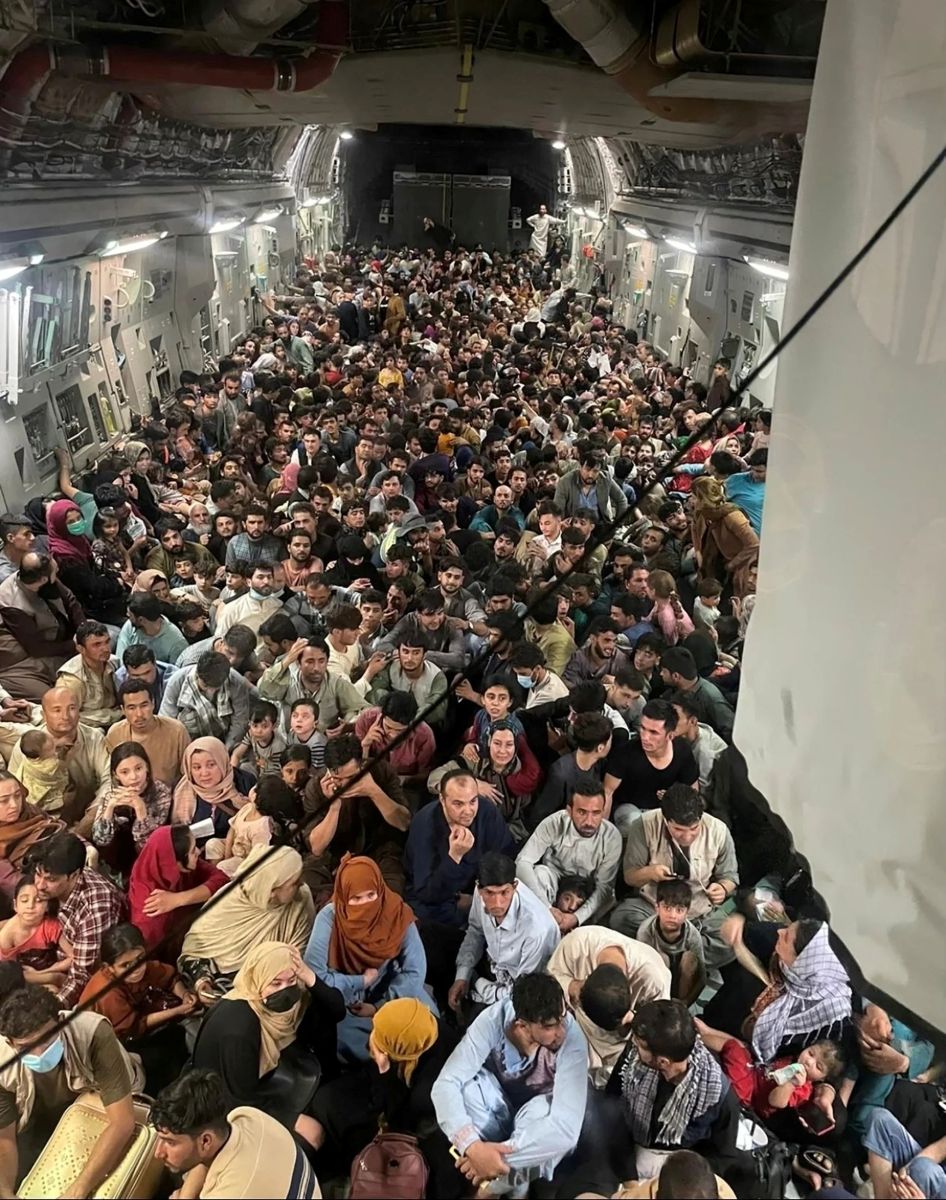
That was prescient, because that dependency on U.S. troops and weapons ushered in the Taliban’s return to power after our involvement in Afghanistan ended in chaos in August 2021.
And as a November 2022 post-mortem by the U.S. Special Inspector General for Afghan Reconstruction (SIGAR) concluded, “several significant shortcomings of the U.S. effort to establish viable governance institutions contributed to” its “overarching failure” to “achieve its goal of building stable, democratic, representative, gender-sensitive, and accountable Afghan governance institutions”.
Most notable among those “significant shortcomings”, as per SIGAR, was the United States’s failure to “resolve the issue of corruption, in part because fighting corruption required the cooperation of Afghan elites whose power relied on the very structures that anticorruption efforts sought to dismantle”.
Although the Hoover Institution convincingly argues that the sobriquet is overblown, there’s a reason Afghanistan has long been referred to as “the graveyard of empires”, a point former CIA Pakistan station chief Milton Bearden fruitlessly attempted to make back in November 2001.
Section 602(b) of the “Afghan Allies Protection Act of 2009”
Division F, Title VI of Pub. L. 111–8 (the “Omnibus Appropriations Act, 2009”) is titled the “Afghan Allies Protection Act of 2009” (AAPA), and as USCIS explains, section 602(b) of AAPA “created a new special immigrant [SIV] category for Afghan nationals who worked for or on behalf of the U.S. government in Afghanistan”.
To establish eligibility for an Afghan SIV, an applicant must (among other requirements) establish that he “is a citizen or national of Afghanistan who was or is employed in Afghanistan” by or on behalf of the U.S. government or a contractor with U.S. government funding; or by ISAF or Resolute Support (RS), the NATO mission that succeeded ISAF.
Such employment or service must have lasted at least one year and occurred “between October 7, 2001, and December 31, 2024”, and the applicant must have “provided faithful and valuable service to the U.S. government, or ISAF/RS, as applicable” as “documented in a positive letter of recommendation” that was authored by “the applicant’s direct supervisor, or someone in the chain of command above the applicant’s direct supervisor”, and the applicant must face some sort of threat due to the employment.
Effective July 20, 2022, responsibility for adjudicating Afghan SIVs was transitioned from USCIS to the U.S. Department of State (DOS), and while there’s much more to say about the program (including the availability of visas for “spouses and unmarried children younger than 21 years old accompanying or following to join” principal SIV immigrants), those are the basics.
The Alleged Decade-Plus Long Crimes of Mustafa Aman
Which brings me back to the criminal charges in the W.D. Wash. against Mustafa Aman, which include alleged offenses that stretch over more than a decade.
According to the indictment: “Aman used his knowledge of the immigration system and his knowledge of a United States defense contractor to conspire to help his friends and family members obtain status by fraud.”
Specifically, it’s alleged that Aman “drafted fake letters of recommendation and assisted others in creating fake employee badges and letters of support”, starting back in 2014 when he purportedly “provided a fake recommendation letter to a coconspirator” who had never worked for a U.S. company in Afghanistan to be submitted with that individual’s Afghan SIV application.
In 2016, the USAO contends, Aman did the same thing for another individual, and then for two other people in 2022.
Not to mention that he also allegedly claimed to be single even though he was married when he filed his own application, or that the USAO contends he “made false statements to public officials, including members of the State Department and Congressional staff”.
Not that any of these purported offenses apparently came to light before he naturalized. As Acting USAO Charles Neil Floyd noted, “Mr. Aman was granted citizenship because he was considered a trusted ally to the United States. Sadly, he exploited our generosity and used it against us.”
As with any criminal defendant, Aman should be presumed innocent until he is proven guilty, but if these charges are correct, it raises the question: “With allies like this, who needs enemies?”
Terrorist Threats
These are far from the first allegations of Afghans submitting fake recommendation letters in connection with their SIV applications.
As Miranda Devine reported in the New York Post on November 8, government whistleblowers claim “evacuees were paying visa fixers in Afghanistan who paid corrupt US officials to sign fraudulent letters of recommendation” and further assert that they had “discovered that potentially thousands of Afghan SIV-holders used faked letters vouching for their ‘faithful service’”.
“Most disturbing,” according to Devine, “the whistleblowers found that ‘Morgan A. Killington,’ a CIA official whose signature was on 12,300 letters of recommendation for Afghan [SIV]-holders, never existed.”
Among those who allegedly submitted letters written by the non-existent Killington were Rahmanullah Lakanwal and Nasir Ahmad Tawhedi, two Afghan nationals whose names should be familiar to those who follow the Center.
According to Devine, the 29-year-old Lakanwal “reportedly was part of a paramilitary force that worked with the CIA in Afghanistan”, and “entered the US in September 2021 as part of the ‘Operation [Allies] Welcome’ evacuation from Kabul”.
In June, he was charged in a 17-count superseding indictment filed in U.S. District Court for the District of Columbia in connection with what the USAO there called an “ambush shooting of National Guardsmen near the White House” at the Farragut West Metro Station in November 2025.
Again, Lakanwal is presumed innocent unless and until he’s convicted, but Specialist Sarah Beckstrom was killed in that attack, Sgt. Andrew Wolfe was “seriously injured”, and two other Guardsmen were wounded.
No modifiers are necessary in Tawhedi’s case, however.
In June 2025, he pled guilty in federal court in Oklahoma City to “conspiring and attempting to provide material support and resources to the Islamic State of Iraq and al-Sham (ISIS)” and to “receiving, attempting to receive, and conspiring to receive firearms and ammunition in furtherance of a federal crime of terrorism”.
Those charges stemmed from a plot to “carry out a violent terror attack on Election Day in 2024” on behalf of ISIS (“a designated foreign terrorist organization”) for which Tawhedi conspired with at least another person to obtain two AK-47 assault rifles and 500 rounds of ammunition.
Screening and Vetting Failures
Both Lakanwal and Tawhedi were here on parole and awaiting adjudication of their SIV applications at the time they were arrested, but it’s questionable whether they would have been denied Afghan SIVs had they not been nabbed on criminal charges.
My former colleague Todd Bensman, now with the Heritage Foundation, noted in the Daily Wire on November 17, that the DHS Office of Inspector General (OIG) issued two reports, one in 2022 and a second in 2026, “documenting widespread national security and fraud vetting failures” of Afghan evacuees.
As OIG concluded in the 2022 report, CBP “did not always have critical data to properly screen, vet, or inspect evacuees arriving as part of Operation Allies Refuge (OAR)/Operation Allies Welcome (OAW)” in part because “some information used to vet evacuees through U.S. Government databases, such as name, date of birth, identification number, and travel document data, was inaccurate, incomplete, or missing”.
The 2026 report was worse from a national-security perspective, with OIG finding a “40 percent error rate” in USCIS’s adjudication of asylum files relating to Afghan nationals who came to the United States during OAW.
As NPR describes it, OAW was a Biden-era program set up during the U.S. withdrawal “to allow Afghans — especially those who might be targeted by the Taliban for having worked with allied forces in their 20 years in Afghanistan — to enter the U.S. for two years on parole without permanent immigration status”.
“About 40% of those who came” under OAW “were eligible for [SIVs] because of the great risks they took to help the U.S., or were a family member of someone who helped the U.S.”, according to the outlet, while the rest were expected to find other ways to remain, including by filing asylum applications.
That 2026 report only examined OAW-related asylum applications, but if it’s any indication, DOS’s vetting of Afghan SIV applicants likely will face any number of challenges — especially given the apparent prevalence of fake recommendation letters.
“Corruption Undermined U.S. Efforts from the Start” in Afghanistan
Before any elected official in the United States votes to expand or extend Afghan SIV, they should read five documents: Devine’s New York Post article; the two DHS OIG reports; the charges against Mustafa Aman; and SIGAR’s November 2022 after-action report.
As SIGAR explained on page 29 of that report:
Corruption — the abuse of entrusted authority for private gain — undermined U.S. efforts from the start. In Afghanistan, corruption took many different forms, some more harmful than others. Small-scale, petty corruption, such as bribery for basic services plagued citizens at a personal level, while powerful individuals destabilized the state with large-scale acts of embezzlement, fraud, nepotism, and extortion that enriched their own patronage networks.
Two decades of U.S. military involvement in Afghanistan officially ended on August 31, 2021, with 2,456 U.S. troops killed and 20,666 wounded. Given all the blood Americans shed in Afghanistan and the grief their families continue to suffer, proper, accurate, and methodical vetting and screening of Afghan SIV applicants is not too much to ask of our true “allies”.