
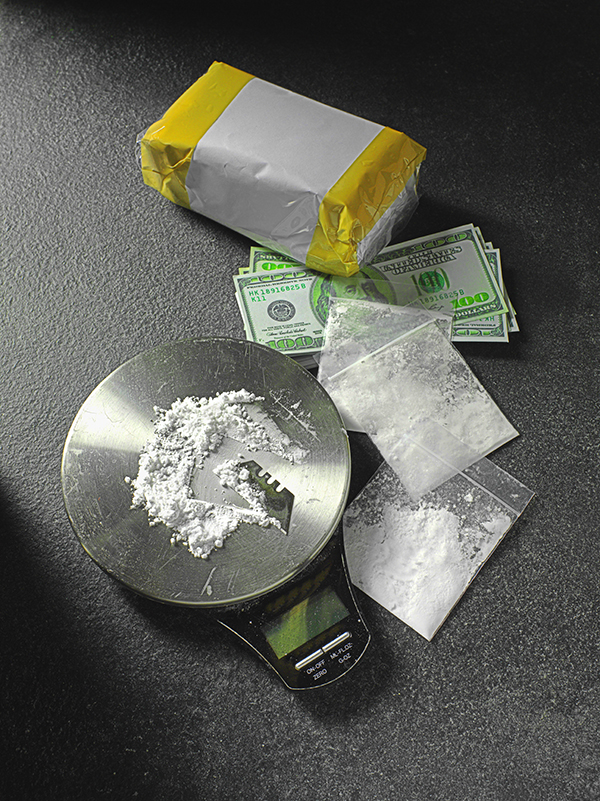
Some immigration hawks (and even a few on the left and in the media) have criticized President Trump for not fulfilling his “mass deportation” promises. But if you want to know why it’s so hard for DHS to remove even the most plainly removable of aliens, take a look at the recent opinion from the Board of Immigration Appeals (BIA) in Matter of Carol Y. Ozuna Mendoza — and try to follow the various claims the respondent made in explaining why, when she was stopped by CBP at a Nogales (Ariz.) U.S. port of entry, she had $8,000 in cash on her and 200 pounds of methamphetamine hidden in her car.
Carol Y. Ozuna Mendoza’s Port Stop
The respondent, Ozuna Mendoza, is a Mexican national and a U.S. lawful permanent resident (“LPR”, i.e., a “green card holder”).
In the wee hours of the morning of Sunday, June 22, 2025, she was driving back from Mexico with her three children in her car when she sought entry to the United States at CBP’s Nogales port of entry.
As per the BIA’s opinion, she “attempted to pass through vehicle inspection on the heels of the vehicle preceding her but was directed to stop and back up her vehicle”.
A CBP report on what happened next, which was entered into the immigration judge’s (IJ’s) court record without objection, states that she “looked like she was upset” after the CBP officer gave her this command, but she told the officer that she had nothing to declare and they she was returning home.
Not surprisingly given that set up, CBP scanned her vehicle for inspection, and that scan revealed what were termed as “anomalies in all four doors, and both rear quarter panels”. A canine was called, and the dog then “alerted to the presence of narcotics”.
You can usually rely on “our boys in fur”, as my criminal procedure professor used to call them, and once CBP started looking around the vehicle they located “208.35 pounds of methamphetamines bundled in 193 separate packages”.
“Conspicuously,” the BIA explained, “these 193 bundles of methamphetamines were packaged with ‘tape that was silver in color with red lettering. The tape was used to adhere the packages to the body of the vehicle in what appeared to be some attempt to avoid detection with a buster for density readings/measurements.’”
Technically, “Buster” is a brand name that has become generic (a “proprietary eponym”), like “Super Glue” and “Band-Aid”, and the Campbell/Harris Security Equipment Company (CSECO), which makes the device explains that in the unlikely event “you are looking for the best density meter for your contraband detection needs, you may as well want to see the reasons why the Buster is the device that delivers”.
Photos of the drug packages “secreted in panels throughout the respondent’s vehicle” were entered into evidence without objection in Ozuna Mendoza’s removal proceedings, as was the fact that when the respondent was stopped she had “$7,886 in United States currency and 8,740 Mexican pesos [worth about $467 at the time], which she stated was for work purposes” in her possession.
The Charges
That’s too much for personal use, so DHS charged Ozuna Mendoza with inadmissibility under section 212(a)(2)(C)(i) of the Immigration and Nationality Act (INA) as an alien who:
is or has been an illicit trafficker in any controlled substance or in any listed chemical (as defined in section 802 of title 21), or is or has been a knowing aider, abettor, assister, conspirator, or colluder with others in the illicit trafficking in any such controlled or listed substance or chemical, or endeavored to do so.
The referenced provision, 21 U.S.C. § 802, defines “controlled substance” as “a drug or other substance, or immediate precursor, included in schedule I, II, III, IV, or V” in 21 U.S.C. § 812, and pursuant to that provision, a “substance (except an injectable liquid) which contains any quantity of methamphetamine, including its salts, isomers, and salts of isomer” is a Schedule III controlled substance.
The Testimony
During testimony in the matter on July 28, 2025, the IJ asked the respondent if she had “applied for admission as a returning” LPR in Nogales, to which Ozuna Mendoza replied: “I was already a permanent resident, my only mistake was to lend my car to a friend.”
When the IJ asked her whether she had brought a controlled substance into this country, the respondent answered, “I didn’t bring it in consciously, what my attorney said was that I was a blind mule.”
Seemingly frustrated, the IJ then tried asking Ozuna Mendoza whether she had brought “drugs, methamphetamine, into the United States, yes or no,” to which she replied: “So, yes, but not consciously. I would never put my children at risk. I live here legally seven years working, selling tamales, walking to work. I have always behaved well.”
When court reconvened on September 8, 2025, Ozuna Mendoza answered additional questions about what the BIA referred to as her “trafficking narcotics into the United States and her activities in Mexico” and she stated that she had been stopped with drugs in her car on June 22.
Her subsequent testimony is almost too convoluted to repeat, so here’s how the Board summarized it:
She stated that she had gone to Mexico at around 11:30 a.m. on June 21 for an appointment with her cosmetologist for a lymphatic drainage. She stated that during her appointment she let a friend borrow her vehicle to buy groceries. She stated that she was dropped off for her appointment at around 12:00 p.m., and her friend returned to pick her up at around 4:30 p.m. because the respondent had to retrieve her children at 5:00 p.m. and had parties to attend. The respondent stated that her friend had groceries, but not too many. The respondent stated that her friend told her that the friend had completed her errands, would see the respondent on Monday, and made plans to borrow the respondent’s vehicle yet again.
Ozuna Mendoza has known the friend in question for approximately 17 to 18 years and claimed that this friend “had problems with partners who trafficked in narcotics” though she “disclaimed knowing further details of this narcotics trafficking”.
“Tellingly”, the BIA explained, “the respondent did not ask her friend about her recent partner because the respondent did not like the partner”, but in any event Ozuna Mendoza had the car in her possession from that point until she arrived at the Nogales port of entry.
The problem was that when she was stopped by CBP, the respondent claimed that “she had her vehicle detailed in Mexico and omitted mentioning her friend’s use of the vehicle allegedly to acquire groceries”.
When confronted with this apparent inconsistency, Ozuna Mendoza “explained that she was asked if she had at any time let her vehicle go, and she told the officer yes, the day she was at the salon she had it detailed for 8 hours, which was Wednesday not Saturday” and that “she had since reentered the United States”.
The “Wednesday” in question was ostensibly June 18, though that still doesn’t explain why she never mentioned the friend and her groceries when talking to CBP.
There’s also the fact that she had told CBP the vehicle was “hers and registered to her ... and that she had gone to Mexico and left her vehicle with a friend to have it detailed”, which she had paid for, and that “her friend was supposed to borrow her vehicle in the morning to run errands”.
Then there’s the roughly $8,000 Ozuna Mendoza had in her possession when she was stopped in Nogales.
According to the BIA:
She first stated that she had this amount for work purposes but then submitted a receipt for the sale of a truck by her partner to explain the amount. Yet, the letter from her partner does not discuss any such sale. Moreover, the receipt denotes payment in the amount of $8,000 to her partner on June 22, 2025, in Mexico. The respondent sought admission into the United States on June 22, 2025, between 2:00 a.m. and 3:00 a.m. Thus, the receipt appears to post-date when the respondent was in Mexico.
Perhaps there’s a reason Mark Twain once quipped, “If you tell the truth, you don't have to remember anything.”
“The Immigration Judge Determined that the Respondent Testified Credibly”
Notwithstanding all of the foregoing, “The Immigration Judge determined that the respondent testified credibly” according to the Board’s recitation of the facts, and he consequently terminated the case having found that DHS failed to bear its burden.
Normally, under section 235(a)(1) of the INA, aliens arriving at U.S. ports are seeking “admission” as that term is defined in section 101(a)(13)(A) of the act, that is “lawful entry ... into the United States after inspection and authorization by an immigration officer”.
Subparagraph (C) of section 101(a)(13) of the INA, however, states that LPRs “shall not be regarded as seeking an admission into the United States for purposes of the immigration laws unless” one of six exceptions applies at the time of their return.
One of those exceptions, in clause 101(a)(13)(C)(iii) of the act, applies where the green card holder “has engaged in illegal activity after having departed the United States”, and under DHS’s (reasonable) theory of the case, that was what had happened here.
Keep in mind that no conviction or even an admission is required to trigger this exception or the ground of admissibility; simply engaging “in illegal activity” of any sort will suffice to prove the alien is seeking admission, and facts suggesting drug trafficking shift the burden to the alien to prove she wasn’t.
Curiously, while the rules governing the parties’ respective burdens of proof in removal proceedings in section 240(c) of the INA state that alien applicants for admission must establish they are “clearly and beyond doubt entitled to be admitted and [are] not inadmissible under” section 212 of the INA, and that DHS must prove by “by clear and convincing evidence” that an alien “who has been admitted to the United States” is deportable, both that provision and section 101(a)(13)(C) of the act are silent on who bears the burden of showing that a returning LPR is “seeking admission”.
Fortunately, the BIA in its 2011 opinion in Matter of Rivens resolved this issue, holding DHS “has the burden of proving by clear and convincing evidence that one of the six exceptions to the general rule for lawful permanent residents set forth at section 101(a)(13)(C) of the Immigration and Nationality Act” applies, and it was that burden the IJ concluded the government had not borne in this case.
The BIA’s Take
Let’s just say that the Board was nowhere near as credulous as the IJ was, finding the immigration court’s conclusion that Ozuna Mendoza was credible was “clearly erroneous” and describing her responses to the court as “vague, evasive, and nonresponsive”.
“Her response about being a mother was nonresponsive to the question of whether she knowingly participated in drug trafficking”, the BIA concluded, and her in-court testimony about what she did while she was in Mexico was inconsistent with prior statements she had made:
vacillating between loaning her vehicle to a friend for errands while she was at the cosmetologist and dropping off her vehicle for 8 hours to have it detailed, or alternatively loaning her vehicle to a friend for personal use and to get a car wash for 6 hours, while getting her hair done at the salon — all in time to pick her children up and attend a party in Mexico.
Of course, there’s also the respondent’s varying accounts of how she came into possession of the $8,000, and the fact that she “offered no plausible explanation for the presence of over 200 pounds of illegal drugs in 193 separate packages secreted throughout compartments in her vehicle”, to say nothing of her statement “that her attorney told her that she was a ‘blind mule’”. (Emphasis in the original.)
The BIA has repeatedly reaffirmed the hoary maxim first stated by the Supreme Court that “statements or assertions by counsel” in immigration cases “are not evidence”, but this may be the first time in my recollection that hearsay statements of counsel were ever offered by an alien facing removal, and given the Board’s response to it here, I’d advise alien respondents to avoid offering it in the future.
The Decision
“In view of the foregoing”, the Board concluded, “clear and convincing evidence establishe[d] that the respondent ‘has engaged in illegal activity after having departed the United States’” and thus was seeking “admission” under section 101(a)(13)(C) of the INA, and that same evidence proved she was removable as charged. Consequently, the Board vacated the IJ’s decision.
But that’s not the end of the case. Because the immigration court found Ozuna Mendoza was credible, and that DHS thus failed to show she was removable, the BIA had no choice but to remand the matter back to the IJ to determine whether she was eligible for any “relief” that would permit her to stay.
She still is an LPR, and by law will keep her green card unless and until a final removal order is issued in her case.
Keep in mind that even the IJ concluded this respondent “did not answer his questions”, which should have been a big red flag if not the basis for an incredibility finding, but he found her credible anyway. While I am normally reflexively supportive of my former colleagues on the immigration bench, the decision below in this case has me at a loss.
If anyone asks why Donald Trump is struggling to fulfill his mass deportation promises, point them to this opinion and tell them about the “blind mule” stopped at a Nogales, Ariz., U.S. port of entry with $8K in cash and 200 pounds of meth — neither of which she could explain — and the overly trusting IJ.