
Related: On Asylum, the Legislature Needs to Legislate
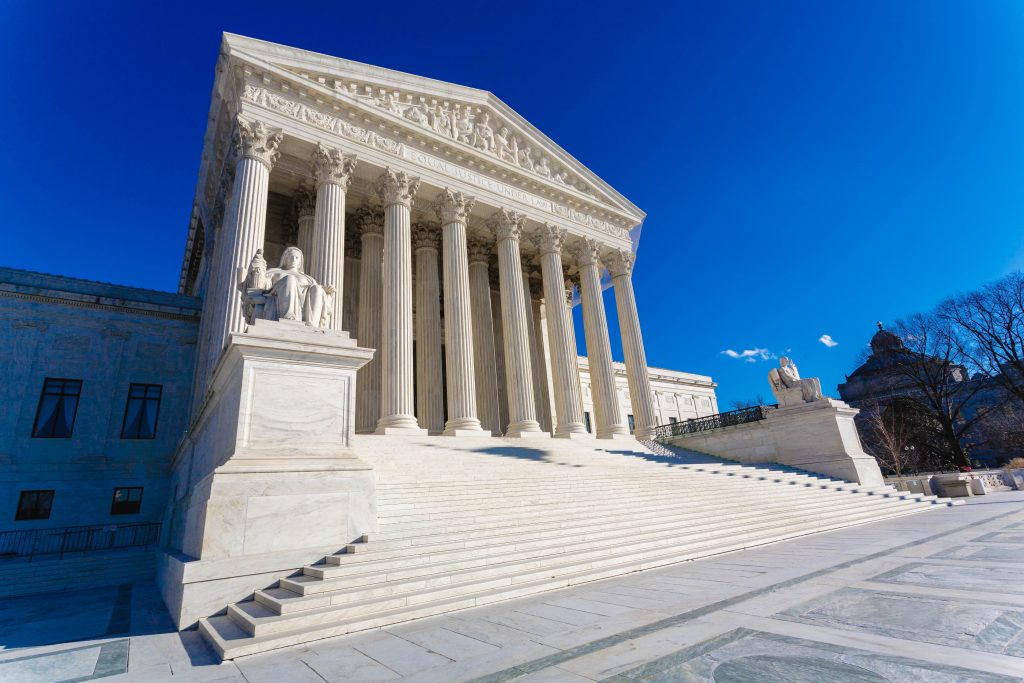
This paper considers whether the president has inherent constitutional power to expel aliens, in light of the Immigration and Nationality Act's explicit removal processes, a series of Supreme Court decisions concluding that Congress reigns supreme with regards to immigration policy, and the Supreme Court's statement in 1950 that the right to exclude aliens "stems not alone from legislative power, but is inherent in the executive power to control the foreign affairs of the nation."
Summary
- President Trump issued a proclamation declaring that “aliens engaged in the invasion across the southern border … are restricted from invoking provisions” of federal law “that would permit their continued presence [here], including” seeking asylum and withholding of removal.
- On April 24, the D.C. Circuit Court of Appeals ruled that “The Proclamation and [implementing] Guidance are … unlawful to the extent that they circumvent [federal law’s] removal procedures and cast aside … [aliens’ statutory] right to apply and be considered for asylum.” I believe that the D.C. Circuit came to the correct legal conclusion.
- Judge Justin Walker, nominated by President Trump, agreed that the proclamation and guidance were “unlawful to the extent they suspend the statutory withholding-of-removal protections that Congress has mandated”, but contended that “the President has an inherent” constitutional “authority to expel aliens”. He argued that because “[t]he President has inherent power to exclude aliens” and “[t]he power to exclude = the power to expel”, that it follows that “The President has inherent power to expel aliens.”
Judge Walker “grounded” his first premise in the Supreme Court’s 1950 decision in United States ex rel. Knauff v. Shaughnessy, which concluded that “The exclusion of aliens is a fundamental act of sovereignty. The right to do so stems not alone from legislative power, but is inherent in the executive power to control the foreign affairs of the nation.” But the Supreme Court has, as one legal commentator has found, “never explicitly returned to the idea of inherent presidential power over immigration”, while the Court has for many years recognized Congress’s inherent power.
A series of Supreme Court decisions dating back to the 19th century demonstrates that, among the political branches, Congress reigns supreme with regard to immigration policy. In 1954, the Court concluded in Galvan v. Press “that the formulation of … policies [pertaining to the entry of aliens and their right to remain here] is entrusted exclusively to Congress has become about as firmly imbedded in the legislative and judicial tissues of our body politic as any aspect of our government”. Knauff seems to have been an evolutionary dead-end. Thus, Judge Walker’s first premise stands on a very weak foundation.
Judge Walker’s second premise is “grounded” in the Supreme Court’s 1893 decision in Fong Yue Ting, which concluded that the “power to exclude aliens, and … power to expel them, rest upon one foundation, are derived from one source, are supported by the same reasons, and are in truth but parts of one and the same power.”
The Supreme Court seemingly based its conclusion on the fact that both are powers “affect[ing] international relations”. But the Court has since based the political branches’ constitutional power over immigration largely on other factors. If the unity of exclusion and expulsion is now in doubt, so is Judge Walker’s second premise.
- Of course, the validity of Judge Walker’s conclusion rests on the strength of his two premises.
Even assuming that a president does have some measure of inherent constitutional power over immigration, it would be subordinate to that of the legislative branch. In 2015, the Supreme Court ruled in Zivotofsky v. Kerry that the executive branch cannot violate a duly-enacted and constitutional federal immigration statute — writing that “whether the realm is foreign or domestic, it is still the Legislative Branch, not the Executive Branch, that makes the law”. Judge Walker himself concluded that Congress can limit a president’s inherent expulsion authority and that a president must follow statutorily required removal procedures.
Zivotofsky did find a statute unconstitutional that controlled the country of birth to be recorded on registrations of birth and passport of U.S. citizens born in Jerusalem, but the Court emphasized that “[t]his case is confined solely to the exclusive power of the President to control recognition determinations” and “does not question the substantial powers of Congress over foreign affairs”.
Justices Roberts, Scalia, and Alito vigorously dissented, not to defend a president’s “exclusive power” over foreign affairs, but rather to warn that “the Court takes the perilous step — for the first time in our history — of allowing the President to defy an Act of Congress in the field of foreign affairs” (Roberts, Alito), and that “the Court’s analysis threatens congressional power over foreign affairs with gradual erosion”. (Scalia, Roberts, Alito)
Introduction
On January 20, 2025, the first day of his second term in office, President Trump issued Proclamation 10888, “Guaranteeing the States Protection Against Invasion”. The president declared that:
The President’s inherent powers to control the borders of the United States, including those deriving from his authority to control the foreign affairs of the United States, necessarily include the ability to prevent the physical entry of aliens involved in an invasion into the United States, and to rapidly repatriate them to an alternative location. [Emphasis added.]
Thus:
The Secretary of Homeland Security, in coordination with the Secretary of State and the Attorney General, shall take all appropriate action to repel, repatriate, or remove any alien engaged in the invasion across the southern border of the United States … , whether as an exercise of the suspension power in section 212(f) and 215(a) of the [Immigration and Nationality Act] INA … or as an exercise of my delegated authority under the Constitution of the United States, until I issue a finding that the invasion at the southern border has ceased. [Emphasis added.]
But on April 24, the D.C. Circuit Court of Appeals in Refugee and Immigrant Center for Education and Legal Services v. Mullin (RICELS) ruled that “The Proclamation and [implementing] Guidance are … unlawful to the extent that they circumvent the INA’s removal procedures and cast aside federal laws affording individuals the right to apply and be considered for asylum or withholding of removal protections.”
As I have written, I believe that the D.C. Circuit came to the clearly correct legal conclusion — the INA “includes no … provision empowering the President to suspend [its] expressly mandatory and exclusive procedures for removing [aliens] already present in the United States”, the INA “does not allow the President to remove [aliens] under summary removal procedures of his own making”, “[n]or does [the INA] allow the Executive to suspend [aliens’ statutory] right to apply for asylum, deny [their statutory] access to withholding of removal under the INA, or curtail mandatory procedures for adjudicating [their] Convention Against Torture claims”.
Even Judge Justin Walker, nominated by President Trump both for his district court and appellate judgeships, agreed that the proclamation and guidance violate the INA (overall, he concurred in part with and dissented in part from the decision). While stating that “I need not resolve — and do not purport to resolve — the question of the President’s statutory expulsion authority[, p]erhaps he has that authority; perhaps he doesn’t”, he concluded that the proclamation and guidance are “unlawful to the extent they suspend the statutory withholding-of-removal protections that Congress has mandated” since “[t]he Executive cannot remove aliens to countries where they will be persecuted, and the Proclamation and Guidance cannot strip them of mandatory [statutory and regulatory] procedures that protect against that removal”. As to the president’s purported expulsion authority under §§ 212(f) and 215(a), Judge Walker expressed doubt, noting that “Ever since the first federal immigration restrictions”, “a ban on entry was understood to authorize exclusion but not expulsion” and “statutes distinguished between the power to deny entry (i.e., exclude) and the power to remove those who had already entered (i.e., expel).”
Apart from the debate over interpretation of the INA, Judge Walker plunged head-first into another debate alluded to by the proclamation. That is the debate as to whether the president has inherent authority under the U.S. Constitution to expel aliens, without the need for congressional authorization and potentially even in a manner prohibited by Congress. Walker concluded that “the President has an inherent, generalized authority to expel aliens”, which he considered a necessary precondition to his contention that the INA denied federal courts jurisdiction to even hear the case at hand. The majority, left in a state of confusion, stated that “It is unclear to us how this theory [of inherent authority] supports the dissent’s view that the district court’s injunction runs afoul of [the INA’s] bar on enjoining the operation of provisions in Part IV of the INA.”
Judge Walker set forth a syllogism regarding the president/the executive branch possessing inherent expulsion authority:
P[remise] 1: The President has inherent power to exclude aliens.
P[remise] 2: The power to exclude = the power to expel.
∴ The President has inherent power to expel aliens.
Does a President Have Inherent Power to Exclude Aliens?
Judge Walker’s Premise No. 1 is that a president has the inherent power to exclude aliens. Walker contended that the premise “is grounded in a holding of the Supreme Court in [its 1950 decision in] United States ex rel. Knauff v. Shaughnessy”. In Knauff, the Court concluded that:
The exclusion of aliens is a fundamental act of sovereignty. The right to do so stems not alone from legislative power, but is inherent in the executive power to control the foreign affairs of the nation. [Citing the Supreme Court’s 1936 decision in United States v. Curtiss-Wright Export Corp. and its 1893 decision in Fong Yue Ting v. United States.] When Congress prescribes a procedure concerning the admissibility of aliens, it is not dealing alone with a legislative power. It is implementing an inherent executive power. [Emphasis added.]
The Supreme Court in Knauff never made a claim regarding the executive branch’s inherent power under the Constitution to expel aliens already in the United States. It addressed only the excludability and admissibility of aliens yet to enter. Thus, we cannot presume that the Knauff Court would have reached the same conclusion regarding the power of expulsion. But, in any event, what should we make of Knauff’s claim regarding exclusion?
Knauff, Curtiss-Wright and the Foreign Affairs Power
Judge Walker admitted that “[w]e do not know which sovereign powers belong to which branch” of the federal government, but contended that “as Curtiss-Wright suggests, when neither text nor history suggests otherwise, sovereign powers over foreign affairs rest, by default, with the President. And no text or history overrides that default rule as to the expulsion power.”
The Supreme Court evaluated Curtiss-Wright in its 2015 decision in Zivotofsky v. Kerry, explaining that:
In Curtiss-Wright, [we] considered whether a congressional delegation of power to the President was constitutional. Congress had passed a joint resolution giving the President the discretion to prohibit arms sales to certain militant powers in South America. … [We] held that the delegation was constitutional, reasoning that Congress may grant the President substantial authority and discretion in the field of foreign affairs.
The Zivotofsky Court quoted Curtiss-Wright as “[d]escribing why such broad delegation may be appropriate”:
In this vast external realm, with its important, complicated, delicate and manifold problems, the President alone has the power to speak or listen as a representative of the nation. He makes treaties with the advice and consent of the Senate; but he alone negotiates. Into the field of negotiation the Senate cannot intrude; and Congress itself is powerless to invade it. As [then Congressman John] Marshall said in his great argument of March 7, 1800, in the House of Representatives, “The President is the sole organ of the nation in its external relations, and its sole representative with foreign nations.”
The Supreme Court in Curtiss-Wright also concluded, in language not quoted by Zivotofsky, that:
[W]e are here dealing not alone with an authority vested in the President by an exertion of legislative power, but with such an authority plus the very delicate, plenary and exclusive power of the President as the sole organ of the federal government in the field of international relations — a power which does not require as a basis for its exercise an act of Congress.
The Zivotofsky Court emphasized that Curtiss-Wright’s “description of the President’s exclusive power” over foreign affairs was merely dicta, “not necessary to the holding of Curtiss-Wright — which, after all, dealt with congressionally authorized action, not a unilateral Presidential determination”.
Chief Justice John Roberts agreed in his dissent (joined by Justice Samuel Alito) that “Curtiss-Wright did not involve a claim that the Executive could contravene a statute; it held only that he could act pursuant to a legislative delegation.” He added that “The expansive language in Curtiss-Wright casting the President as the ‘sole organ’ of the Nation in foreign affairs certainly has attraction for members of the Executive Branch. … But our precedents have never accepted such a sweeping understanding of executive power.”
Knauff’s Place in Supreme Court Precedent
The Supreme Court’s language in Knauff is dramatically at odds with that of multiple other decisions of the Court both preceding and following. As Professor Adam Cox at the New York University School of Law has explained, “the Court has never explicitly returned to the idea of inherent presidential power over immigration”.
What about the other side of the coin? Has the Supreme Court concluded that the legislative branch has inherent power over immigration? Further, has it concluded that the legislative branch reigns supreme over immigration?
Cox and Professor Cristina Rodriguez at Yale Law School see confusion as to these questions. Cox has written that:
Plenary power doctrine … focuses on the distribution of authority between the judiciary and the political branches of the federal government. For all this attention to the constitutional distribution of authority between courts and the political branches, however, immigration courts and commentators have consistently overlooked a second separation of powers issue: the difficult question of how immigration power is distributed within the political branches, between Congress and the executive generally, or more specifically between Congress and administrative agencies. [Emphasis in original.]
Cox has fretted that “Constitutional immigration law provides little guidance about the distribution of immigration authority between Congress and the executive.” He has written that “The Supreme Court has sometimes suggested that immigration power is distributed within the political branches in the same fashion as most other lawmaking powers.” But he then contended that “[I]t is far from clear that immigration is like other areas. In most other areas, Article I gives Congress clear supremacy with respect to lawmaking. [“All legislative Powers herein granted shall be vested in a Congress of the United States”, Art. I, § 1.] Immigration law, however, is nothing like this; the constitutional source of power to make immigration law has always been contested and uncertain.”
Cox has concluded that “Confusion about the source of immigration power creates substantial uncertainty about the distribution of that authority between Congress and the executive.” Cox and Rodríguez have contended that the Supreme “Court’s reliance on multiple, inconsistent conceptions of the distribution of immigration authority over the years means that the jurisprudential history of immigration law ultimately provides little guidance, much less definitive answers, regarding the political branches’ relative authority in immigration decision-making.”
Yet, despite Cox’s and Rodríguez’s belief, the Supreme Court seems to have indeed declared a winner. A series of Court decisions dating back to the 19th century demonstrates that, among the political branches, Congress reigns supreme with regard to exclusion, expulsion, and immigration policy as a whole.
In its 1909 decision in Oceanic Navigation Co. v. Stranahan, the Court concluded that “over no conceivable subject is the legislative power of Congress more complete than it is over that with which the act we are now considering [the Act of March 3, 1903, ‘An Act to Regulate the Immigration of Aliens into the United States’] deals”, and that Congress has “absolute power … over the right to bring aliens into the United States” and “complete and absolute power … over the subject with which the statute deals”.
In its 1924 decision in Mahler v. Eby, the Court concluded that “The sovereign power to expel aliens is political, and is vested in the political departments of the government. … [T]he executive may not exercise it without congressional authority.” (Emphasis added.)
And the Court famously concluded in its 1954 decision in Galvan v. Press (a deportation case), that:
Policies pertaining to the entry of aliens and their right to remain here are peculiarly concerned with the political conduct of government. In the enforcement of these policies, the Executive Branch of the Government must respect the procedural safeguards of due process. … But that the formulation of these policies is entrusted exclusively to Congress has become about as firmly imbedded in the legislative and judicial tissues of our body politic as any aspect of our government. [Emphasis added.]
In its 1967 decision in Boutilier v. Immigration and Naturalization Service, the Court observed that “It has long been held that the Congress has plenary power to make rules for the admission of aliens and to exclude those who possess those characteristics which Congress has forbidden.”
Cox and Rodriguez have written that “Many more recent cases, such as Kleindienst v. Mandel … have reiterated [Galvan’s] language.” In 1972, after quoting from Galvan, the Kleindienst Court concluded that “We are not inclined in the present context to reconsider this line of cases.”
Cox and Rodriguez have posited that “[Galvan’s language] could be read as simply limiting judicial review and recognizing political branch primacy generally. But the reference to ‘Congress’ rather the political branches as a unit could also be read as recognizing congressional primacy.” “Could” be read as recognizing congressional primacy? Galvan phrased it as “entrusted exclusively to Congress”! (Emphasis added.) With all due respect to Cox and Rodriguez, Galvan recognized congressional primacy.
Given the Court’s decisions subsequent to Knauff, culminating in Galvan, it may well be that Knauff became an evolutionary dead-end. Thus, Judge Walker’s Premise No. 1 — that a president has inherent constitutional power over the exclusion of aliens — stands on a very weak foundation.
Cox and Rodriguez have concluded that:
Knauff … is in tension with conventional understandings of the separation of powers. The Court linked the power to the capacious and unique conception of executive power defended in United States v. Curtiss-Wright. … [S]een in this light, the Court’s statement in Knauff regarding inherent executive immigration authority appears related to the complexities of the scope and source of the foreign affairs power. The Court’s statement thus could be dismissed as an oddity, simply the product of a historically contingent conception of foreign affairs.
Knauff and the Delegation of Legislative Authority
Further, Knauff’s language regarding inherent executive power over exclusion can easily be read as simply providing a basis for Congress’s delegation of Congress’s inherent immigration powers to the executive branch. A long line of Supreme Court cases has affirmed Congress’s ability to delegate immigration decision-making to the executive branch. Why would Congress want to do so? As the Court explained in Mahler, “Congress cannot exercise [the power to expel aliens] effectively save through the executive. It cannot, in the nature of things, designate all the persons to be excluded. It must accomplish its purpose by classification and by conferring power of selection within classes upon an executive agency.”
The Supreme Court concluded in its 1896 decision in Wong Wing v. United States that:
[W]e regard it as settled by our previous decisions that the United States can … by congressional enactment, forbid aliens or classes of aliens from coming within their borders and expel aliens or classes of aliens from their territory, and can, in order to make effectual such decree[s] … devolve the power and duty of identifying and arresting the persons included in such decree, and causing their deportation, upon executive or subordinate officials. [Emphasis added.]
And in Fong Yue Ting, the Court wrote that:
- It is no new thing for the lawmaking power, acting either through treaties made by the President and Senate or by the more common method of acts of Congress, to submit the decision of questions, not necessarily of judicial cognizance, either to the final determination of executive officers or to the decision of such officers in the first instance. [Emphasis added throughout.]
- Congress, under the power to exclude or expel aliens, might have directed any Chinese laborer found in the United States without a certificate of residence to be removed out of the country by executive officers, without judicial trial or examination, just as it might have authorized such officers absolutely to prevent his entrance into the country. But Congress has not undertaken to do this.
In Knauff itself, the Court stated that:
Normally, Congress supplies the conditions of the privilege of entry into the [U.S.]. But, because the power of exclusion of aliens is also inherent in the executive department of the sovereign, Congress may in broad terms authorize the executive to exercise the power … for the best interests of the country during a time of national emergency. Executive officers may be entrusted with the duty of specifying the procedures for carrying out the congressional intent. [Emphasis added.]
Notice what the Court did not say. It did not say that the executive branch’s power of exclusion could be exercised without congressional authorization. It did not say that the executive branch’s power could be exercised outside of “carrying out the congressional intent”. Very possibly, the Knauff Court’s description of inherent power was only meant as a mechanism to allow the executive branch to carry out congressional delegation. On the other hand, the Court never said that the executive branch’s inherent power was actually so limited.
Cox has written that Knauff’s “reasoning, it seems, was that Congress cannot run afoul of the nondelegation doctrine if the Executive has inherent constitutional power to exclude noncitizens even absent any delegation of authority from Congress”.
Deputy Assistant Attorney General Drew Ensign even hinted that the Trump administration might be falling back on the executive branch’s inherent power as simply a means for Congress to delegate Congress’s inherent power. When Judge Julianna Childs asked him at oral argument in RICELS “If we were not to agree with you [regarding the statutory basis for the proclamation and guidance], are you still going under Article II as an independent basis for the President’s authority under the Proclamation?”1 Ensign replied that, “I think Article II is more important … in terms of construing the scope of the grant of Congress's authority, as well as it underscores … the discretionary nature of asylum and is, again, supported by the fact that ultimately these decisions are the sort that fall within the context of the President’s inherent Article II powers.”2 (Emphasis added.)
Does the Power to Exclude = the Power to Expel?
Judge Walker’s Premise No. 2 is that the power to exclude equals the power to expel. He contended that this premise “is grounded in Fong You Ting”, quoting the Court’s holding that Congress’s “power to exclude aliens, and … power to expel them, rest upon one foundation, are derived from one source, are supported by the same reasons, and are in truth but parts of one and the same power” (emphasis added by Judge Walker). He then concluded that “[t]he logic of Fong Yue Ting” that “the powers” of exclusion and expulsion “are indivisible” leads to the conclusion that “Congress has power to expel aliens.”
Well, Congress certainly has the inherent power to expel aliens, as Galvan, Mahler, and other cases have made clear. But does the existence of this power hinge on exclusion and expulsion being “indivisible”?
The Supreme Court in Fong Yue Ting seemingly based its conclusion that the exclusion and expulsion powers “rest upon one foundation, are derived from one source, are supported by the same reasons, and are in truth but parts of one and the same power” on the fact that both are powers “affecting international relations”. But over time the Court has not based the political branches’ immigration power only, or even primarily, on the foreign affairs power. Cox has written that:
[T]he constitutional source of power to make immigration law has always been contested and uncertain. While Article I [§ 8, cl. 4] confers on Congress power to establish a “uniform rule of naturalization,” the Supreme Court has not read this provision as the sole source of federal authority over immigration. Instead, the Court has for over a century made conflicting and ambiguous pronouncements about the source of federal immigration authority.
Cox then explained that:
Sometimes the Court has stated that the immigration power derives from an extraconstitutional source — from principles of international law, or from the foundational attributes of sovereignty. On other occasions the Court has indicated that the immigration power is part and parcel of the foreign relations power. And, to round things out, the Court has from time to time suggested that the immigration power is entailed by the combination of a number of enumerated powers [“includ[ing] the Treatymaking Clause, the War Powers Clauses, the Foreign Commerce Clause, the Republican Government Clause, and the Naturalization Clause”].
If the Court’s conclusion in Fong Yue Ting as to the indivisibility of exclusion and expulsion was dependent on the fact that both “affect[ed] international relations”, but the Court has since based the political branches’ constitutional power over immigration, including exclusion and expulsion, largely on other factors, then the unity of the two can no longer be presumed. And if their unity is in doubt, so is Judge Walker’s second premise.
Does a President Have the Inherent Power to Expel Aliens?
What about the conclusion of Judge Walker’s syllogism, that a president has the inherent power to expel aliens? Of course, its validity rests on the strength of its two premises, which don’t necessarily seem up to the task.
In President Trump’s first term, the administration argued in federal court that “[t]he President has broad constitutional power to exclude aliens”, citing Knauff. In, RICELS, the Trump administration has expanded Knauff’s scope to encompass expulsions. At the oral argument before the D.C. Circuit, Deputy Assistant Attorney General Ensign quoted from Knauff in contending that “[T]he President … has inherent Article II authority in order to expel aliens. It’s a fundamental aspect of sovereignty.”3
Have Federal Courts Concluded that a President Has the Inherent Power to Expel Aliens?
Let’s look at Judge Walker’s supplementary arguments. He wrote that “Since Fong Yue Ting, many Supreme Court cases have followed suit in recognizing inherent executive expulsion authority.” I was not aware of these many cases, so I took a look at the supporting citations provided by Judge Walker.
The first was the Supreme Court’s 1977 decision in Fiallo v. Bell, in which Walker wrote that the Court concluded that the “‘power to expel or exclude aliens’ is ‘a fundamental sovereign attribute exercised by the Government’s political departments’”. (Fiallo in turn quoted the Court’s 1953 decision in Shaughnessy v. Mezei.)
Next, Judge Walker cited the Supreme Court’s 1976 decision in Hampton v. Mow Sun Wong, in which he quoted the Court (in turn quoting Fong Yue Ting) as stating that “The power to exclude or to expel aliens, being a power affecting international relations, is vested in the political departments of the government.” I should note that the Court in Hampton hardly endorsed Fong Yue Ting’s conclusion that “The power to exclude or to expel aliens[ is] a power affecting international relations.” Rather, it quoted Fong Yue Ting merely to make the point that “the power over aliens is of a political character, and therefore subject only to narrow judicial review”.
Then Judge Walker cited the Supreme Court’s 1952 decision in Harisiades v. Shaughnessy, writing that the Court concluded that “‘any policy toward aliens’ — including one involving ‘deportation’ or ‘expulsion’ — ‘is vitally and intricately interwoven with contemporaneous policies in regard to the conduct of foreign relations, the war power, and the maintenance of a republican form of government”, matters which are “exclusively entrusted to the political branches of government’”.
In addition to the cases cited by Judge Walker, let me offer up two more. The Supreme Court concluded in Mahler that “The sovereign power to expel aliens is political, and is vested in the political departments of the government,” and in Mezei that “Courts have long recognized the power to expel or exclude aliens as a fundamental sovereign attribute exercised by the Government's political departments largely immune from judicial control.”
Do you notice a pattern here? None of these Supreme Court cases mention the president or the executive branch — each mentions the political branches of government. Now the executive branch is, of course, one of the two political branches of the government, along with the legislative branch. Judge Walker apparently assumed that any reference by the Supreme Court to the political branches necessarily encompassed both political branches. But as George Gershwin once wrote, it ain’t necessarily so. The Court could have meant the executive branch. It could have meant the legislative branch. It could even have meant both the executive branch and the legislative branch. But Judge Walker cannot just assume that the Court meant the executive branch alone or in conjunction with the legislative branch.
In fact, the Supreme Court in Fong Yue Ting itself seems to have been referring to the legislative branch! After the Court stated that “The power to exclude or to expel aliens, being a power affecting international relations, is vested in the political departments of the Government,” it concluded that this power “is to be regulated by treaty or by act of Congress, and to be executed by the executive authority”. The power is regulated by “treaty [requiring a two-thirds vote in the U.S. Senate (Art. II, § 2, cl. 2)] or by act of Congress”, that is, it is regulated by the legislative branch. “[T]he executive authority” simply “execute[s]” the power according to the terms by which the power has been “regulated” by Congress. Of course, the president “shall take Care that the Laws be faithfully executed” (Art. II, § 3).
As to the expulsion power specifically, the Court in Fong Yue Ting ruled that “Congress, ha[s] the right, as it may see fit, to expel aliens of a particular class or to permit them to remain”. (Emphasis added.) The Court further wrote that:
Chinese laborers … like all other aliens residing in the United States … are entitled, so long as they are permitted by the Government … to remain in the country. … But they … remain subject to the power of Congress to expel them or to order them to be removed and deported from the country whenever, in its judgment, their removal is necessary or expedient for the public interest. [Emphasis added.]
Nowhere did the Court even hint that the executive branch has to inherent power to expel or exclude.
Does Power over Foreign Affairs Rest by Default with the President?
Judge Walker’s next argument was that “‘English law undoubtedly informed’ the Founders’ ‘understanding of the government they were forging[]’” and that “the Founders knew that in England, foreign affairs powers traditionally belonged to the Executive”. He pointed out that “Before [the United States’] Founding, the King appears to have exercised ‘the power to expel aliens ... without the consent of parliament[],’” quoting Fong Yue Ting. However, the Court in that case never actually answered the question as to whether the king could do so (at least since Parliament started exercising the power in 1793). Rather, the Court simply asked “In England, the only question that has ever been made in regard to the power to expel aliens has been whether it could be exercised by the King without the consent of Parliament.”
Regardless of whether the king actually possessed the power, I’m not sure this was Judge Walker’s best argument. Remember that our Declaration of Independence proclaimed “The history of the present King of Great Britain is a history of repeated injuries and usurpations, all having in direct object the establishment of an absolute Tyranny over these States,” emphasizing injuries and usurpations such as King George III “call[ing] together legislative bodies at places unusual[ and] uncomfortable … for the sole purpose of fatiguing them into compliance with his measures”, “dissolv[ing] Representative Houses repeatedly, for opposing with manly firmness his invasions on the rights of the people”, and “ke[eping] among us, in times of peace, Standing Armies without the Consent of our legislatures”. Our founding fathers might have wanted to take a pass on ratifying the king’s powers here!
Don’t just accept my conclusion. Justice Antonin Scalia wrote in his dissent (joined by Chief Justice John Roberts, and Justice Samuel Alito) in Zivotofsky that:
Before this country declared independence, the law of England entrusted the King with the exclusive care of his kingdom’s foreign affairs. … The People of the United States had other ideas when they organized our Government. They considered a sound structure of balanced powers essential to the preservation of just government, and international relations formed no exception to that principle.
The People therefore adopted a Constitution that divides responsibility for the Nation’s foreign concerns between the legislative and executive departments.
Does the Foreign Affairs Power “Fall More Naturally Within the Domain of the President”?
Judge Walker also argued that “Many foreign affairs powers fall more naturally within the domain of the President, who has been granted the ‘executive Power [Art. II, § 1, cl. 1],’ rather than Congress which has been granted ‘legislative Powers [Art. I, § 1].’” He argued that “Due to Congress’s nature as a large, deliberative body, it does not have the tools to take the sort of ‘prompt and decided action’ needed to protect ‘the lives or property of’ our ‘citizen[s]’ against sudden threats. Only the President does.” (Quoting Durand v. Hollins, an 1860 Southern District of New York decision.) He argued that “in the[] domains” of foreign affairs and national security, “‘a unitary Executive’” has “‘structural advantages’” (quoting Justice Clarence Thomas’s dissent to the Supreme Court’s 2004 decision in Hamdi v. Rumsfeld), as “Success … depends on ‘[d]ecision, activity, secrecy, and dispatch,’ traits that ‘characterize the proceedings of one man in a much more eminent degree than the proceedings of any greater number.’” (Quoting Federalist Paper No. 70.) Judge Walker therefore concluded that “the default constitutional position is that the President has inherent power over foreign affairs”.
But keep in mind Justice Scalia’s (and Roberts’s and Alito’s) warning in Zivotofsky about such judicial functionalism:
Functionalism … will systematically favor the unitary President over the plural Congress in disputes involving foreign affairs. It is possible that this approach will make for more effective foreign policy, perhaps as effective as that of a monarchy. It is certain that, in the long run, it will erode the structure of separated powers that the People established for the protection of their liberty. [Emphasis in original.]
Would a President with Inherent Power over Immigration Have the Power to Violate Federal Immigration Law?
Of course, if Knauff’s language was to become the Court’s prevailing doctrine, it would, in Cox’s words, “have significant implications for the power of the President to set immigration policy”. That’s an understatement! Cox wrote further that:
At a minimum, it would dramatically change the posture of the countless lawsuits filed over the last decade challenging presidential immigration initiatives. The legal challenges to President Obama’s Deferred Action for Childhood Arrivals program [DACA], to President Trump’s travel ban, and to President Biden’s humanitarian-parole initiatives would all look profoundly different — and be much less likely to succeed — in a world where the Supreme Court once again concluded that the President has inherent constitutional authority to regulate immigration.
As to the implications of inherent presidential power over immigration, Cox and Rodriguez have contemplated that:
[I]t [is not] clear from Knauff whether the Court thought Congress could, by statute, limit the terms by which the President exercised his inherent authority, or whether the President could rely on his inherent authority to reject a congressional attempt to implement that authority. At a minimum, however, [Knauff] suggests that the President possesses some power to act in the immigration arena without congressional authorization, and perhaps even despite congressional action.
Republicans in the U.S. House of Representatives have been quite worried about presidents acting in the immigration arena contrary to the will of Congress, staunchly believing that the executive branch may not rewrite or violate federal immigration law.
After President Obama’s Department of Homeland Security (DHS) created a “deferred action” program for illegal aliens who arrived in the U.S. as minors (DACA) and attempted to create a similar program for illegal-alien parents with U.S. citizen or lawful permanent resident children (“Deferred Action for the Parents of Americans” (DAPA)), the House of Representatives on March 17, 2016, passed a resolution authorizing Speaker Paul Ryan to appear as amicus curiae on behalf of the House in a case before the Supreme Court “in support of the position that [President Obama’s DHS] ha[s] acted in a manner that is not consistent with [its] duties under the Constitution and laws of the United States” by expanding DACA and creating DAPA. The Republican-controlled House Rules Committee explained that:
[President Obama] bypassed the legislative process to essentially create law by executive fiat. These unilateral actions have shifted the balance of power in favor of the presidency, thereby diminishing Congress’ constitutional powers. Such a shift in power should alarm Members of both political parties because it threatens the very institution of Congress.
Contrary to its duty to faithfully execute the laws, the Administration has acted unilaterally to rewrite the Nation’s immigration laws. These actions undermine the framework of the Constitution, which separates power between the branches to best protect liberty.
House Republicans voted in favor of the resolution by a margin of 234-5 while Democrats unanimously opposed it.
On February 13, 2024, House Republicans voted by a margin of 214-3 to impeach Alejandro Mayorkas, President Biden’s secretary of Homeland Security, for high crimes and misdemeanors. House Democrats unanimously opposed impeachment. The first article of impeachment stated in part that:
In his conduct while Secretary … Alejandro N. Mayorkas, in violation of his oath to support and defend the Constitution of the [U.S.] against all enemies, foreign and domestic, to bear true faith and allegiance to the same, and to well and faithfully discharge the duties of his office, has willfully and systemically refused to comply with Federal immigration laws, in that:
Throughout his tenure as Secretary … Mayorkas has repeatedly violated laws enacted by Congress regarding immigration and border security. In large part because of his unlawful conduct, millions of aliens have illegally entered the [U.S.] on an annual basis with many unlawfully remaining in the [U.S.] His refusal to obey the law is not only an offense against the separation of powers in the Constitution … it also threatens our national security and has had a dire impact on communities across the country.
- Mayorkas created, re-opened, or expanded a series of categorical parole programs never authorized by Congress for foreign nationals outside of the [U.S.] … which enabled hundreds of thousands of inadmissible aliens to enter the [U.S.] in violation of the laws.
The Supreme Court in Zivotofsky emphatically agreed that that the executive branch may not rewrite or violate federal immigration law, even in the context of foreign affairs:
[I]t is essential the congressional role in foreign affairs be understood and respected. For it is Congress that makes laws, and in countless ways its laws will and should shape the Nation’s course. The Executive is not free from the ordinary controls and checks of Congress merely because foreign affairs are at issue. … It is not for the President alone to determine the whole content of the Nation’s foreign policy. [Emphasis added.]
The Court concluded that:
Curtiss-Wright did not hold that the President is free from Congress’ lawmaking power in the field of international relations. The President does have a unique role in communicating with foreign governments, as then-Congressman John Marshall acknowledged. … But whether the realm is foreign or domestic, it is still the Legislative Branch, not the Executive Branch, that makes the law. [Emphasis added.]
All that being said, the Zivotofsky Court then ruled unconstitutional a statutory provision providing that “For purposes of the registration of birth, certification of nationality, or issuance of a passport of a United States citizen born in the city of Jerusalem, the Secretary shall, upon the request of the citizen or the citizen’s legal guardian, record the place of birth as Israel.” Why? The Court wrote that:
[J]udicial precedent and historical practice teach that it is for the President alone to make the specific decision of what foreign power he will recognize as legitimate, both for the Nation as a whole and for the purpose of making his own position clear within the context of recognition in discussions and negotiations with foreign nations. Recognition is an act with immediate and powerful significance for international relations, so the President’s position must be clear. Congress cannot require him to contradict his own statement regarding a determination of formal recognition.
But the Court emphasized this to be an exception to the general rule, writing that:
In holding [the statute] invalid the Court does not question the substantial powers of Congress over foreign affairs in general or passports in particular. This case is confined solely to the exclusive power of the President to control recognition determinations, including formal statements by the Executive Branch acknowledging the legitimacy of a state or government and its territorial bounds.
The majority opinion infuriated Justices Roberts, Scalia, and Alito. They vigorously dissent, not to defend a president’s “exclusive power” over foreign affairs, but rather to warn that “the Court takes the perilous step — for the first time in our history — of allowing the President to defy an Act of Congress in the field of foreign affairs” (Chief Justice Roberts’s dissent, joined by Justice Alito), and that “the Court’s analysis threatens congressional power over foreign affairs with gradual erosion” (Justice Scalia’s dissent, joined by Chief Justice Roberts and Justice Alito).
Chief Justice Roberts wrote that:
Today’s decision is a first: Never before has this Court accepted a President’s direct defiance of an Act of Congress in the field of foreign affairs. We have instead stressed that the President’s power reaches “its lowest ebb” when he contravenes the express will of Congress, “for what is at stake is the equilibrium established by our constitutional system.” [Quoting Justice Jackson’s famous concurrence to the Supreme Court’s 1952 decision in Youngstown Sheet & Tube Co. v. Sawyer.]
He explained that:
- The first principles in this area are firmly established. The Constitution allocates some foreign policy powers to the Executive, grants some to the Legislature, and enjoins the President to “take Care that the Laws be faithfully executed.” Executive may disregard “the expressed or implied will of Congress” only if the Constitution grants him a power “at once so conclusive and preclusive” as to “disabl[e] the Congress from acting upon the subject.” [Quoting Justice Jackson’s concurrence in Youngstown.]
- Assertions of exclusive and preclusive power leave the Executive “in the least favorable of possible constitutional postures,” and such claims have been “scrutinized with caution” throughout this Court’s history.
Roberts pointed out that “Just a few Terms ago, this Court rejected the President’s argument that a broad foreign relations power allowed him to override a state court decision that contradicted U.S. international law obligations.” (Citing the Court’s 2008 decision in Medellín v. Texas.) He reasoned that “If the President’s so-called general foreign relations authority does not permit him to countermand a State’s lawful action, it surely does not authorize him to disregard an express statutory directive enacted by Congress, which — unlike the States — has extensive foreign relations powers of its own.” Roberts then bemoaned that “Unfortunately, despite its protest to the contrary, the majority today allows the Executive to do just that.”
In the end, while Judge Walker concluded that “the President has an inherent, generalized authority to expel aliens” and “may expel aliens without statutory authorization”, he agreed that Congress has preeminence, that a president cannot exercise his authority in violation of federal law. Walker concluded that “Congress may choose to limit [the President’s] authority.” And in the case at hand, he concluded that “Congress limited the President’s inherent expulsion authority in [INA §§ 235(b) and 240]. Those provisions prescribe procedures that the executive must follow. For example, the Executive must sometimes afford to an alien a hearing before an immigration judge.” (Emphasis added.)
So, in Judge Walker’s view, while the president has an inherent authority to expel aliens, that authority is subordinate to Congress’s inherent authority. The president can exercise his inherent authority only unless and until there is federal law to the contrary. Of course, a president can veto legislation passed by both the House and Senate, and unless his veto is overridden, his actions are unimpeded. But a president cannot violate legislation that has already been enacted.
Cox has written that “in the challenge to [DACA] brought by Texas and other states, the Fifth Circuit … held that the executive branch lacked the authority to create DACA because it was a major question that could be authorized only by a clear statement from Congress”. Cox concluded that “In a world of inherent presidential authority, the major questions doctrine — indeed any kind of nondelegation doctrine — would have no application.”
While the Fifth Circuit Court of Appeals has not weighed in on the president’s inherent expulsion power per se, it has concluded that he cannot violate federal immigration law. In 2015, in Texas v. United States, it utilized the Supreme Court’s major questions doctrine in concluding that DAPA was unlawful.
In 2014, the Supreme Court concluded in Utility Air Regulatory Group v. EPA that:
When an agency claims to discover in a long-extant statute an unheralded power to regulate “a significant portion of the American economy,” … we typically greet its announcement with a measure of skepticism. We expect Congress to speak clearly if it wishes to assign to an agency decisions of vast “economic and political significance.”
This was the birth of the doctrine. The Supreme Court then ruled in 2022 in West Virginia v. EPA that “the Government must — under the major questions doctrine — point to ‘clear congressional authorization’ to regulate in that manner”, quoting Utility Air.
In Texas, the Fifth Circuit concluded that:
For the authority to implement DAPA, the government relies in part on … a provision that does not mention lawful presence or deferred action, and that is listed as a “[m]iscellaneous” definitional provision expressly limited to … a section concerning the “Unlawful employment of aliens” — an exceedingly unlikely place to find authorization for DAPA. Likewise, the broad grants of authority [in three statutory provisions] cannot reasonably be construed as assigning “decisions of vast ‘economic and political significance,’” such as DAPA, to an agency.
The interpretation of those provisions that the Secretary advances would allow him to grant lawful presence and work authorization to any illegal alien … — an untenable position in light of the INA’s intricate system of immigration classifications and employment eligibility. Even with “special deference” to the Secretary, the INA flatly does not permit the [administration’s] reclassification of millions of illegal aliens as lawfully present and thereby make them newly eligible for a host of federal and state benefits, including work authorization. [Emphasis added.]
The Fifth Circuit ruled that DAPA was “foreclosed by Congress’s careful plan” and “‘manifestly contrary to the statute’ [quoting the Supreme Court’s 2011 decision in Mayo Found. For Med. Educ. & Research v. United States] and therefore was properly enjoined”.
Then, in 2022, the Fifth Circuit similarly took on DACA in U.S. v. Texas:
Like DAPA, DACA “undoubtedly implicates ‘question[s] of deep “economic and political significance” that [are] central to this statutory scheme; had Congress wished to assign that decision to an agency, it surely would have done so expressly.’” (Quoting from its 2015 decision.)
There is no “clear congressional authorization” for the power that DHS claims. (Quoting West Virginia and Utility Air.)
- Like DAPA, DACA “is foreclosed by Congress's careful plan; the program is 'manifestly contrary to the statute.’” (Quoting its 2015 decision.)
In 2025, the Fifth Circuit ruled invalid a DHS final rule embodying DACA:
The INA “expressly and carefully provides legal designations allowing defined classes of aliens to be lawfully present.”… In the INA, Congress enacted a “comprehensive federal statutory scheme for regulation of immigration and naturalization” and “set the terms and conditions of admission to the country.” [Quoting from its 2022 decision.]… Because it chose not to include DACA recipients in that comprehensive scheme, “Congress’s rigorous classification scheme forecloses the contrary scheme in the DACA Memorandum.” [Again quoting from its 2022 decision.]
Absent a relevant change in law, [our 2022 decision] controls, meaning that DACA remains “manifestly contrary to the [INA].”
Conclusion
Justice Walker’s syllogism is based on two likely false premises. His first premise, that a president has the inherent power to exclude aliens, is based on language from the Supreme Court’s decision in Knauff, language that the Court has never again adopted and that is at odds with Supreme Court precedent giving Congress alone inherent power over immigration.
Judge Walker’s second premise, that the power to exclude equals the power to expel, is based on language in the Supreme Court’s decision in Fong Yue Ting, which turns on both powers “affecting international relations”. But the Court has not since anchored the political branches’ immigration powers only, or even primarily, on the foreign affairs power.
In 2001: A Space Odyssey, the HAL9000 supercomputer warned astronauts David Bowman and Frank Poole aboard the Jupiter-bound Discovery spacecraft “Just a moment. ... Just a moment. ... I've just picked up a fault in the AE-35 unit. It's going to go 100% failure within 72 hours.” Let me say this as to Judge Walker’s syllogism: “Just a moment. ... Just a moment. ... I've just picked up a fault in Judge Walker’s logic unit. It’s already gone 100% failure.”
Even assuming that a president does have some measure of inherent constitutional power over immigration, it would be subordinate to that of the legislative branch. The Supreme Court concluded in Zivotofsky that the executive branch cannot violate a duly enacted and constitutional federal immigration statute. Judge Walker himself reached the same conclusion, finding that Congress can limit a president’s inherent expulsion authority and that a president must follow statutorily required removal procedures.
For the executive branch to do otherwise, it would have to rely on another constitutional power. The Trump administration has suggested the Constitution’s invasion clause: “The United States … shall protect each [State] against Invasion.” (Art. IV, § 4.) I will dive into that at a future date.
End Notes
1 Recording beginning at 27:29.
2 Id., beginning at 27:39.
3 Id., beginning at 11:10.