
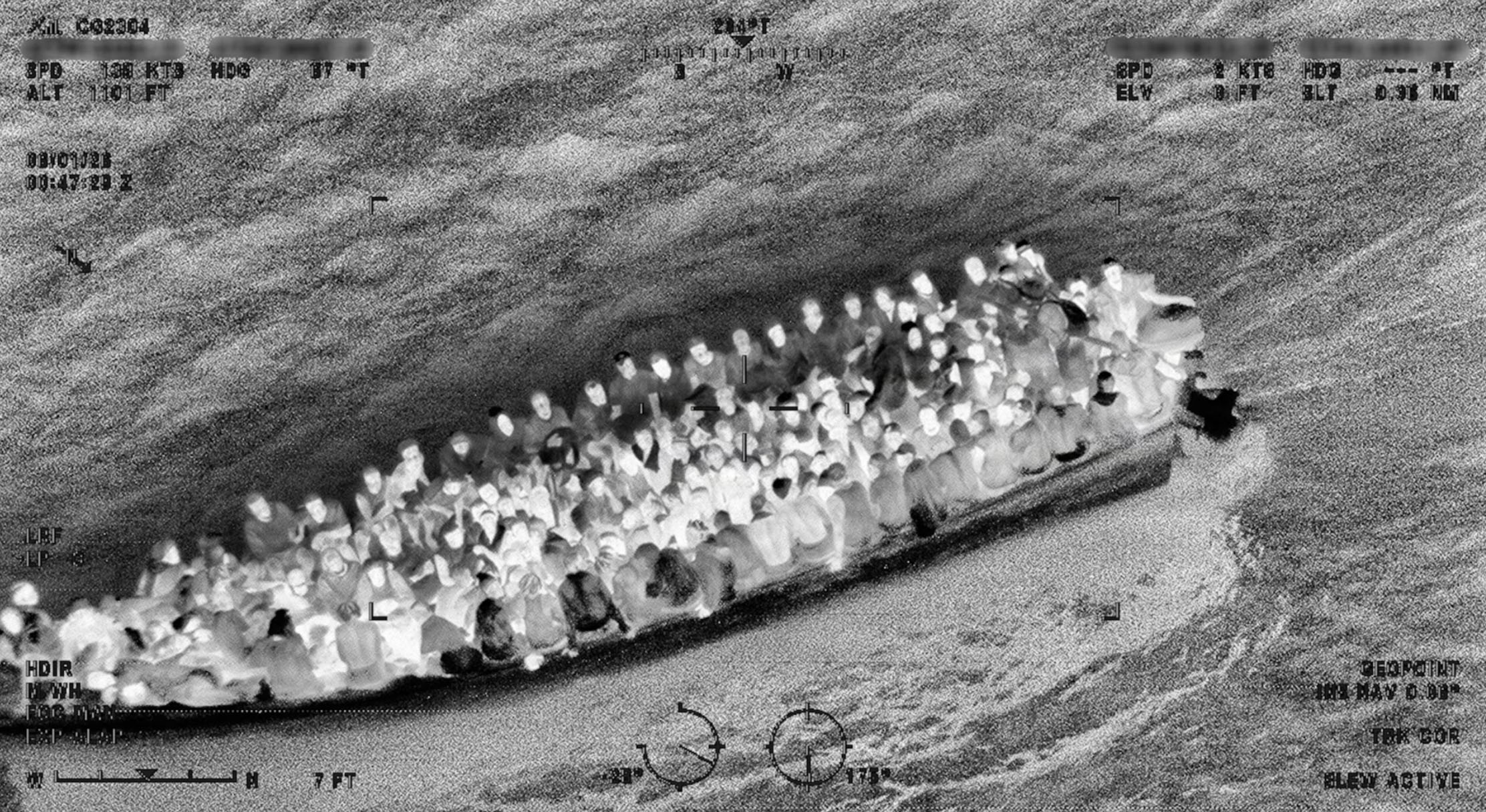
Are we witnessing a revival of the mass migration by sea crises of past decades? On June 5th, the U.S. Coast Guard announced the interdiction of a foundering boat carrying 240 Haitians near the Turks and Caicos and emphasized that such journeys “are extremely hazardous, frequently involving severely overcrowded and unseaworthy vessels that are often taking on water and lack basic life-saving equipment.” On March 25th, Alejandra Legarda reported in AL DÍA that “[i]n the waters of the Florida Straits, a scene … appears to be repeating itself with renewed urgency: fragile vessels, desperate journeys, and a steady flow of Cuban migrants”.
In 1992, President George H.W. Bush initiated the U.S.’s policy of interdicting migrant-carrying vessels on the high seas and repatriating migrants without first having to undertake potentially years-long adjudications of meritless asylum and withholding of removal claims. Since 2004, the USCG-led “Operation Vigilant Sentry” has sought to “protect the safety of life at sea while preventing unlawful maritime entry”.
The Trump administration should not only continue the interdiction policy, but also expand it to encompass vessels interdicted in U.S. territorial waters (generally within 12 miles of the coast). As the Eleventh Circuit concluded in 1982 in Haitian Refugee Center v. Smith, “[i]t is highly likely that [the former Immigration and Naturalization Service’s] inaction provided the greatest inducement to the ultimate swollen tide of incoming, undocumented Haitians.” The court explained that “[A] large percentage of the aliens bought passage … from promoters … whose best sales pitch was the large number of the prospect’s countrymen who … had reached Florida and were residing there undisturbed. Protestations by INS … could hardly be expected to prevail … [when] Haitians who reached southern Florida were living, working and earning” here.
…