
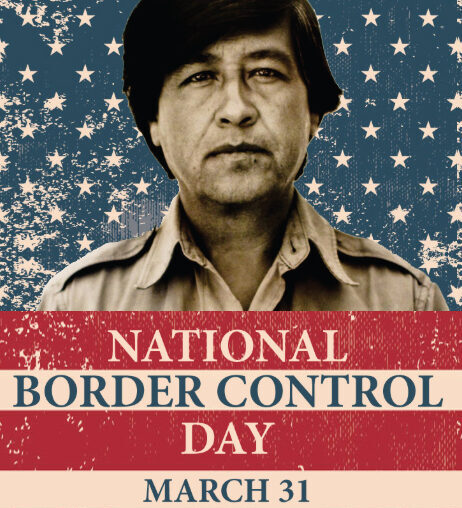
Back in 2014, when I designated Cesar Chavez’s birthday as National Border Control Day, it was, of course, partly a troll. The left had turned Chavez into the Hispanic Gandhi, naming streets after him and turning his birthday into March’s answer to Martin Luther King Jr. Day.
Imagine my satisfaction when Dolores Huerta, Chavez’s more conventionally leftist co-founder of the United Farm Workers union, told NBC News my initiative was “a mean thing to do.”
But it wasn’t entirely a troll. Chavez really was a border hawk, because illegal immigration (and guest worker programs) really did undermine the efforts of U.S. citizen farmworkers to better their lot. And it wasn’t just some ancillary thing — fighting illegal immigration was at the center of his advocacy for American farmworkers.
But today, on what would have been his 99th birthday, it’s clear my troll succeeded beyond my wildest expectations.
Chavez’s shockingly rapid un-personing in response to a recent New York Times exposé of his alleged abuse of underage girls was the last straw for his defenders. Had that been the only revelation running counter to the regime-approved hagiographic narrative, you’d be hearing a lot more “let the investigation take its course” and “these are troubling allegations but it’s important not to rush to judgment.”
Instead, before the ink had dried on the Times piece, lefties started renaming streets, removing his name from buildings, taking down statues, and covering up engravings of his name with concrete. Robert E. Lee and Christopher Columbus fared better during the BLM riots. All that’s left is for the Washington Post to publish a picture of his face being melted down in a foundry.
This is because his alleged preying on girls wasn’t the first inconvenient truth about Chavez that Hispanic identitarians and the left more generally have had to grapple with over the past decade.
…