
On June 30, the Supreme Court issued its long-awaited opinion in Trump v. Barbara, concluding on constitutional and (ancient) common-law grounds that every child born in the United States is a U.S. citizen, with only limited exceptions. There’s little Congress and the executive branch — even acting in tandem — can do about it, short of a constitutional amendment that would also involve the states (bon chance), but DOJ quickly responded to that decision by announcing it would prune the lowest-hanging fruit on the “birthright citizenship” tree: “birth tourism”. If the department is successful, it would be the silver lining in the dark Barbara cloud.
Barbara in Brief
A 5-4 majority of the Court (Chief Justice Roberts joined by Justices Sotomayor, Kagan, Barrett, and Jackson) held that under the “citizenship clause” in section 1 of the 14th Amendment, every child born to foreign parents on U.S. soil is a U.S. citizen, except for children of certain diplomats and those born in areas of foreign occupation and on foreign public ships.
Justice Kavanaugh in concurrence would have struck down Trump’s executive order (EO) at issue (which de facto denied citizenship to the children of illegal aliens and temporary nonimmigrants) on procedural grounds, arguing the EO violated the citizenship definition in section 301(a) of the Immigration and Nationality Act (INA), but he failed to pull enough justices to his position to form a majority.
That was the outcome I expected, and one that would have allowed Congress to amend the statute to narrow the otherwise expansive current definition of birthright citizenship, but then decisions like this are why I joke that I never bet on two things: college basketball games and SCOTUS opinions.
Justice Kavanaugh’s position would have been more consistent with the Court’s usual adherence to the principle of “constitutional avoidance”, that is ducking constitutional questions when there are easier procedural ones to rely on in dispensing with an issue, but the chief justice likely wanted to resolve this issue once and for all without letting it fester (and get out of town; this was the last opinion of the term).
Popular in the Abstract, Less So Often in the Concrete
Not that Barbara will make most on the right, and possibly ultimately even many in the political center, happy. Let me explain.
I’ve long privately argued that the commonly held expansive view of birthright citizenship is akin to the “Miranda rule” in criminal cases, defined by the Legal Information Institute as “the constitutional requirement that police officers give detainees a Miranda warning that describes their constitutional rights when faced with interrogation”.
The rule is a staple of police procedurals, that one scene when the cops collar the perp and calmly explain, “You have a right to remain silent. Anything you say can and will be used against you in a court of law. You have the right to an attorney”, etc.
In the abstract, Americans like that our constitution protects even the most odious of offenders (all the better to protect the innocent), but given that a failure to comply with Miranda can result in key evidence necessary for conviction being excluded from a case — and plainly guilty criminals walking free — many aren’t so sanguine about it in the concrete.
The same is true of birthright citizenship.
There is a great deal of appeal in the idea that every cute, smiling, and gurgling baby wrapped in a standard-issue hospital blanket is also wrapped metaphorically in all of the rights and privileges of U.S. citizenship.
That appeal wanes slightly, however, when those privileges include costly means-tested public benefits and a free public education, but given our unspoken national ethos of “we take care of our own”, the fiscal costs only mildly dim the luster of that numinous natal image.
The blush first really begins to leave the rose, however, when we consider the intentions of some of the parents of those newly minted U.S. citizens.
Ideally, we’d all embrace the challenges and joys of parenthood with the purest of intentions: an expression of love for our spouses; a desire to bring new life into the world; an opportunity to improve our nation and our communities by raising strong and industrious young men and women; and adding another worker to pay into the Social Security system and support us in our senescence.
As I explained in analyzing Barbara, however, children are also an “equity” for those here unlawfully, a positive discretionary factor that makes it more difficult to deport any given removable alien, and many immigrants therefore have children for no other purpose than to be able to remain here.
Birth Tourism
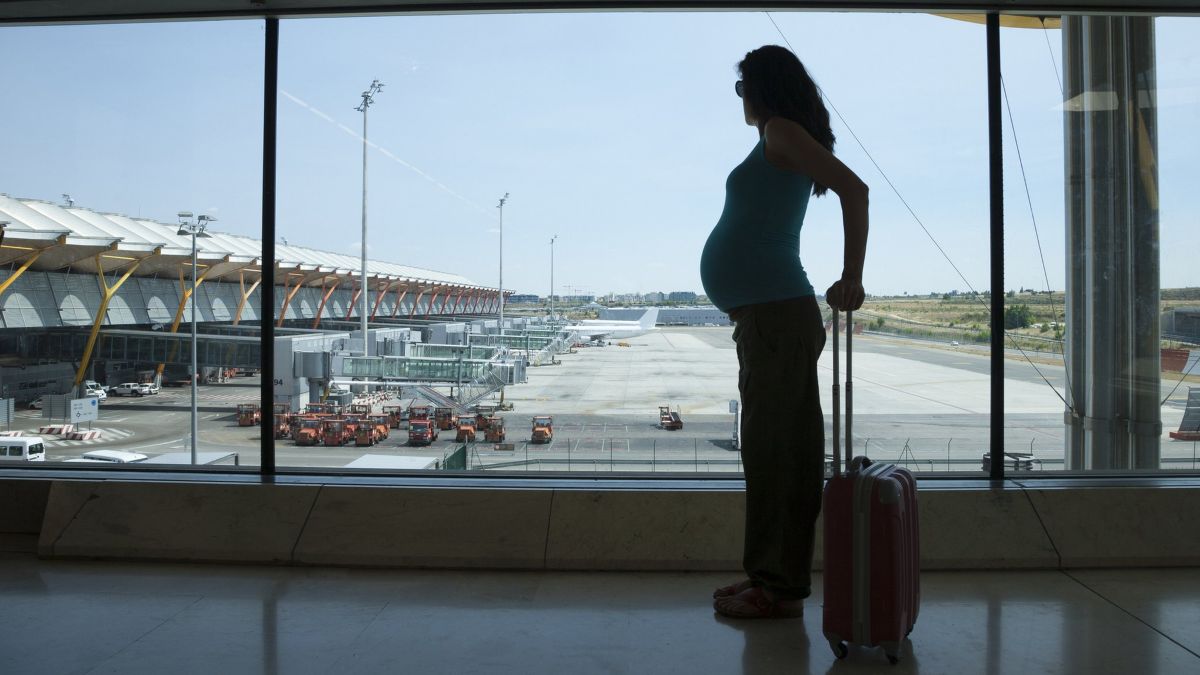
More objectifying (and objectively distasteful) is “birth tourism”, defined by Justice Thomas in his 91-page dissent in Barbara as “the practice of traveling here with temporary authorization solely to give birth and obtain citizenship for one’s children, then returning to raise them in another country”.
He continued:
Today, “birth tourism companies” reportedly collect large fees from wealthy foreigners to facilitate their trips to give birth in the United States. Large numbers of children are born in the United States each year to parents who are temporarily present here in order to obtain citizenship for their children. [Citations omitted.]
Actually, that “practice” can be more clinical in extremis than even the seniormost member of the High Court describes it.
For example, the Wall Street Journal reported in December on a “market” Chinese business titans abroad are using to father large number of children in this country via surrogate mothers:
The market has grown so sophisticated, experts say, that at times Chinese parents have had U.S.-born children without stepping foot in the country. A thriving mini-industry of American surrogacy agencies, law firms, clinics, delivery agencies and nanny services — even to pick up the newborns from hospitals — has risen to accommodate the demand, permitting parents to ship their genetic material abroad and get a baby delivered back, at a cost of up to $200,000 per child.
Birth Tourism Degrades “the Concept of United States Citizenship”
In any event, Justice Alito picked up on his colleague’s birth tourism theme in his separate dissent in Barbara, attacking the majority’s opinion on the grounds that:
As interpreted by the Court today, the Fourteenth Amendment confers citizenship on virtually everyone who happens to be born in this country, including the children of “birth tourists,” women who come here solely for the purpose of giving birth to a child and then promptly return home. Careful analysis of the text of the Fourteenth Amendment and the process that led to its adoption shows that it does not degrade the concept of United States citizenship in this way.
Those points are (or should be) beyond cavil, and yet they were not enough to sway enough justices to reconsider whether the citizenship clause and republican citizenship itself should really be interpreted under what Justice Thomas referred to as “a medieval English ‘feudal’ principle, according to which each person ‘owed personal service to the lord of the soil’ as his ‘master’ — a perpetual servitude that was ‘born with the child and only ended in the grave’”.
“Prosecution of Fraudulent Birth Tourism Schemes”
Those arguments were, however, enough to spur the Justice Department to action, because hours after the Court published its opinion in Barbara, the department issued the following tweet:
Memorandum for DOJ Employees on Prosecution of Fraudulent Birth Tourism Schemes from Assistant Attorney General Colin McDonald ⬇️ pic.twitter.com/hoilA5o2TE
— U.S. Department of Justice (@TheJusticeDept) June 30, 2026
As the memo attached to that tweet explains, most birth tourism schemes have been prosecuted under 18 U.S.C. § 1546, which criminalizes “fraud and misuse of visas, permits, and other documents”.
Pursuant to that provision, anyone who “knowingly makes under oath, or ... knowingly subscribes as true, any false statement with respect to a material fact in any application, affidavit, or other document required by the immigration laws or regulations prescribed thereunder” faces a felony sentence of up to 10 years’ imprisonment and a fine upon conviction.
According to DOJ, many birth tourism schemes “start with a false [nonimmigrant] visa application — with lies about the purpose and duration of one’s travel to the United States”.
That’s well and good, and correct in its assessment. The problem, as my boss Mark Krikorian recently explained, is that the current State Department visa form has no “question asking whether the applicant is pregnant”, and worse, “the regulations governing visa issuance now handcuff consular officers in this regard”.
Krikorian specifically referenced DOS rules at 9 FAM 402.2(8)(a), which warn consular officers that:
you must not ask a visa applicant whether they are pregnant unless you have a specific articulable reason to believe they may be pregnant and planning to give birth in the United States. You should document any such reason in your case notes. You must not, as a matter of course, ask all female applicants (or any specific sub-sets of applicants) whether they are pregnant or intend to become pregnant; you also may not require B NIV applicants to provide evidence that they are not pregnant. Additionally, you should remember, when posing your questions, that pregnancy can be a sensitive topic.
If pregnancy were really that sensitive a topic, we wouldn’t have “gender reveal parties”, but to clarify, “B NIV” applicants are foreign nationals seeking tourism and business visitor visas, and given those are the largest nonimmigrant classes, State’s instructions leave would-be birth tourists with fewer “lies” they must tell.
Krikorian argues that these rules “must change”, and even if he weren’t my boss I’d wholeheartedly agree, but what his points really underscore is the degree to which DOJ must work in tandem with the State Department to make any difference in deterring birth tourists.
I should note more optimistically, however, that the DOJ memo also encourages line prosecutors to think outside the box in combatting birth tourism, which means using other federal crimes (they are legion in Title 18 of the U.S. Code) to go after both would-be parents of U.S. citizens and their shady facilitators.
Those crimes include wire fraud (18 U.S.C. § 1343) and conspiracy to commit wife fraud (18 U.S.C. §1349), health care fraud (18 U.S.C. §1347), and money laundering and conspiracy to commit money laundering (18 U.S.C. § 1956).
There’s plenty of proof of those offenses to go around.
In 2022, minority staff on the Senate Homeland Security and Governmental Affairs Committee (HSGAC) reported that some birth tourists received medical bill “adjustments” — that is a reduction in the costs they had incurred for treatment — in excess of $25,000 “in several instances”.
“As a result,” HSGAC explained, “in some cases the state where the child was born was left to pay the outstanding difference on the total costs incurred by the birth tourist.”
Conversely, according to that report, birth tourists declared inexplicably huge sums of money when they arrived.
The most common declarations ran between $25,000 and $50,000, but in one instance, a “birth tourist from 2019 reported a $301,400 cash declaration for medical expenses” — way, way more than the cost of an average birth (even if it involves a cesarean section), and raising the question of what all the rest of that cash was intended for.
To paraphrase Forrest Gump’s mother, “sketchy is as sketchy does”, and when you are running a sketchy birth tourism racket, or utilizing one, there are any number of sketchy things you must do to keep it all under wraps.
Nor are these one-off trips, either, because as HSGAC made clear, “Birth tourists ... made return visits citing the superior educational and career opportunities available to United States citizens” — which more or less proves Justice Alito’s point.
The Silver Lining in the Dark Barbara Cloud
There are few ways to spin the Supreme Court’s birthright citizenship opinion without referring to it as a huge loss for both immigration enforcement and the “the concept of U.S. citizenship”. But triggering a renewed and more focused (and overdue) federal crackdown on the odious practice of “birth tourism” would be the silver lining in the dark Barbara cloud.