
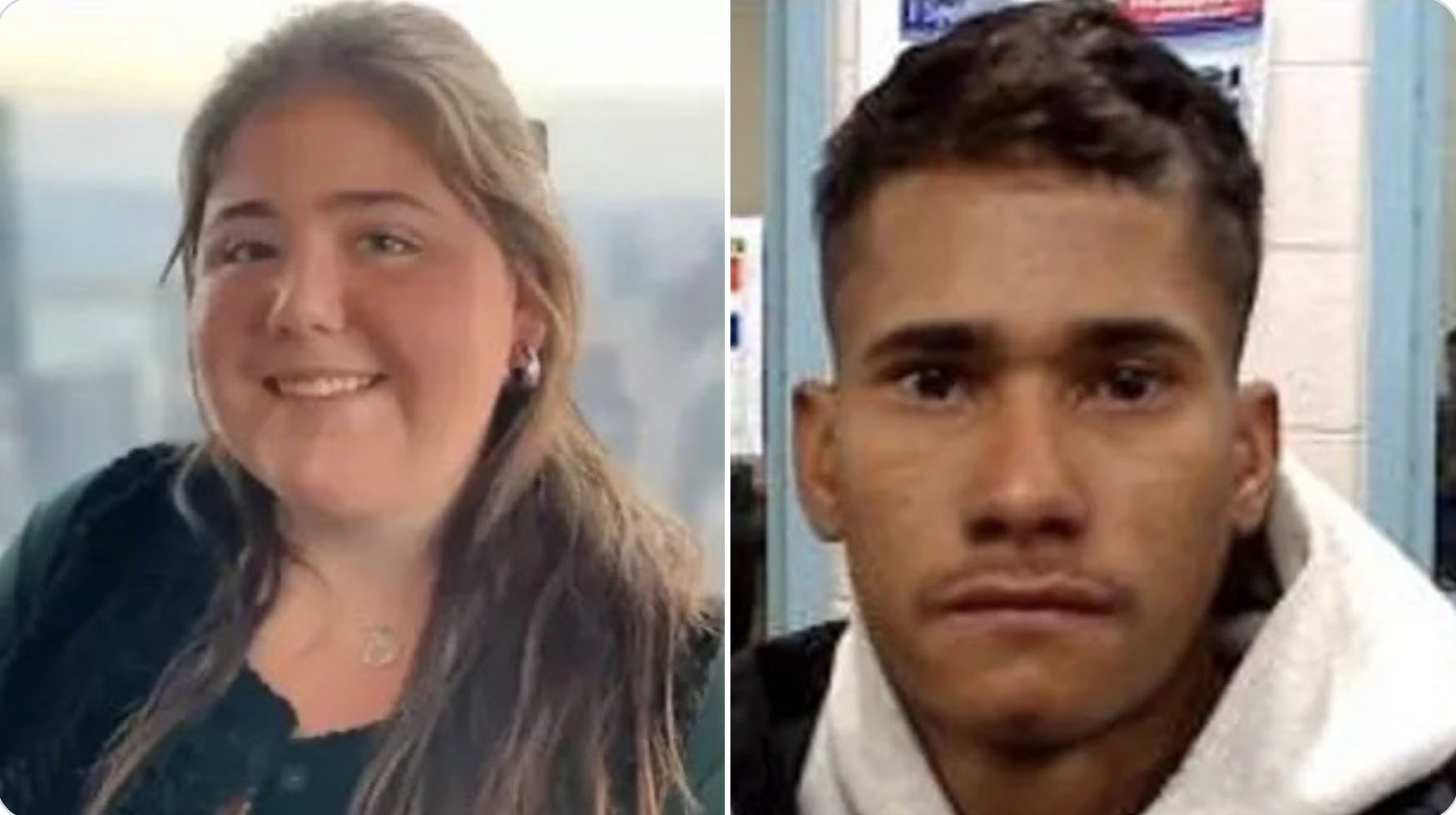
Sheridan Gorman; Jose Medina-Medina
Around 1:30 a.m. on March 19, Sheridan Gorman, an 18-year-old student at Loyola University in Chicago was shot and killed by a masked gunman less than a mile from her campus, in Tobey Prinz Beach Park. A manhunt ensued, and on Saturday police questioned a “person of interest”, subsequently identified as Jose Medina-Medina, 25, a Venezuelan national apprehended at the border and released into the United States under the Biden administration in May 2023. The case is “Laken Riley 2.0” — and a reminder of why Congress passed a law in her name to crack down on criminal migrants.
Sheridan Gorman
Gorman was a native of Yorktown, N.Y., in northern Westchester County, and she was in her freshman year at Loyola.
On Saturday, her family released the following statement:
Three days ago, our lives were shattered in a way no family should ever have to endure. Sheridan was our daughter, our sister, and the heart of our family. She was full of life, full of kindness, and full of a love that she gave freely to everyone around her. She made people feel seen. She made people feel valued. Whether it was her friends, her family, or someone she had just met, Sheridan had a way of leaving people better than she found them.
Even in a city where crime is not uncommon, her murder stood out even before the suspect was named: Every parent worries about their children, particularly when they leave home and go away to college. It’s unnatural for parents to bury their children, and the Gorman family received the sort of news all parents dread.
Jose Medina-Medina
Simply put, this murder was brutal, senseless, horrific — and yes, notable — even before the identity of the suspected was revealed.
On Monday morning, DHS issued the following tweet about the killing and the suspect:
Sheridan Gorman was failed by open-border policies and sanctuary politicians who RELEASED this illegal alien TWICE before he carried out this heinous murder.
On May 9, 2023, Medina-Medina was apprehended by U.S. Border Patrol and released into the country under the Biden… pic.twitter.com/s6v57GPwyu— Homeland Security (@DHSgov) March 23, 2026
Laken Riley was a Georgia nursing student who also was senselessly killed in February 2024, and like the suspect in Gorman’s murder, her killer — Jose Ibarra — was a Venezuelan migrant who was arrested at the Southwest border during the Biden administration (in September 2022) and released into the United States.
And like Medina-Medina, Ibarra had been arrested for shoplifting prior to Riley’s killing.
According to the Chicago Sun-Times, Gorman’s suspected killer “was wanted on a warrant in a local shoplifting case at the time of his latest arrest”, though it’s not clear whether that was the same shoplifting offense DHS referenced in its tweet on the suspect in Gorman’s killing.
The Laken Riley Act
Few criminals start out committing violent crimes. Instead, most are “upward offenders”, who initially begin by committing property or drug offenses before devolving into more serious criminality later.
In 2018, DOJ’s Bureau of Justice Statistics (BJS) released the results of a study tracking over a nine-year period more than 400,000 state prisoners across 30 states who were released from confinement in 2005.
In the nine years after they were released, those released prisoners were arrested an additional two million times (five arrests on average per releasee), and 44 percent were rearrested within a year of their initial release.
Saliently, as BJS explained:
During the first year following release, the percentage of prisoners released for a property offense who were arrested for any type of offense (including violent, property, drug, or public order offenses) was higher than the percentage of prisoners released for a drug or violent offense. This general pattern was maintained across the 9-year follow-up period.
Some 9.3 percent of property offenders upwardly offended and were arrested for a violent crime in the first year after release, and “by the sixth year after release, prisoners released for a violent or property crime were similarly likely to be arrested for a violent crime”.
Those statistics provide background for the Laken Riley Act, Pub. L. 119-1, the first law passed in the current Congress and the first bill signed by President Trump after he returned to office.
Among other actions, it amended section 236(c) of the Immigration and Nationality Act (INA), which lists various criminal aliens ICE is required to take into custody and detain throughout their removal proceedings.
Section 2 of the Laken Riley Act expanded that list to include, inter alia, aliens “charged with, arrested for, convicted of, [who] admits having committed, or [who] admits committing acts which constitute the essential elements of any burglary, theft, larceny, [and] shoplifting”.
In that provision, Congress made clear that DHS needs to take property criminals like Ibarra off the streets before they can reoffend, or worse, upward offend.
“The Most Immigrant Friendly City in the Country”
Medina-Medina’s June 2023 shoplifting arrest predated passage of the Laken Riley Act, but in a March 22 press release captioned “ICE Asks Governor Pritzker and Chicago Sanctuary Politicians to Not Release Criminal Illegal Alien Accused of Killing 18-Year-Old Loyola College Student”, DHS referenced that arrest in asking state and local officials in Illinois to turn the accused murderer over to the department if they decide to release him.
DHS is right to be concerned. As I explained in October, both the city of Chicago and the state of Illinois are “sanctuary” jurisdictions, in part because each refuses to comply with ICE detainers.
Chicago’s “Welcoming City Ordinance” makes no bones about the Windy City’s “sanctuary city” status and proudly tells all its lawbreakers (both would-be and after the fact) that “the City will not ask about your immigration status [or] disclose that information to authorities”.
In explaining why it refuses “to partner with” ICE “to deport undocumented individuals”, the city states:
Partnering with ICE would go against our mission to make Chicago the most immigrant friendly city in the country and turn ours into a community of fear for immigrants. Furthermore, enforcing immigration law would take away needed resources and time from the Chicago Police Department.
Cooperating with ICE’s doesn’t “take needed resources and time away from” local police departments. Rather, it alleviates cops from having to investigate the next crime and (on average) four more that criminal aliens will likely commit, and spares parents from having their “lives shattered in a way no family should ever have to endure”.