
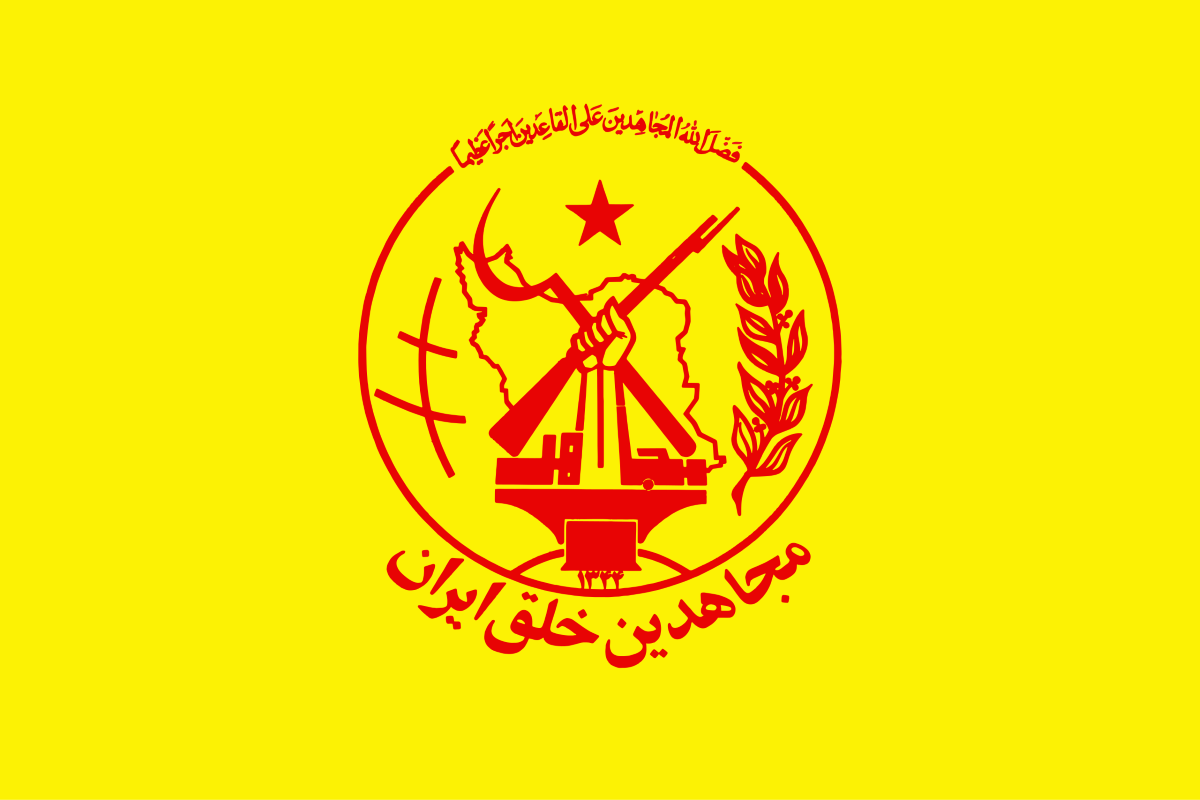
The Board of Immigration Appeals (BIA) — the tribunal that considers challenges to immigration court orders — recently issued an opinion in Matter of Ghanbari, finding that an immigration judge had erred in granting bond to an alien who had been a “sympathizer” of Mojahedin-e-Khalq (MEK), an erstwhile designated foreign terrorist organization. Credit the Board for calling “material support for terrorism” what it is.
Mojahedin-e-Khalq
MEK was founded in the 1960s to oppose the then-shah of Iran, and as the Congressional Research Service (CRS) explains, “The group's foundational ideology has been described by one historian as ‘a combination of Islam and Marxism.’”
This wasn’t simple free-speech activism, as MEK in the 1960s and 1970s engaged in “guerilla attacks against the Iranian government and other targets”, certain of which resulted in the deaths of “U.S. military personnel stationed in Iran”.
MEK was involved in the 1979 Iranian revolution during which the shah was deposed and, according to the U.S. State Department, “supported the takeover of the U.S. embassy, and opposed the release of American hostages” (which MEK denies).
The group quickly fell out with the mullahs and began leading attacks on the Islamic Republic of Iran (de facto successor to the shah), decamping to Iraq (then led by Saddam Hussein) and aiding that country in the Iran-Iraq War in the 1980s.
As per CRS, after the war ended in 1988:
the MEK remained in Iraq, which they continued to use as a base for attacks both in Iran and abroad. Such attacks included coordinated assaults against Iranian diplomatic installations in 11 countries (including Iran's Mission to the United Nations in New York) in April 1992, and the April 1999 assassination of the deputy chief of the Iranian Armed Forces General Staff.
The State Department first designated the MEK as a “foreign terrorist organization” (FTO) in October 1997, which the group denied, eventually suing in federal court in the District of Columbia seeking delisting.
Finally, in September 2012 the State Department revoked the MEK’s FTO designation, explaining:
With today’s actions, the Department does not overlook or forget the MEK’s past acts of terrorism, including its involvement in the killing of U.S. citizens in Iran in the 1970s and an attack on U.S. soil in 1992. The Department also has serious concerns about the MEK as an organization, particularly with regard to allegations of abuse committed against its own members.
Matter of Gholam Ghanbari
The BIA’s opinion was not initially intended for publication; rather, it was issued in October and only published at the attorney general’s direction in December.
Consequently, many key facts in the case, including Ghanbari’s nationality and the removability ground, are not specified, but it’s likely he’s an Iranian national who entered as a refugee and was flagged by DHS when he applied for a green card under section 209(a) of the INA.
He’s apparently not charged under the terrorism grounds of deportability at section 237(a)(4) of the INA, but nonetheless the government argued at his bond hearing that he’s subject to mandatory detention under section 236(c)(1)(D) of the INA as an alien deportable on those grounds “for providing material support to a terrorist organization”, MEK.
That may sound confusing, so let me explain.
It’s difficult to satisfy the terrorism removal grounds (few terrorists admit as much), but under BIA precedent, the government isn’t required to charge an alien on any mandatory detention ground in section 236(c) to establish that the alien is, nevertheless, not eligible for release under that provision.
And commission of an act that an alien “knows, or reasonably should know, affords material support” to a terrorist organization falls within the definition of “engage in terrorist activity” in section 212(a)(3)(B) of the INA, which is incorporated by reference into the terrorism removability grounds in section 237(a)(4)(B).
Ghanbari had claimed in his refugee application that “he was a sympathizer of” MEK between 1980 and 1987, “dealing in propaganda activities”, and further stated therein that when authorities came to his house in June 1981, they found “papers, leaflets, and books about the MEK movement, and detained him for being involved in ‘mojahidins’ activities’”.
That was a problem for Ghanbari because his case is in the Sixth Circuit, which has held that MEK “operated as a terrorist organization in the 1970s” and engaged in violent activities that continued until at least September 1981 (after Ghanbari was arrested abroad), and also concluded that the copying and distribution of flyers on behalf of that organization constituted material support.
Despite these facts, an immigration judge granted him release on bond, concluding that, as Ghanbari was between the ages of 15 and 16 when those events occurred, he was too young to “have reasonably known of the MEK’s involvement in ... terrorist activities until” the group carried out a “1981 bombing that killed Iran’s chief justice and dozens of other officials”.
In so doing, the BIA concluded: “The Immigration Judge ignored the respondent’s statements in his refugee application that Iranian officials accused him of being involved in mojahidins’ activities, he was imprisoned twice, and a family member also was a ‘mojahidin.’”
Maya Angelou explained that “When someone shows you who they are, believe them,” and that’s especially true when they put it in writing on a government application.
Worse, according to the BIA, the immigration judge rejected the government’s argument that Ghanbari was barred from receiving bond for having provided material support for a terrorist organization even though the alien didn’t testify in support of his application for release, and thus didn’t “present evidence that he was unaware of the MEK’s violent activities or that he disassociated himself from the MEK upon learning of its violent activities”.
Accordingly, the BIA held that Ghanbari was subject to mandatory detention under section 236(c)(1)(D) of the INA and sustained the government’s appeal of the immigration judge’s release order.
* * *
The proverb “the enemy of my enemy is my friend” may sometimes be true, but as the BIA recently held in Matter of Ghanbari, it isn’t a defense to a material support for terrorism allegation under the INA even when the (second) enemy in question is the Islamic Republic of Iran.