
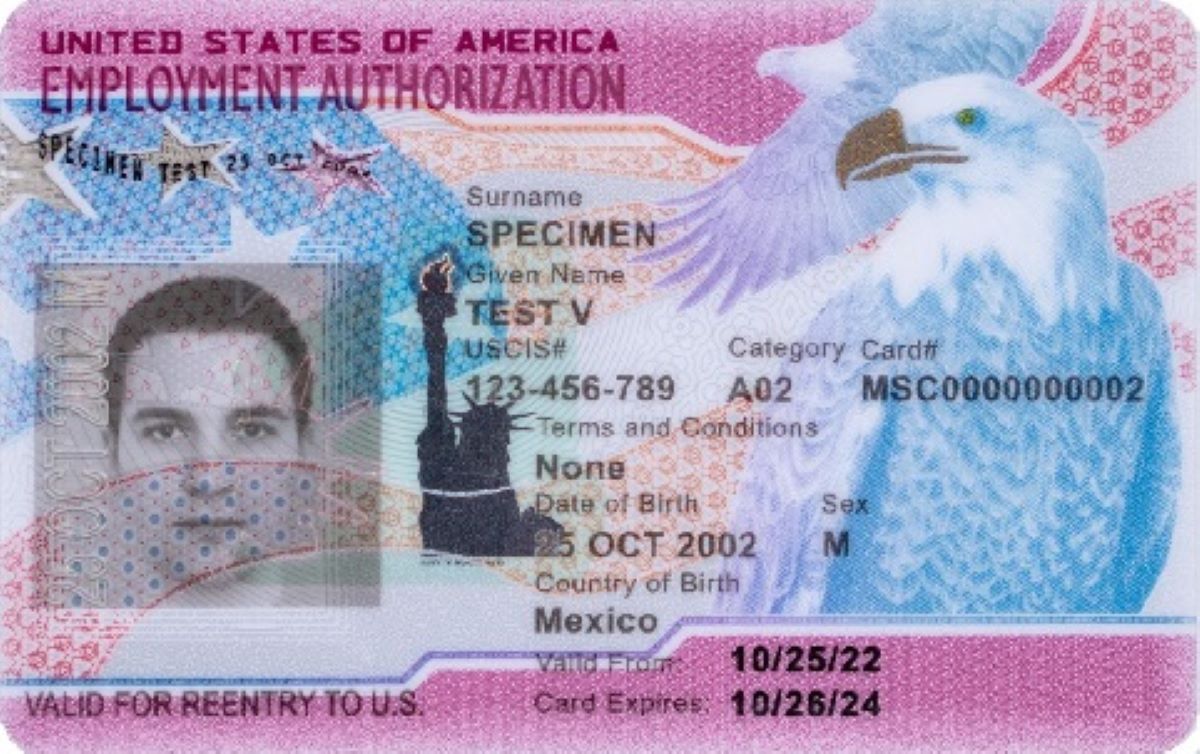
When the Obama administration unilaterally created the H-4 Employment Authorization Document (EAD) rule in 2015, it promised a policy designed to "retain global talent". In reality, it constructed an unlegislated, backdoor labor pool — one that actively cannibalizes domestic opportunities while bending over backward for foreign guestworker households.
By standard design, an H-4 visa is merely a nonimmigrant dependent status granted to the immediate family members — spouses and minor children — of primary H-1B visa holders. Historically, it carried no right to work in the United States. However, the 2015 administrative rule under President Obama, carved out a massive regulatory loophole: Once a primary H-1B holder reaches a preliminary green card milestone (such as an approved I-140 petition), their spouse can apply for an EAD card. Crucially, unlike the primary H-1B visa — which requires employer sponsorship, job-location limits, and prevailing wage mandates — the resulting H-4 EAD confers completely unrestricted, open-market work privileges across any sector or field.
USCIS reports and immigration data reveal that there are currently around 100,000 active H-4 EAD holders working in the United States, with roughly 170,000 initial authorizations approved since the program's inception. Congressional Research Service (CRS) and policy analyses confirm that this backdoor labor pool is overwhelmingly concentrated, with between 86 and 93 percent of all H-4 EAD work permits issued to Indian nationals.
This work permit program was never authorized by an act of Congress; it exists solely through administrative overreach. While my CIS colleague John Miano led a years-long legal challenge in Save Jobs USA v. DHS to strike down the rule, the Supreme Court ultimately declined to review the case in October 2025, leaving in place a lower court ruling allowing the program to continue. But while the judiciary chose not to end the program, the Department of Homeland Security retains full administrative authority to rescind 8 C.F.R. § 274a.12(c)(26) on its own through simple executive action.
It is time to end this racket and re-establish a straightforward "Hire American" standard.
The Asymmetry of Reciprocity: The View from Overseas
While Washington routinely invents open-market regulatory perks for foreign temporary workers, it ignores the stark double standards faced by American citizens representing our country abroad.
Having served as a U.S. visa officer in India, I have seen this injustice firsthand. Many of my fellow American diplomats who served at Consulate General Chennai and posts across India were frontline visa officers, toiling long hours at consular windows to process and facilitate legal travel for hundreds of thousands of Indian nationals. Yet these same American public servants faced severe visa restrictions and a total lack of reciprocity from the host government. In numerous cases, officers could not even bring their spouses to post because local Indian visa frameworks provided no legal path for them to reside or work. For those spouses who did accompany their partners, including highly accomplished corporate executives — the local labor market offered zero employment opportunities.
Furthermore, during my time at the consular window in India, I witnessed first-hand that not all H-4 relationships presented were even legitimate marriages. In several instances, individuals presented fake marriage certificates — easily purchased in fraud hubs like Ameerpet, Telangana — to leverage the H-1B/H-4 immigration pipeline as a backdoor into the American labor market, often slipping past overworked visa officers undetected.
This is not isolated to the Foreign Service. American CEOs, directors, and corporate expats posted to India face the exact same wall: Their spouses are left to dry on the vine, forced to pause their careers, forfeit their incomes, and endure immense professional isolation — straining marriages and disrupting family stability.
Yet, while American spouses are forced to sacrifice their careers abroad while U.S. visa officers facilitate travel for foreign nationals, Washington constructs elaborate regulatory fast-tracks back home to guarantee dual-income security for foreign guestworker households. Why does the U.S. government bend over backward for the dependents of temporary foreign workers when host countries offer zero equivalent access to American spouses?
Whistleblowers and Tech Hub Displacement: The Dallas Warning
This double standard is hitting American workers head-on across the country. In tech hubs like Dallas numerous American tech worker whistleblowers have reached out to me to report how qualified citizens are being routinely bypassed. Time and again, domestic engineers and IT professionals report being passed over in favor of H-4 EAD holders for tech, analysis, and administrative positions.
Because H-4 EAD holders operate with open-market work permits that carry zero prevailing wage protections, labor condition applications, or citizen-first hiring mandates, corporations leverage them as a low-cost, highly compliant workforce. American tech workers — already bearing the weight of corporate layoffs, high mortgage rates, and mounting economic uncertainty — are watching their own local job markets handed over to guestworker dependents.
Domestic whistleblowers report that H-4 spouses frequently receive preferential access to job openings within the very IT and tech companies where their spouses work. Driven by internal nepotism and insular hiring networks, these corporate pipelines offer foreign guestworker dependents employment guarantees that are never extended to the spouses of American workers — a practice that would normally be condemned as blatantly nepotistic in any standard American workplace.
From White-Collar Displacement to Blue-Collar Exploitation
The H-4 program does not stop at displacing American tech workers; it distorts the entire domestic labor pyramid. Because an H-4 EAD grants unrestricted work authorization, holders are free to establish their own limited liability companies (LLCs).
Far from driving organic economic growth, these LLCs frequently operate as closed ecosystems:
- Offshoring and Subcontracting: Many of these entities act as middleman staffing firms, contracting project work back to foreign offshore hubs and siphoning capital away from domestic markets.
- Displacing Blue-Collar Americans: Rather than hiring local American workers for operational, entry-level, or service roles — such as pizza delivery, logistics, and basic administrative work — these LLCs routinely pipeline jobs to foreign students on F-1 Optional Practical Training (OPT).
At a time when American families are struggling to make mortgage payments and navigate high inflation, federal policy should not be subsidizing a shadow labor pipeline that systematically bypasses citizens at both the top and bottom of the wage scale.
The Solution: A Simple Executive Action
If a company operates in the United States, its primary obligation must be to the American workforce. A genuine "Made in America" agenda cannot stop at manufacturing physical goods — it must apply to human capital and corporate hiring practices.
Rescinding the H-4 EAD rule via executive action would immediately:
- Restore Congressional Intent: Re-establish that nonimmigrant dependent status (H-4) is intended purely for accompanying family members, not as an unvetted, open-market workforce.
- Protect Citizen Jobs and Wages: Remove hundreds of thousands of non-wage-controlled work authorizations from direct competition with American job seekers.
- Rebalance National Priorities: Reaffirm that federal immigration regulations exist to protect the interests of American citizens and their families — not to optimize corporate bottom lines at their expense.
It is time for executive leadership to rescind the 2015 H-4 rule. Putting American workers and American spouses first isn’t just sound economic sense — it is the basic obligation of the U.S. government.