
Database: National Security Vetting Failures
The Center for Immigration Studies’ Vetting Failure Database presents the first known collection of preventable federal government vetting failures that enabled entries of foreign nationals who threatened and harmed American national interests and public safety. Its purpose is to be a constant reminder to the American public and to government employees in a position to effect remedies that they are obliged to do so as soon as practicable. Additionally, the database points America’s homeland security establishment and its congressional overseers to previously unidentified fail points in the highly complex immigration security screening array so that they may more ably block future entries of foreign threat actors.
The pool of cases selected for inclusion is far from comprehensive and should not be construed as reflecting either problem-set totality or representative weight in any given area. It is by necessity, rather, a compilation selected almost solely on the basis of public information availability to reverse-engineer cases for analysis and from which to draw reasonable conclusions that security failure most likely occurred.
Only vetting opportunities on or after the year 2008 are included. The year 2008 was chosen as the starting point on the assumption that the first series of 9/11 visa vetting reforms would have fully vested by then and, in essence, remain in current use. The year 2008 also was chosen because certain significant new process improvements were implemented that year.
View About the National Security Vetting Failures Database to read more about database inclusions and exclusions in detail. For suggestions on additions to the database, please e-mail [email protected].
| Year of First Vetting* | Name | National Security Crime Type | Summary | Immigration Status Type | Opportunities Missed | Time from US Entry to Discovery | Case Outcome | Read More | Link to edit Content |
|---|---|---|---|---|---|---|---|---|---|
Vetting Year
|
Name Ali Yousif Ahmed Al-Nouri |
|
Summary Extradition request by Iraqi government for Al-Nouri, who is accused of leading an al-Qaeda group that killed two police officers in Iraq in 2006; case pending |
Immigration Status Type Refugee classification; Lawful Permanent Residence; Naturalized Citizenship |
Opportunities Missed 3 |
Time from US Entry to Discovery 9 years, 11 months* |
Case Outcome Extradiction proceedings pending on two Iraq murder counts |
Details
x
Vetting Year
Time from US Entry to Discovery 9 years, 11 months* National Security Crime Type Terrorism-related, extradition proceeding Iraq
Immigration Status Type Refugee classification; Lawful Permanent Residence; Naturalized Citizenship Agency Responsible for Failure USCIS for Refugee classiciation, Lawful Permanent Residence and Naturalized Citizenship Opportunities Missed 3
Criminal Charges Iraqi government has charged him with two counts of murder Case Outcome Extradiction proceedings pending on two Iraq murder counts
Iraqi national Ali Yousif Ahmed Al-Nouri came to the United States in 2009 after vetting as a refugee in neighboring Syria. He became a lawful permanent resident in about 2010 and, in 2015, a naturalized citizen, for a total of three security screenings. He lived in Phoenix, Ariz., and worked as a “cultural advisor” at U.S. military bases and also operated a driving school in Phoenix until his 2019 arrest. Ten years after entering as a refugee, however, on May 12, 2019, an Iraqi judge issued an arrest warrant and extradition request for Al-Nouri on claims that he was leader of an al-Qaeda assassination cell that targeted Iraqi police officers in Fallujah, Iraq. The 2020 extradition case was still pending as of March 2023, and although Al-Nouri stated that he was innocent of the Iraqi charges and that Iraqi witnesses have given conflicting, discreditable testimony, a federal judge in Phoenix in April 2022 certified his extradition. According to information provided by Iraq’s government, Al-Nouri’s al-Qaeda group allegedly shot and killed a first lieutenant in the Fallujah Police Directorate and a police officer on about June 1, 2006, and on October 3, 2006, respectively. On January 30, 2020, the U.S. government filed a complaint and arrested Al-Nouri on probable cause that the cultural advisor who worked with the U.S. military inside military bases inside the United States was actually an al-Qaeda assassin. Security vetting by USCIS – at the times Al-Nouri applied for U.S. refugee status in 2009, as well as for his LPR and citizenship applications in subsequent years – apparently failed to pursue several lines of inquiry available that may have led to a denial of any one of the three immigration benefits. Basic background investigation reasonably would have uncovered that, as U.S. prosecutors now allege in a complaint, a member of the al-Qaeda cell captured in 2006 – three years before Al-Nouri received refugee status – had identified him to Iraqi authorities as the cell’s “emir”, or leader. “Cooperator I” gave Iraqi authorities extensive details about Al-Nouri and the cell’s assassination operations. A check with Iraqi or American governments likely would have turned up this information. Cooperator I’s 2006 intelligence information about Al-Nouri as a terrorist cell leader should have been available to USCIS adjudicators stationed in Iraq for the asking and, probably, from American military intelligence there, too, the presumption being that Iraq at the time regularly shared such terrorism intelligence with U.S. agencies. Apparently, there was a fourth vetting opportunity, too. This one involved a security screening by the Department of Defense, a precondition for Al-Nouri to work as a "cultural adviser" on military bases, according to his defense attorney during a May 2020 detention hearing, readable in a transcript of it (page 35). Al-Nouri passed that one, too. Among other red flags that USCIS reviewers should have seen and pursued in reviewing all three applications is that, as described in more recent court record allegations, Al-Nouri had given U.S. officials “conflicting” accounts about how he received gunshot wounds in Iraq before he fled to Syria as a refugee and also why, after he arrived in Syria, the government there imprisoned him for a time prior to his moving to the United States. It should be presumed that the American or Iraqi government had checkable derogatory intelligence information about Al-Nouri prior to his 2009 refugee status grant and, even more certainly, in the years afterward when he applied for a change in status to LPR in 2010 and, finally, citizenship in 2015. Had adjudicators done due diligence, merely the allegations that he committed murder and ran a terrorist cell would have preempted years of Al-Nouri residing inside the United States while hiding an allegedly murderous terrorist past, not to mention that as far as adjudicators could know, he might have posed a more general threat to other Americans. However, only as a result of the Iraqi government’s extradition request did more recent Department of Justice and federal law enforcement investigations discover the terrorism allegations. |
|
Vetting Year
|
Name Hayatullah Dawari |
|
Summary Afghan doctor concealed ties to Hezb-e-Islami Gulbuddin, an anti-Western insurgent group that frequently attacked U.S. and coalition troops in Afghanistan, when filling out his green card application and citizenship application; he also concealed a prior arrest by Russia in the 1980s for working with Afghan mujahidin battling a Russian occupation. While in the U.S., he maintained contact with Hezb-e-Islami Gulbuddin associates for years using sophisticated coded messages |
Immigration Status Type Lawful Permanent Residence; Naturalized Citizenship |
Opportunities Missed 1 |
Time from US Entry to Discovery 5 years, 10 months |
Case Outcome Convicted 09/2014 for immigration fraud |
Details
x
Vetting Year
Time from US Entry to Discovery 5 years, 10 months National Security Crime Type Terrorism-related, immigration fraud
Immigration Status Type Lawful Permanent Residence; Naturalized Citizenship Agency Responsible for Failure USCIS for Lawful Permanent Residence Opportunities Missed 1
Criminal Charges Immigration fraud, lying on official documents Case Outcome Convicted 09/2014 for immigration fraud
Afghan national and licensed physician Hayatullah Dawari first entered the United States in November 2008 and obtained a lawful permanent resident green card. He settled in Philadelphia, Pa. Dawari did not appear to have been licensed to practice medicine in the United States. Rather, he worked at 7-11 convenience stores, taught children at a local mosque, and was regarded as a deeply pious, prominent member of his community, according to letters of support from co-workers and neighbors later arguing that he be freed on bond. But the initial 2008 security vetting for Dawari’s LPR apparently failed to discover that he omitted any reference to the fact that Russian military authorities had arrested him in the late 1980s for working with mujahideen fighters battling the Russian occupation of Afghanistan, a likely disqualifying factor for obtaining legal residence that almost certainly would have led to further investigation, which would have found that up until he immigrated to the United States and for years afterward he maintained deep, abiding, and clandestine ties to a violent Islamist extremist group in Afghanistan and Pakistan that often targeted American troops. Only years later did an FBI and ICE Homeland Security Investigations counterterrorism investigation discover he already had “strong ties” to operatives of Hezb-e-Islami Gulbuddin (HIG) before arriving on an immigrant visa, to the extent that he had treated their combat wounded. The HIG is a violent al-Qaeda-associated group that frequently attacked U.S. and coalition troops in Afghanistan in pursuit of overthrowing the government and replacing it with an Islamic state. The group is also active in Pakistan. The U.S. Treasury Department designated its founder, Gulbuddin Hekmatyar, a “global terrorist”. A defense attorney for Dawari much later inadvertently disclosed that the doctor had treated HIG operatives prior to moving to the United States in late 2008, a fact that screeners could reasonably have uncovered by smart questioning, intelligence database checks, and interviews with those around him checking his proffered whereabouts during that period in question or the 1980s fighting with mujahideen. Dawari’s ties to HIG in both countries were so deep and broad, the attorney said, that shortly after entering the United States in 2008 - on his LPR - Dawari even returned to the region and stayed among HIG associates for seven months before coming back to the United States. Much later, after Dawari’s August 2014 arrest for deceits related to all of this obscured personal history, U.S. prosecutors argued that his ties to his HIG network ran so deep that it would have hidden Dawari should he flee U.S. prosecution if allowed out on bond. Security screeners for the LPR almost certainly would not have granted Dawari permission to enter had they discovered these ties and the 1980s mujahideen militia fighting in the post-9/11 context (the United States had armed and equipped the anti-Russian mujahideen, which had turned those arms on the United States well before Dawari obtained his visa). After the requisite five years more of keeping all this under wraps, in November 2013 Dawari applied for U.S. citizenship. But security screening for the citizenship application was not what brought Dawari to FBI attention and got him convicted and ultimately deported for terrorism activity. Federal authorities said Dawari confirmed his “membership” in the HIG group during a coincidentally intercepted telephone call within weeks of submitting his 2013 citizenship application. The subsequent investigation over a period of more months uncovered the rest. Dawari continued his relationships knowing he would draw law enforcement attention if discovered. So he communicated with HIG operatives by sending and receiving packages of books containing coded, hidden messages, sometimes about urgent unspecified actions. Federal investigators were clearly spooked by some shipments just prior to Dawari’s arrest. Just prior to his arrest, FBI agents found in one of the shipped books two pages glued together with a note secreted inside. The note contained a coded message with directions for “urgent action” of a nature left unspecified in court records. Both shipments of books contained instructions to forward select books to other individuals including a known HIG associate in Philadelphia. A search of that person’s home found a handwritten sheet that appeared to be a cypher, containing a list of numbers and cryptic words. In the end, security vetting for his 2013 citizenship application proved unnecessary, as by then the FBI had become aware of his HIG links and had opened a multi-faceted counterterrorism investigation. Prosecutors did charge him with lying on his citizenship application about his associations with HIG. In 2014, Dawari pleaded guilty to immigration fraud, was sentenced to two years time served and deported to Afghanistan as part of a plea deal. |
|
Vetting Year
|
Name Mergia Negussie Habteyes |
|
Summary Ethiopian refugee who lied about human rights abuses in the past to enter the U.S. in 1999 but was approved for US citizenship after 9/11 screening reforms in September 2008, despite his involvement in Ethiopia's "Red Terror" |
Immigration Status Type Refugee classification; Legal Permanent Residence; Naturalized Citizenship |
Opportunities Missed 1 |
Time from US Entry to Discovery 19 years |
Case Outcome Convicted 02/2019 for fraudulently obtaining citizenship |
Details
x
Vetting Year
Time from US Entry to Discovery 19 years National Security Crime Type Human rights violations, Immigration fraud
Immigration Status Type Refugee classification; Legal Permanent Residence; Naturalized Citizenship Agency Responsible for Failure USCIS for refugee classification, Lawful Permanent Residence, and Naturalized Citizenship Opportunities Missed 1
Criminal Charges Unlawful procurement of Naturalization Case Outcome Convicted 02/2019 for fraudulently obtaining citizenship
Ethiopian national Mergia Negussie Habteyes entered the United States in 1999 as a refugee, having successfully covered up his direct involvement as a violent interrogator in makeshift political prisons during the 1977-1980 “Red Terror”. In the late 1970s, a military coup led to a rise to power of military officers known as the “Derg”, after which supporting militias throughout Ethiopia were organized to violently suppress the rival Ethiopian People’s Revolutionary Party (EPRP). The Derg militias carried out the suppression campaign by rounding up suspected EPRP members and supporters and then torturing, imprisoning, and executing many. According to much later U.S. court records, Habteyes participated in the Red Terror as a tormentor who committed atrocities against EPRP suspects by beating them with belts, rods, and other objects, causing permanent scarring and injury. In the pre-9/11 era when Habteyes applied for refugee status, he easily lied his way through his 1999 application and review process. Similarly, he lied his way through a 2000 application for a lawful permanent residence. But USCIS officials granted him legal residence in February 2005, well after 9/11 security screening reforms had been implemented. Habteyes’ obfuscations proved so durable in gaming security screeners even in the post-9/11 era that USCIS once again failed to determine his true history when he applied for citizenship in 2007. After nearly a year of opportunity to investigate Habteyes and verify his proffered personal history, in September 2008, USCIS interviewed him in person, the indictment says. Immediately after perfunctory questions about whether he had ever tortured anyone or was involved in political persecution, the agency granted Habteyes citizenship. It’s unclear how federal investigators of ICE Homeland Security Investigations came to know of his Red Terror history, but it was not as a result of the immigration application review processes of the ostensibly much-improved post-9/11 era. HSI agents arrested him on an August 2018 indictment. In 2019, Habteyes pleaded guilty to immigration fraud, lying on forms and to officials. A judge sentenced Habteyes to 37 months in prison. The Department of Justice revoked his citizenship, as well. |
|
Vetting Year
|
Name Inocente Orlando Montano |
|
Summary El Salvadoran war criminal responsible for an internationally notorious slaughter of six Jesuit priests in 1989 as well as a housekeeper and her daughter who witnessed the murders; using his real name, he successfully lied repeatedly on a Temporary Protected Status renewal form from 2002 through 2010 that he'd never served in the military despite many public sources naming him |
Immigration Status Type Temporary Protected Status renewed seven times |
Opportunities Missed 1 |
Time from US Entry to Discovery 17 years* |
Case Outcome Extradited to Spain in 2017 to face charges by the National Criminal Court of Spain, which convicted him of the Jesuit priest murders |
Details
x
Vetting Year
Time from US Entry to Discovery 17 years* National Security Crime Type Human rights violator, immigration Fraud
Immigration Status Type Temporary Protected Status renewed seven times Agency Responsible for Failure USCIS for Temporary Protected Status and seven renewals Opportunities Missed 1
Criminal Charges Two counts of falsifying claims on TPS Form 821 Case Outcome Extradited to Spain in 2017 to face charges by the National Criminal Court of Spain, which convicted him of the Jesuit priest murders
El Salvador national Inocente Orlando Montano served from 1963 to 1994 in the El Salvadoran military, rising to the rank of colonel and then public safety vice minister in 1989 during the civil war, which lasted from 1980 through 1992. In 1989, he ordered and carried out the internationally notorious murder of five Jesuit priests, as well as a local priest who was present, a housekeeper, and her 16-year-old daughter to eliminate them as witnesses to the war crime. Montano retired in 1994 and, under unclear legal circumstances, moved to the United States and began using his real name, according to court records and media reporting. His immigration status during those years is not known, although he was likely in the country illegally and worked for years in a Massachusetts candy factory. In 2002, he applied under his real name for Temporary Protected Status, an immigration benefit that prevented deportation of illegally present Salvadorans who claimed they could not return due to natural disaster. He did so despite the fact that, at the time, his photo and name had been posted in numerous government and public reports as the one who ordered the Jesuit priest killings - publications that were available to American adjudicators at all times. These included a 1990 report in the Arms Control and Foreign Policy Caucus of the U.S. Congress, and a 2004 National Catholic Reporter report, both of which included Montano's name and photographs, an ICE investigator stated in a complaint affidavit. USCIS processors are supposed to conduct security reviews of TPS applicants looking for disqualifying criminal histories, warrants, national security threat issues and, in the case of Salvadorans at the time, whether they participated in government war crimes. But USCIS granted Montano TPS status despite the public availability of his photo and name as a suspected war criminal. An even greater issue with TPS security screening is that USCIS approved Montano’s TPS renewal seven more times under his real name, the last time being August 2010. The following year, a Spanish court indicted Montano and other Salvadoran military officers for the Jesuit priest murders. After being located in Everett, Mass., by the civil rights group the Center for Justice and Accountability, Montano was convicted in 2013 of immigration fraud and perjury for making false statements to immigration officials in order to stay in the United States on the TPS renewals. He served two years in federal prison in North Carolina. In September 2020, Spain convicted him and sentenced him to 133 years in prison for the crimes. |
|
Vetting Year
|
Name Adil Hasan (Al-Mashhadani) |
|
Summary Iraqi refugee who covered up by lies and omissions that possibly two of his brothers were involved in the 2005 kidnapping of U.S. citizen contractor Roy Hallums and made false statements creating a story of persecution, committed wire fraud; failed to include previous name in naturalization application. One of the brothers still in Iraq was imprisoned after a U.S. raid and was not mentioned in immigration applications, including a naturalization application in 2013, the same year Adil visited the alleged terrorist brother in Iraq. |
Immigration Status Type Refugee classification; Lawful Permanent Residence; Naturalized Citizenship |
Opportunities Missed 2 |
Time from US Entry to Discovery 5 years, 5 months* |
Case Outcome Convicted 06/2017 for illegally procuring citizenship |
Details
x
Vetting Year
Time from US Entry to Discovery 5 years, 5 months* National Security Crime Type Terrorism-related, immigration fraud
Immigration Status Type Refugee classification; Lawful Permanent Residence; Naturalized Citizenship Agency Responsible for Failure USCIS for Refugee classification, Lawful Permanent Residence and Naturalized Citizenship Opportunities Missed 2
Criminal Charges Attempt to procure naturalization contrary to law Case Outcome Convicted 06/2017 for illegally procuring citizenship
Iraqi citizen Adil Hasan, his wife, and a brother entered the United States as refugees in 2008. They claimed persecution stories involving victimhood at the hands of al-Qaeda in Iraq and settled in the Fairfax, Va., area. But USCIS security screeners based in Amman, Jordan, granted their provisional refugee petitions despite discoverable intelligence information that the refugee brothers were hiding knowledge that a third brother served as an operative of Iraq’s particularly murderous al-Qaeda franchise – and also that they knew he had committed international terrorism crimes. A much later FBI investigation, in 2016, discovered that in 2004, the third brother, Majid Al Mashhadani, was working with al-Qaeda and helped his terrorist group kidnap U.S. contractor Roy Hallums, who was kept for nearly a year blindfolded in a deplorable underground torture bunker. U.S. military forces freed Hallums and other captives in a 2005 raid on the bunker and arrested Al Mashhadani at the site. The U.S.-based FBI investigation also found a fingerprint on a document inside the bunker that belonged to the brother who came to the United States with Adil Hasan, Yousif Al-Mashhadani, an FBI complaint affidavit stated. Was Yousif an al-Qaeda operative who got into America as a refugee? Court records do not elaborate on the meaning behind the Yousif al-Mashhadani fingerprint. But whether this refugee-approved brother, Yousif Al-Mashhadani, was a terrorist operative too, the investigation also found that, at the least, he, Adil Hasan, and Adil Hasan’s wife wittingly covered up their disqualifying relationships to the kidnapper brother and then fabricated elaborate persecution stories for themselves. They did so on at least two occasions; during the 2007-2008 USCIS security screening for the provisional refugee applications in Iraq, possibly on presumed 2008 change-of-status applications for green cards, and in 2013 in applying for citizenship. In his first refugee application, for instance, Hasan filled out a “Worldwide Refugee Admissions Family Tree” report in which he omitted the al-Qaeda Al Mashhadani brother. Hasan also dropped his own “Al Mashhadani” family name as part of the ruse, keeping the alias permanently after they settled in Virginia. USCIS security screeners who used the family tree report for their approval apparently missed much discoverable derogatory information at their fingertips, judging from court records. For one, a fourth brother was identified in court records only as “A.M.”. A ranking Iraqi police official who would have been listed in the family tree document, he also applied for refugee status in 2007 and in August of that year provided all of the information about the terrorist brother and fully identified all of his other brothers to USCIS adjudicators. Information that all the brothers were biologically related, nearly a year before Hasan’s application was granted, should have been available through basic fact-finding and would have enabled adjudicators to link them all and find the fraud. Secondly, a fingerprint check of the brother who entered as a refugee with Hasan, Yousif Al-Mashhadani, likely was never conducted as required under post-9/11 security screening reforms. Otherwise, a fingerprint database check should have discovered that this brother’s fingerprint had been collected from inside the bunker, flagged the refugee applicant as a likely terrorist operative as well, and doomed the initial early applications of all family members. Third, the FBI in 2016 found the persecution stories Hasan-Mashhadani, his wife, and brother Yousif initially provided to USCIS adjudicators to be riddled with simple discrepancies that seemed easily discoverable. Under FBI questioning about these back-story discrepancies, all were forced to admit to making up the basic facts of their claims years after USCIS adjudicators apparently accepted them at face value. Hasan was arrested in March 2017, after eight years of living inside the United States. He pleaded guilty to immigration fraud, was sentenced to time served and was deported. |
|
Vetting Year
|
Name Kemal Mrndzic |
|
Summary Kemal Mrndzic lied on refugee, green card, and citizenship applications to cover up Bosnia wartime atrocities as a prisoner of war camp guard supervisor. |
Immigration Status Type Refugee, LPR and naturalized citizenship. |
Opportunities Missed 2 |
Time from US Entry to Discovery Approximately 25 years |
Case Outcome Convicted by jury in October 2024 of immigration fraud surrounding the concealment of human rights violations during guard service at a Bosnia prisoner of war camp in 1992. On January 22, 2025, a federal Massachusetts judge sentenced Mrndzic to 65 months in prison. |
Details
x
Vetting Year
Time from US Entry to Discovery Approximately 25 years National Security Crime Type Human Rights Violator
Immigration Status Type Refugee, LPR and naturalized citizenship. Agency Responsible for Failure USCIS Opportunities Missed 2
Criminal Charges Immigration fraud on citizenship and passport application forms. Case Outcome Convicted by jury in October 2024 of immigration fraud surrounding the concealment of human rights violations during guard service at a Bosnia prisoner of war camp in 1992. On January 22, 2025, a federal Massachusetts judge sentenced Mrndzic to 65 months in prison.
During the war in Bosnia of the early 1990s, Kemal Mrndzic, a Bosnian Muslim, served with the Bosnian defense forces. In October 2024, a federal grand jury in Massachusetts convicted Mrndzic on charges that he criminally concealed his service as a supervisor of guards at the notorious Celebici prison camp near Konjic, Bosnia during 1992, in charge of security there, to enter the United States as a refugee and then later to become a lawful permanent resident and naturalized citizen despite his direct engagement in systematic rape, torture, assault, and murder.
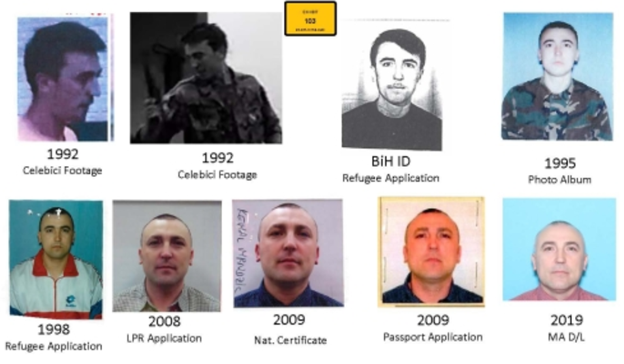
The camp closed in December 1992 and Mrndzic went on to serve as commander of the Musala detention camp, another Serb POW camp detention camp that became widely known for brutal regular abuses of detainees, including murder, an HSI agent complaint stated. After the war ended, Mrndzic went into hiding and, in 1999 entered the United States on an approved refugee application based on an elaborate cover story he provided that went unchecked at the time and again a decade later when he applied for a green card and U.S. citizenship, both granted based on the original fake cover story. As early as 1996, international investigative agencies were aware of Mrndzic’s crimes and had documented them, including at a major 1998 trial and conviction of four guards, one of whom used Mrndzic’s written testimony for his defense that placed him at the camp as a supervisor. American adjudicators later could have accessed these records at any time but never did. Had they checked during any of three approval processes, two of them well after post 9/11 security screening reforms were in place, U.S. immigration adjudicators would have learned that dozens of his victims had described Mrndzic as one of the most brutal guards at the camp and had long since attested that he was widely known for his particularly vicious and flagrant public treatment of Serb prisoners. An ICE press release described Mrndzic as having participated in the “systematic and pervasive brutal torture and deprivation of basic human needs of hundreds of captive victims – some of whom were elderly – at the Celebici prison camp.” He and guards under his command raped women in front of each other, sadistically tortured inmates at random with electric devices and heated knife blades, beat at least eight to death, and withheld food, water, and medicine. One survivor recounted the beating death of a 70-year-old detainee to whom guards had pinned a military badge on his forehead while he was dying. While in hiding from an international war crimes investigation in Croatia during 1998, Mrndzic applied for U.S. refugee status using a fraudulent cover story that he’d been captured by Serb forces at the war’s start and eventually escaped brutalities of the sort for which he was implicated. In 1998, prior to 9/11-era security vetting reform improvements, the U.S. Citizenship and Immigration Service (USCIS) representative accepted Mrndzic’s detectable frauds at face value. “At the conclusion of the interview, and upon review of his completed forms…the immigration officer approved Mrndzic’s application as a refugee. In so doing, the immigration officer relied on Mrndzic’s written and oral false statements,” the agent complaint said. He entered the United States in 1999 to settle in Lynn, Massachusetts with his wife, who was also admitted as a refugee. In 2008, long after U.S. implementation of more rigorous post-9/11 security vetting reforms, USCIS officers inside the United States approved Mrndzic’s application to become a lawful permanent resident, again accepting elaborate fake stories he’d originally concocted, the agent complaint said. Again the following year, in April 2009, USCIS approved his application to become a naturalized U.S. citizen based on Mrndzic’s bogus storylines. (This was possible, just one year after receiving permanent residence, because, as the complaint notes, his "lawful permanent residence status was applied retroactively to his original admission date of March 4, 1999.") In fact, American adjudicators could have easily learned that Mrndzic had always been lying to cover up his crimes at the camps but just checking with the International Criminal Tribunal for the Former Yugoslavia (ICTY). HSI agents had no trouble finding these, plus videos and photographs of Mrndzic at the Celebici camp. Key among this documentation was a major ICTY investigation of four Celebici camp guards, all later convicted, which surfaced information that Mrndzic had regularly engaged in and ordered the inmate abuses as head of security. The ICTY investigators were aware of the brutality allegations against Mrndzic and that he worked at the camp because they interviewed him that year, filing away the notes. While Mrndzic acknowledged working at the camp, he denied that any abuses took place there. During his October 1996 interview, Mrndzic himself stated that “the ICTY investigator told him that the Tribunal knows and there is proof that he was involved in the alleged murder” of one prisoner at Celebici. Furthermore, Mrndzic provided written testimony on behalf of one of the accused guards at the ICTY’s 1998 trial, placing him at the camp in a position of authority, another missed clue that Mrndzic’s fake story given to immigration authorities was at odds with checkable reality. Having been told ICTY had evidence against him too in 1996, Mrndzic began planning to emigrate to the United States as a refugee. ICE Homeland Security Investigations agents caught up to Mrndzic in 2022 and showed him the 1996 interview statements they’d had no trouble retrieving. HSI agents also were able to find video recordings taken at Celebici in 1992 in which he appeared in uniform holding a rifle, and military photos too. They’d also found plenty of witness victims willing to provide testimony and brought immigration fraud charges. He was indicted in June 2023. On October 18, 2024, following a two-week jury trial in Boston, a jury convicted Mrndzic. A judge sentenced him to 65 months in prison. |
|
Vetting Year
|
Name Vallmoe Shqaire (aka Mahmad hadr Mahmad Shakir) |
|
Summary Covered up Palestine Liberation Organization "Shabeda cell"/Israeli conviction for road-side bomb by using fake name |
Immigration Status Type B-2; Petition for Alien Relative Legal Permanent Residence; Naturalized Citizenship |
Opportunities Missed 1 |
Time from US Entry to Discovery 13 years, six months* |
Case Outcome Convicted 1/2019 for false statements; denaturalized |
Details
x
Vetting Year
Time from US Entry to Discovery 13 years, six months* National Security Crime Type Terrorism-related, immigration fraud
Immigration Status Type B-2; Petition for Alien Relative Legal Permanent Residence; Naturalized Citizenship Agency Responsible for Failure State Department for B-1 visa; USICS for Legal Permanent Residence and Naturalized Citizneship Opportunities Missed 1
Criminal Charges False statements on citizenship application Case Outcome Convicted 1/2019 for false statements; denaturalized
Vallmoe Shqaire, a Palestinian with Jordanian citizenship who had been living in Los Angeles, Calif., entered the United States on a visitor's visa in 1999. It would not be discovered for nearly a decade that his real name is Mahmad hadr Mahmad Shakir and that the Israeli government had significant terrorism-related records about him. That same year, 1999, he paid $500 to a woman to marry him, a so-called "green card marriage" that didn't work out, although a second marriage attempt did. He was then able to apply for and successfully obtain lawful permanent residence and eventually obtained citizenship in 2008. Vetting failure occurred, evidently, because USCIS officers failed to cross-check fingerprints or other biometrics with Israeli intelligence for his 2008 security vetting, which would have turned up a trove. It wasn’t until 2013, and only because Shqaire had fallen under investigation for financial fraud, that the DOJ requested records from Israel under a mutual assistance agreement. The request yielded detailed Israeli court records and confessions as to Shqaire’s trusted role as a PLO guerilla fighter and operative during the 1980s who was convicted in 1991 of planting a bomb on a bus filled with civilians (it failed to explode). In 2010, Shqaire confessed his PLO involvement in a terrorist team known as the "Shabeda cell" and also to criminal activities to LA sheriff’s deputies investigating him for grand theft auto. To gain visas and legal status and citizenship in the many years prior to 2013, when he came under financial fraud investigation and the Israeli records were requested, Shqaire illegally omitted the disqualifying facts of his life history and his real birth name. Shqaire's work in the Shabeda cell also required that he train with arms and explosives and that he beat Arabs suspected of collaborating with Israel. One of those victims died of stab wounds. A USCIS officer interviewed Shqaire, looked over his application for legal residence, then approved it the same day, court records show. For the citizenship petition, a USCIS officer interviewed Shqaire, asked him to reiterate answers to some of the questions under oath (he lied), and about a month later that, too, was approved. CNN reported that the U.S. immigration officer who handled his citizenship application said she merely relied on him to "provide complete and truthful answers" about his criminal past and associations. Only if he had told the truth about his bombing conviction would she have requested further documentation. Naturally, Shqaire did not offer that personal history. A CNN story quoted a former U.S. immigration official involved in the vetting process in 2008 saying that a mandatory background check in place at the time should have detected the terrorism conviction, whether or not an applicant disclosed it. Left unclear was whether the check took place or, if so, was defeated by the false name. Regardless, a check of his fingerprints with the Israelis years later led to his undoing. |
|
Vetting Year
|
Name Enas Ibrahim |
|
Summary Iraqi refugee omitted information about at least one and possibly two brothers-in-law involved in the 2005 kidnapping of U.S. contractor Roy Hallums; also committed wire fraud; failed to include previous name in natuarlization application |
Immigration Status Type Refugee classification; Lawful Permanent Residence; Naturalized Citizenship |
Opportunities Missed 2 |
Time from US Entry to Discovery 5 years, 5 months* |
Case Outcome Convicted 06/2017 for illegally procuring citizenship |
Details
x
Vetting Year
Time from US Entry to Discovery 5 years, 5 months* National Security Crime Type Terrorism-related, immigration fraud
Immigration Status Type Refugee classification; Lawful Permanent Residence; Naturalized Citizenship Agency Responsible for Failure USCIS for Refugee classification Opportunities Missed 2
Criminal Charges Attempt to procure naturalization contrary to law Case Outcome Convicted 06/2017 for illegally procuring citizenship
Iraqi citizen Enas Ibrahim entered the United States as a refugee in 2008 with her husband and his brother. They claimed elaborate persecution stories involving victimhood at the hands of al-Qaeda in Iraq and settled in the Fairfax, Va., area. But USCIS security screeners based in Amman, Jordan, granted their provisional refugee petitions despite discoverable intelligence information from a U.S. military raid in 2005 that recovered Yousif Al-Mashhadani’s fingerprint inside an al-Qaeda bunker where kidnapped westerners were freed, including American contractor Roy Hallums, an FBI complaint affidavit much later revealed. USCIS reviewers in Jordan also missed other ties to the particularly murderous branch of al-Qaeda in Iraq. She, her husband Adil, and brother-in-law Yousif hid the existence of a third brother tied even more directly to the raided al-Qaeda bunker. The later FBI investigation in 2016 discovered that in 2004, that brother, Majid Al-Mashhadani, was working with al-Qaeda and helped his terrorist group kidnap Hallums, who was kept for nearly a year blindfolded in a underground torture bunker. When U.S. military forces freed Hallums and other captives in the 2005 raid, they arrested this Al-Mashhadani brother at the site. That brother was imprisoned for two years in Iraq, getting out at about the time the rest of his family was applying for U.S. refugee status in 2007 in next-door Jordan. Enas Ibrahim participated in family decisions to cover this up and to fabricate terrorist persecution stories to improve their odds of admission as refugees. (In an unrelated matter, Enas also was later found to have falsely overstated her income to qualify for a car loan in Virginia.) Ultimately, it was the U.S.-based FBI investigation that uncovered not only Yousif’s fingerprint match to the terrorist safe house but also the fact that the third brother, Majid, had been captured in the U.S. raid at the kidnapping lair. It was also the FBI investigation, rather than any routine security screening associated with the refugee or permanent residence applications, that discovered the family’s elaborate lies about having been victimized by terrorists in Iraq. Was Yousif an al-Qaeda operative who got into America as a refugee? Court records do not elaborate on the meaning behind the Yousif Al-Mashhadani fingerprint. But regardless of whether this refuge-granted brother was a terrorist operative, too, the investigation also found that both brothers, Yousif and Adil, as well as Enas Ibrahim, wittingly covered up their disqualifying relationships to the arrested kidnapper brother on at least two occasions. The first was during the 2007-2008 USCIS security screening for the provisional refugee applications in Iraq. A second opportunity passed when they secured their change-of-status applications in the United States for lawful permanent residence some months later in 2008, and a third came and went in May 2013 when the trio applied for citizenship. The FBI found the Yousif fingerprint match in a separate investigation six months later, in November 2013. The misses seemed particularly egregious in light of other information apparently at the fingertips of adjudicators. In his first refugee application, for instance, Hasan filled out a “Worldwide Refugee Admissions Family Tree” report in which he omitted the al-Qaeda Al Mashhadani brother. He also dropped his own “Al Mashhadani” family name as part of the ruse, keeping the alias permanently after they settled in Virginia. USCIS security screeners who used the family tree report for their approval apparently missed much discoverable derogatory information at their fingertips, judging from court records. For one, a fourth brother identified in court records only as “A.M.”, a ranking Iraqi government official who would have been listed in the family tree document, also applied for refugee status in 2007 and in August of that year provided all of the information about the terrorist brother and fully identified all of his other brothers to USCIS adjudicators. Information that all the brothers were biologically related (one therefore revealed as not listed in applications), nearly a year before Hasan’s application was granted, should have been available through basic fact-finding and would have enabled adjudicators to link them all and find the omission. Secondly, a fingerprint check of Yousif Al-Mashhadani likely was never conducted as required under post-9/11 security screening reforms. Otherwise, a fingerprint database check should have discovered his fingerprint had been collected from inside the bunker, flagged the refugee applicant as a likely terrorist operative as well, and doomed the initial applications of all of the family members. Third, the FBI in 2016 found that the persecution stories that she and both brothers initially provided to USCIS adjudicators were riddled with simple discrepancies that seemed easily discoverable. Under FBI questioning about these back-story discrepancies, all were forced to admit to making up the basic facts of their claims years after USCIS adjudicators apparently accepted them at face value. In short, domestic criminal investigations that followed the footsteps of immigration security screening – rather than the other way around – turned up the derogatory information necessary to reveal so many deceits. Enas was arrested in March 2017, after eight years of ineligible living inside the United States. She pleaded guilty to conspiracy to commit immigration fraud, was sentenced to time served and submitted to deportation proceedings. |
|
Vetting Year
|
Name Kefelegn Alemu Worku (aka Habteab Berhe Temanu) |
|
Summary Ethiopian human rights violator who used false identities to slip through several U.S. security vetting processes by posing as the father of a large family to which he was not related. |
Immigration Status Type Refugee status; Naturalized Citizenship |
Opportunities Missed 2 |
Time from US Entry to Discovery 7 years, 7 months |
Case Outcome Convicted at trial of identity fraud, lying on immigration documents. Sentenced to 22 years in federal prison |
Details
x
Vetting Year
Time from US Entry to Discovery 7 years, 7 months National Security Crime Type Human rights violations, immigration fraud
Immigration Status Type Refugee status; Naturalized Citizenship Agency Responsible for Failure USCIS for Refugee classification and Naturalized Citizenship Opportunities Missed 2
Criminal Charges Unlawfully procuring citizenship or naturalization, aggravated identity theft, and fraud and misuse of visas, permits, and other documents. Case Outcome Convicted at trial of identity fraud, lying on immigration documents. Sentenced to 22 years in federal prison
Ethiopian Citizen Kefelegn Alemu Worku entered the United States and settled in Colorado in November 2004 on a family refugee status claim established in Kenya. In November 2006, he applied for lawful permanent residence and received it in 2008, then applied for U.S. citizenship on November 22, 2009, which he received in under 13 weeks. But the false name the Ethiopian successfully submitted on all three applications – Habteab Berhe Temanu – covered up the fact that, eight years earlier, Ethiopia had publicly convicted him of genocide and sentenced him to death in absentia for torturing to death at least 101 and as many as 150 people during the 1977-80 “Red Terror” campaign, which was a ruthless political purge targeting those suspected of opposing the Marxist regime of the time. Worku committed these crimes while working as a prison guard at the notorious Higher 15 detention camp during the purge years. Later witness testimony had Worku conducting beatings and torture sessions using a cattle prod, rifle butts, whips and pipes, burning newspapers, and cigarettes, and shot dead both adults and children, court records show. One witness testified, for instance, that the “bloodthirsty monster”, after executing several prisoners, ordered other prisoners to drink the shed blood and lick the blood clean with their tongues. Ethiopia’s 2000 prosecution could have made his face and name publicly knowable and potentially discoverable in three separate security vettings, but so too could his initial identity fraud. U.S. government agencies missed three opportunities to discover Worku, two of them from 2008 onward. After fleeing Ethiopia, Worku lived in Kenya for 13 years. In about early 2004, he slotted himself into the identity of an Ethiopian father of five who was dying as he and his family in Kenya were about to be granted provisional refugee status and admittance to the United States. At the invitation of the ill man’s wife and older children, Worku then falsely claimed parenthood of the four children to ensure the application would go through. Worku has denied committing the atrocities but admitted that he slotted himself into the refugee family at the behest of the man who eventually did die the following year, in 2005. “The father of the kids that I brought here…[he} was sick and on his death bed. He entreated me to take his kids to the United States because he didn’t want his kids to miss that opportunity of coming to the United States,” Worku told a judge during a hearing in Denver. USCIS refugee affairs personnel on the ground potentially could have uncovered the fraud by checking with the Ethiopian government for wanted convicted war crimes fugitives, or merely by interviewing the family members individually at length for discrepancies and comparing their testimony against Worku’s personal history during his long years living in Kenya. He lived for years as a Denver-area parking attendant before a former victim in May 2011 recognized him by chance in a local café and tipped off federal ICE Homeland Security Investigations. After his Colorado discovery, an ICE investigator easily coaxed from all of the children that Woku was an “imposter”, court records show. On July 12, 2004, however, he entered the United States with the man’s wife and five children. A second chance for the U.S. government to discover this fraud came came and went in 2008, when the USCIS granted Worku lawful permanent residence. A third opportunity was lost after Worku applied for U.S. citizenship on November 22, 2009 and was granted it on March 2, 2010. USCIS granted these benefits despite the Ethiopian court’s 2000 conviction. In May 2011, Homeland Security Investigations received information from an informant who was a naturalized U.S. citizen originally from Ethiopia. The informant was a former prisoner of Higher 15 who recognized Worku at the Cozy Cafe in Aurora, Colorado. On October 11, 2013, a federal jury convicted Worku for unlawfully procuring citizenship or naturalization, aggravated identity theft, and fraud and misuse of visas, permits and other documents. In May 2014, a federal judge sentenced him to 22 years in federal prison and revoked his U.S. citizenship. |
|
Vetting Year
|
Name Yousif Al-Mashhadani |
|
Summary Iraqi refugee whose fingerprints were found at the scene of a terrorist group's Iraq bunker, where kidnapped U.S. citizen contractor Roy Hallums was taken and abused in 2005; omitted information about a brother who was arrested there in a raid and served two years in prison; also created a false story of persecution |
Immigration Status Type Refugee classification; Lawful Permanent Residence; Naturalized Citizenship |
Opportunities Missed 2 |
Time from US Entry to Discovery 5 years, 5 months* |
Case Outcome Convicted 06/2017 for illegally procuring citizenship |
Details
x
Vetting Year
Time from US Entry to Discovery 5 years, 5 months* National Security Crime Type Terrorism-related, immigration fraud
Immigration Status Type Refugee classification; Lawful Permanent Residence; Naturalized Citizenship Agency Responsible for Failure USCIS for Refugee classification, Lawful Permanent Residence, and Naturalized Citizenship Opportunities Missed 2
Criminal Charges Attempt to procure naturalization contrary to law Case Outcome Convicted 06/2017 for illegally procuring citizenship
Iraqi citizen Yousif Al-Mashhadani, his brother Adil Hasan Al-Mashhadani, and his brother’s wife Enas Ibrahim entered the United States together as refugees in 2008. They claimed persecution stories involving victimhood at the hands of al-Qaeda in Iraq and settled in the Fairfax, Va., area. But US Citizenship and Immigration Services security screeners based in Amman, Jordan, granted their provisional refugee petitions despite discoverable intelligence information from a U.S. military raid in 2005 that recovered the fingerprint of Yousif inside a deplorable underground al-Qaeda torture bunker where kidnapped westerners were freed, including American contractor Roy Hallums, an FBI complaint affidavit much later revealed. While it’s unclear from public information why Yousif's fingerprints taken for his refugee application in Jordan three years later did not get matched to the one in U.S. possession, UCIS reviewers in Jordan also missed other family ties to the particularly murderous branch of al-Qaeda in Iraq and to the torture bunker. It was that Yousif and his other brother, Adil Hasan, hid the existence of another problematic brother, Majid Al Mashhadani, who was working directly with al-Qaeda and helped his terrorist group kidnap Hallums, who was kept for nearly a year blindfolded in a deplorable underground torture bunker, a later FBI investigation found. When U.S. military forces freed Hallums and other captives in the 2005 raid, they arrested Majid at the site. The Iraqi government imprisoned him for two years in Iraq. It was the U.S.-based FBI investigation that matched Yousif's fingerprints to the torture bunker and also uncovered the brotherly connection to Majid at the al-Qaeda bunker, not any routine security vetting associated with refugee or permanent immigration applications, including one in May 2013 for naturalized citizenship. The FBI found the fingerprint match in a separate investigation six months after the citizenship applications were filed, in November 2013. Court records do not elaborate on government thinking about the Yousif Al-Mashhadani fingerprint. But whether this refuge-granted brother was a terrorist operative, too, the investigation also found that all three refugees, including Adil’s wife, Enas Ibrahim, wittingly covered up their disqualifying relationships to the arrested kidnapper brother on at least two occasions. The first was during the 2007-2008 USCIS security screening for the provisional refugee applications in Iraq. A second opportunity passed when they secured their change-of-status applications in the United States for lawful permanent residence sometime later in 2008, and a third came and went in 2013 when the trio applied for naturalized citizenship. The misses seemed particularly egregious in light of other information apparently at the fingertips of adjudicators. In his first refugee application, for instance, Hasan filled out a “Worldwide Refugee Admissions Family Tree” report in which he omitted the al-Qaeda brother who'd been imprisoned after the American bunker raid. He also dropped his own “Al Mashhadani” family name as part of the ruse, keeping the alias "Adil Hasan" permanently after they settled in Virginia. But these ruses were discoverable because of yet a fourth brother who'd entered the United States earlier. The fourth brother identified in court records only as “A.M.”, a ranking Iraqi police official who would have been listed in the family tree document, also applied for refugee status in 2007. In August of that year, the Iraqi police official brother provided the American agency with all of the information about the terrorist brother and fully identified all of his other brothers to USCIS adjudicators. They were all in searchable databases. Information that all the brothers were biologically related (one therefore revealed as not listed in applications), nearly a year before Hasan’s application was granted, was therefore available through basic fact-finding and would have enabled adjudicators to link them all and discover the omissions. Secondly, a fingerprint check of Yousif Al-Mashhadani likely was never conducted as required under post-9/11 security screening reforms. Otherwise, a fingerprint database check should have discovered his fingerprint had been collected from inside the bunker, flagged the refugee applicant as a likely terrorist operative as well, and doomed the initial early applications of all three. Third, the FBI in 2016 found the persecution stories that both brothers and Enas Ibrahim initially provided to USCIS adjudicators were riddled with simple discrepancies that seemed easily discoverable. Under FBI questioning about these back-story discrepancies, all were forced to admit to making up the basic facts of their claims years after USCIS adjudicators apparently accepted them at face value. In short, federal criminal investigation following the basic footsteps of immigration security screening – rather than the other way around – turned up the derogatory information necessary to reveal the deceits. Yousif Al-Mashhadani was arrested in March 2017, after eight years of ineligible living inside the United States. He pleaded guilty to immigration fraud, was sentenced to time served and submitted to deportation proceedings. |
Key & Definitions
Types of cases
Espionage-Related: Cases begun under the auspices of federal law enforcement agencies as potential espionage involving the theft of sensitive U.S. government information, political influence operations by agents of foreign governments, theft of proprietary U.S. economic property for proliferation into foreign nations, illegal exports of U.S. technologies or restricted military-use commodities, and counter-intelligence.
Human-Rights Violation Related: Cases begun under the auspices of federal law enforcement agencies responsible for investigating global atrocities and perpetrators of human rights violations and war crimes. These would include individuals suspected of conducting murder, genocide, torture and other forms of serious human rights abuses who are living within the United States.
Terrorism Related: Cases begun under the auspices of the FBI as illegal violent acts of terrorism intending to murder, maim or destroy property to affect social and policy change; material support furthering acts of terrorism by U.S.-designated banned groups or individuals such as providing financial, material, or physical assistance or any other assistance that advances the illegal causes of those groups or individuals; the collection, use or plans to use of weapons of mass destruction in the commission of terrorism acts.
Visas
A-2: Derivative benefit given to spouse or child of an A-1 visa holder, which is a nonimmigrant visa for diplomat or government official physically present in the United States on assignment for their national government. (U.S. Department of State)
Asylum: A protection against deportation granted to beneficiaries determined to have suffered persecution or fear that they will suffer persecution on the basis of their race, religion, nationality, membership in a particular social group or political opinion (USCIS).
B-1: Nonimmigrant temporary business visitor participating in business activities of a commercial or professional nature (U.S. Citizenship and Immigration Service)
B-2: Nonimmigrant spouse and children of a B-1 temporary business visitor who is participating in business activities of a commercial or professional nature. (U.S. Citizenship and Immigration Service)
EB-5: Immigrant visa leading to lawful permanent residence (green cards) for foreign national entrepreneurs who invest capital in U.S.-based businesses that will employ U.S. citizens and residents. Part of the “immigrant Investor Program.” (U.S. Citizenship and Immigration Service)
Electronic System for Travel Authorization (ESTA): An online electronic application system allowing approved citizens of 40 select nations to enter the United States and remain without a visa for up to 90 days.
F-1: Nonimmigrant students enrolled full-time in an academic educational program, language-training program, or vocational program at an accredited college, university, seminary, conservatory, academic high school, elementary school, or other academic institution or language training program, culminating in a degree, diploma or certificate. (U.S. Department of State)
F-2: Nonimmigrant dependents of F-1 student visa holders who are enrolled in an academic education program. (U.S. Department of State)
H1-B: Nonimmigrant specialty occupation worker visas requiring higher education degree or equivalency. This temporary visa requires sponsoring employers to file petitions with U.S. Citizenship and Immigration Services and potentially expires when employer sponsorship ends. The duration is three years, extendable to six years after which the visa holder may need to reapply. (U.S. Citizenship and Immigration Service)
J-1: Nonimmigrant temporary cultural or scholarly exchange visas with participating countries often involving teachers, physicians, researchers, short-term scholars, advanced-degree students, interns and government visitors. (U.S. Department of State
L-1: Nonimmigrant visas for temporary intracompany transferees who work in managerial positions or have specialized knowledge. Holders typically work in executive positions in a company located outside the United States but are opening offices inside the United States. (U.S. Citizenship and Immigration Service)
LPR (Lawful Permanent Residence): Most commonly known as “green-card” holders, noncitizen immigrants lawfully authorized to live permanently within the United States, own property, receive public benefits, work authorization, financial assistance at public colleges or join the Armed Forces. Three broad classes cover foreign nationals seeking family reunification, or relief on economic and humanitarian bases. May apply to become U.S. citizens five years after LPR grant. (U.S. Citizenship and Immigration Services)
MAVNI (Military Accessions Vital to National Interest): Immigrant program leading to citizenship for foreign nationals who enlist in the U.S. Armed Forces for up to four years and who hold useful specialized critical skills such as language, cultural backgrounds, medical and nursing training. (U.S. Department of Defense)
Naturalized Citizenship: Process by which U.S. citizenship is granted to a lawful permanent resident after meeting requirements established by Congress in the Immigration and Nationality Act. Prerequisites include at least five years as a lawful permanent resident, “good moral character,” English language proficiency, test of U.S. history and government principles, physically present in the U.S. for at least 30 months and able to take an Oath of Allegiance. (U.S. Citizenship and Immigration Service)
Refugee: Immigrant status granted to applicants located outside the United States who can demonstrate persecution due to race, religion, nationality, political opinion, or membership in a particular social group. Those approved outside the United States are granted conditional Legal Permanent Residence. (U.S. Citizenship and Immigration Service
TPS (Temporary Protective Status): Nonimmigrant form of temporary residency and protection from removal bestowed by the Secretary of Homeland Security on foreign nationals who are already inside the United States whose home countries are regarded as unsafe for their returns. Eligible people without nationality, who last resided in the unsafe country, may also be granted TPS. Countries may be designated on grounds of ongoing armed conflict, environmental disaster or “extraordinary and temporary conditions.” The protection is renewable but not legally regarded as permanent and provides for work authorization and other benefits reserved for permanent legal residents. (U.S. Citizenship and Immigration Service)