
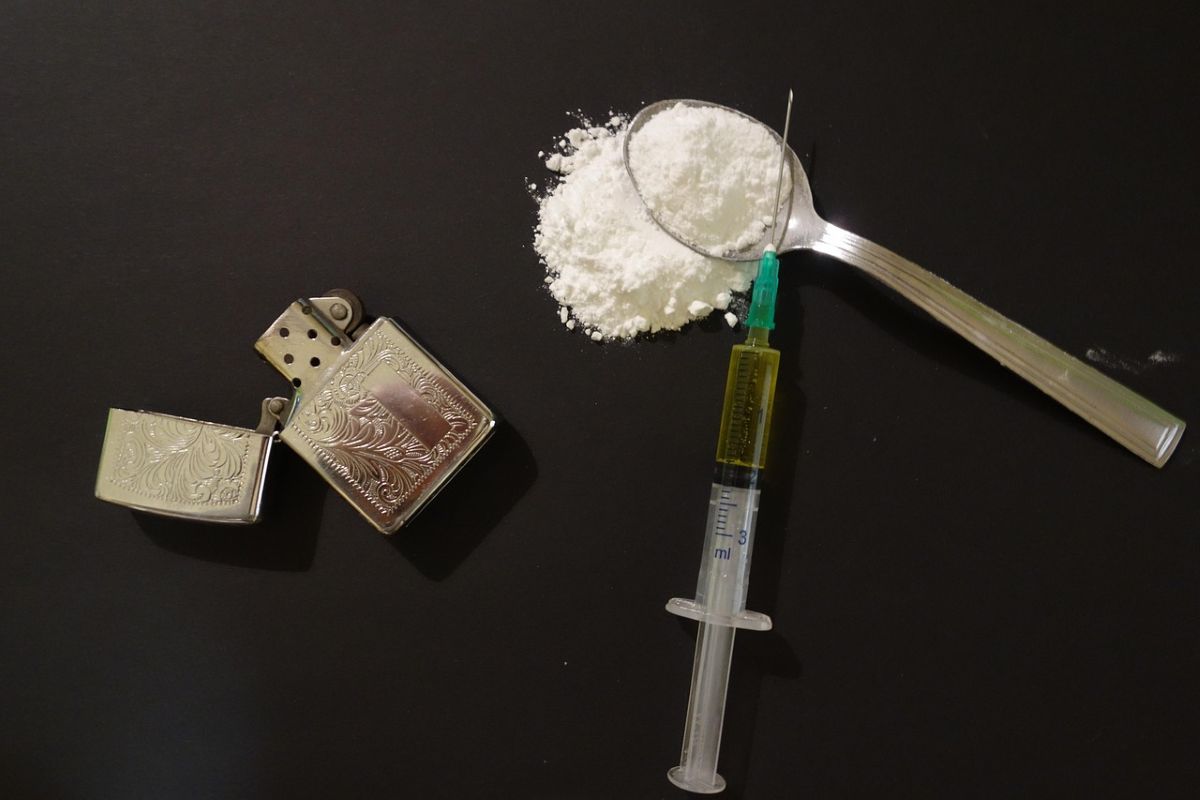
In April, my then-colleague Todd Bensman reported that Mexican drug cartels cum foreign terrorist organizations were heeding the Trump administration’s warnings to stop running fentanyl (a uniquely dangerous synthetic opioid) into the United States. CBP statistics continue to show a decline in the fentanyl being smuggled in at the Southwest border — but perhaps it’s time for the federal government to focus on methamphetamine and cocaine, as well.
Fentanyl
As noted, fentanyl is uniquely deadly — two milligrams (similar to five to seven grains of salt), of the opioid can be lethal, “depending on a person’s body size, tolerance and past usage”.
The toxicity of fentanyl was blamed for an increase in drug fatalities in the United States throughout the pandemic and well into the Biden administration, with nearly 74,000 of the roughly 108,000 overdose deaths in FY 2022 (68.5 percent) traced to it.
It’s well known that most of the fentanyl that enters this country is produced in illicit Mexican drug labs using precursor chemicals shipped to that country from China, but less well-examined is the role Canadian actors play in production of the synthetic opioid and in the laundering of drug proceeds.
These facts haven’t escaped the administration’s notice, however, which is in part why Trump imposed tariffs on all three countries in early February.
The Biden Migrant Surge and Fentanyl Smuggling
CBP statistics reveal that the agency’s seizures of the drug skyrocketed along with the migrant surge at the Southwest border under the last administration, rising 89 percent between FY 2022 (14,100 pounds seized at the border and the ports) and FY 2023 (26,700 pounds).
There was a clear correlation between the tsunami of migrants entering illegally and the rise in fentanyl smuggling. As Rodney Scott — Biden’s first Border Patrol chief and now CBP director under Trump II — explained in a letter to Senate leadership in September 2021:
[I]llegal entries are being scripted and controlled by Plaza Bosses that work directly for the transnational criminal organizations (TCO) to create controllable gaps in border security. These gaps are then exploited to easily smuggle contraband, criminals, or even potential terrorists into the U.S. at will. Even when [Border Patrol] detects the illegal entry, agents are spread so thin that they often lack the capability to make a timely interdiction.
While total CBP Southwest border seizures of fentanyl declined slightly (to 21,100 pounds) in FY 2024, Border Patrol seizures increased modestly during that period (from 2,800 pounds in FY 2023 to 2,900 pounds in 2024), a sign smugglers had shifted away from the ports — where CBP officers can more easily find contraband — to the wide-open border between them as migrants continued to flow into the country.
And then Trump Returned
Total CBP Southwest border fentanyl seizures went into a quick decline following the November 2024 presidential election that ushered in Trump’s return, falling from 2,200 pounds last September to half that in December, falling further to 598 total pounds in February, the first full month of the new administration.
Except for July, when CBP seized 1,300 pounds of the drug, fentanyl apprehensions have remained below 1,000 pounds at the Southwest border every month since Trump came back, and in August totaled just 679 pounds — still too much, but 60 percent less than the same month in 2024 (1,700 pounds).
As Bensman explained in April:
The cartels appear to have determined that since Trump is so bad for business, they have decided to quit smuggling it into the American market and send it to Europe and other parts of the world instead. What to do about the lost revenue? Easy. Make up the difference by shipping greater volumes of less-politically and physiologically lethal drugs like cocaine and methamphetamine.
Cocaine
Back in the 1980s and 1990s, when I was coming of age, referring to cocaine as a “less-politically and physiologically lethal drug” would have been met with some quizzical stares.
Cocaine was everywhere, and there were entire sectors of the media dedicated to the drug, regardless of whether it was referred to as “blow”, “bump”, “coke”, “snow”, or “Bolivian marching powder” in movies (Scarface, Goodfellas, and King of New York, to name a few) and songs (“Smuggler’s Blues”, “Koka Kola”, “Morning Glory”, etc.), with Cracked recently publishing a list of what it claims were “23 Movies Brought to You Mostly By Cocaine” during the period.
Then, there was “Miami Vice”, “must-see television” that defined fashion (for the worse) for the five years it was on NBC in the mid-1980s. Every episode revolved around Sonny Crockett (Don Johnson) and Rico Tubbs (Philip Michael Thomas) going undercover to disrupt an illegal cocaine industry seemingly populated by overly ripped imbeciles.
Societal disruptions caused by the crystallized form of the drug, “crack”, propelled then-First Lady Nancy Reagan’s famous “Just Say No” crusade and the Drug Abuse Resistance Education (D.A.R.E.) program.
But in the face of tens of thousands of fentanyl-poisoning deaths annually, cocaine has seemingly been pushed into a category of naughty licentiousness once occupied by marijuana, before “Reefer Madness” got a face-lift and was transformed into nearly $4 billion in state-tax revenue in 2024.
Except cocaine is still illegal and really bad for you, with use of the drug resulting in nearly 30,000 deaths in 2023, up from fewer than 4,700 in 2011.
As for the source of U.S.-consumed cocaine, the U.S. Drug Enforcement Administration (DEA) explains:
Cocaine is derived from coca leaves grown in Colombia, Peru, and Bolivia. The cocaine manufacturing process takes place in remote jungle labs where the raw product undergoes a series of chemical transformations. Colombia produces about 90 percent of the cocaine powder reaching the United States. Most of the cocaine entering the United States comes through Mexico.
That hasn’t changed since Lt. Castillo (Edward James Olmos) was sending Sonny and Rico out to bust the bad guys.
Methamphetamine
Methamphetamine never has been as socially acceptable as cocaine, likely because it makes users twitch and causes their teeth to fall out (so-called “meth mouth”).
Moreover, that synthetic stimulant doesn’t simply rob you of a Pepsodent smile: Of the 309,000-plus overdose deaths in the United States between January 2021 and June 2024, nearly a third (31.2 percent) involved meth alone, and an additional 4 percent were triggered by meth and cocaine.
And while AMC’s “Breaking Bad” had its own five seasons of Emmy glory, the show strictly focused on the morally conflicted anti-heroes who cooked the stuff, not the social outcasts (read: losers) consuming it.
That said, Walter White/Heisenberg (Bryan Cranston) and his domestic blue meth production business were essentially artifacts by the time the show premiered in January 2008.
As InSight Crime has reported, the 2005 Combat Methamphetamine Epidemic Act of 2005 (CMEA) limited “access to over-the-counter cold medicines that contain ephedrine and pseudoephedrine, key precursor ingredients for methamphetamine production” in this country.
That’s why you must show your driver’s license to buy Sudafed at the local Walgreen’s and CVS.
While Mexico followed suit two years later, according to the DEA, “Mexican methamphetamine is made with different precursor chemicals.” Consequently: “Mexican drug trafficking organizations have become the primary manufacturers and distributors of methamphetamine to cities throughout the United States, including in Hawaii.”
Like small-town hardware stores folding after Home Depot arrives, domestic meth labs can’t keep pace with the Mexican competition. Whereas law enforcement seized 23,700 clandestine methamphetamine production operations in the United States in 2004, by 2023, total U.S. seizures dropped to a mere 60 domestic meth labs.
Seizures Under Trump
It’s tough to measure the quantities of drugs and other contraband successfully smuggled into the United States, but as Bensman alluded to, CBP seizures are “a key indicator of broader total smuggling at and between the southern border’s ports of entry”.
As fentanyl seizures — and logically total fentanyl smuggled — have declined under Trump, apprehensions of both cocaine and fentanyl have risen at the Southwest border.
In all of FY 2024, CBP at the U.S.-Mexico line nabbed 30,400 pounds of cocaine, whereas in the first 11 months (through the end of August), seizures totaled more than 39,000 pounds, hitting a four-year monthly high of 4,600 pounds seized in July.
August’s CBP Southwest border cocaine haul, 4,000 pounds, marked a 54-percent increase compared to August 2024 (2,600 pounds).
Methamphetamine seizures haven’t seen the same marked increase, but the trendlines are headed in the wrong direction.
Border Patrol agents and CBP officers at the Southwest border and ports stopped 142,000 pounds of meth through the first 11 months of FY 2025, compared with 158,000 pounds in all of FY 2024.
But the nearly 24,000 pounds of meth seized by CBP at the Southwest border in June was, again, a four-year monthly record, and the August total (20,500 pounds) was more than 23 percent higher than in the same month one year prior (16,600 pounds).
More than 41 percent of all methamphetamine seizures by CBP at the Southwest border in FY 2025 were recorded in the last three reporting months, June through August.
It’s possible — and more than likely — that the rise in seizures in part correlates with the fact that agents aren’t as busy now rounding-up, transporting, processing, and (usually under Biden) releasing illegal migrants, and can thus focus more on stopping drugs.
But that would be true of fentanyl, as well, and as noted fentanyl seizures are on the decline at the Southwest border.
Cartel leaders and smugglers are, by definition, low-life creeps. But they’re also canny businessmen and need money to support their operations, lifestyles, and questionable architectural tastes without garnering the extra attention the Trump administration is focusing on their fentanyl.
As Todd Bensman reported in April, the cartels out of fear of the administration are cutting back on fentanyl smuggling and sending more cocaine and meth north instead. It’s time for the U.S. government to give those drugs — both of which are highly addictive and deadly — the “full Trump treatment”, too.