
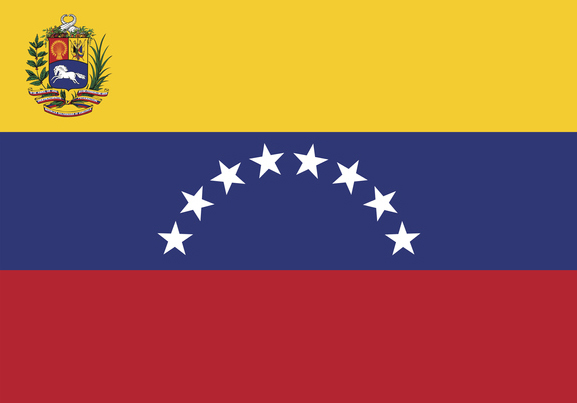
Like many, I awoke on Saturday to news U.S. troops had “extracted” Venezuelan “President” Nicolas Maduro from his presidential palace in Caracas and were bringing him to the United States to face criminal prosecution in New York. Can we now have a reckoning about the hundreds of thousands of Maduro’s countrymen who came illegally to this country as “migrants”, and about those in the media who ignored the obvious dangers of the reckless Biden immigration policies the worst of those migrants exploited?
A Quick Recap of Venezuelan History
Ever since the 1950s, the political and economic fortunes of the South American nation have been tied to its key export: oil. The country has the world’s largest known reserves of the stuff, but due to its “density” and sulfur content, Venezuelan crude is especially difficult to extract and refine. Simply put, oil helps an economy, but just because you have it doesn’t mean you’ll get rich.
To put his country on an even economic keel, then-President Carlos Andres Perez in February 1989 tried to impose free-market reforms that were modeled along the lines of the pro-capitalist Washington Consensus. “Populism” in the face of reason is evergreen in Latin America, however, and those reforms triggered riots, in which hundreds died.
The disorder gave an opening to Hugo Chavez, a Venezuelan military officer with a revolutionary agenda, to mount an attempted coup in February 1992 (which got him jailed), followed by another in November of that year, both of which were turned back by troops loyal to the government.
Chavez was released in 1994 and used his high profile to run for the presidency on a populist platform, winning with 56 percent of the vote in 1998.
He took office in 1999, forming what the Wall Street Journal described as “an exceptionally close bond with Fidel Castro, who ... served as the Venezuelan's mentor, medical adviser and father figure”.
It quickly became a symbiotic relationship, as Caracas propped up a Castro regime that had been hit hard by the demise of its former patron, the Soviet Union, with a cash infusion of around $10 billion annually and Havana helping out Chavez with its own revolutionary “expertise”.
Chavez’s ruling philosophy became known as “chavismo”, marked by abundant social services funded by the oil industry and “PDVSA”, the state-owned oil company. But after Chavez fired the management of the company following a strike in 2002, it became corrupt and inefficient, eventually helping to turn the country into an economic basket case.
Cuba and Venezuela became even more intertwined, and after Chavez died in 2013 in a Havana hospital, his hand-picked successor, Nicholas Maduro, continued both chavismo and his predecessor’s close ties to the Castroist regime.
Certain experts took notice, with Luis Almagro, secretary general of the Organization of American States (OAS), using a December 2018 OAS Conference on the Human Rights Situation in Cuba to note:
This year in Venezuela, the presence of Cubans was recorded in the torture of its people. It is estimated that there are some 46,000 Cubans in Venezuela, an occupation force that teaches how to torture and repress, that performs intelligence, civil identification, and migration services. [Emphasis added.]
If you’re wondering why Cuba claims that 32 of its officers were killed during the U.S. military’s quick jaunt into Caracas, look no further. They weren’t there to provide human rights training or humanitarian aid.
The Venezuelan Diaspora, and Its Recent Arrival Here
UNHCR has reported an estimated 7.9 million Venezuelan nationals have left the country since 2014, fleeing “rampant violence, inflation, gang-warfare, soaring crime rates as well as shortages of food, medicine and essential services”. Perhaps “collectivism” isn’t all that “warm” after all.
At the outset, however, most fled to nearby countries in South America and the Caribbean. In FY 2019, a “bad” year by Trump I standards, Border Patrol agents apprehended 2,202 Venezuelans at the Southwest border, while in FY 2018, agents caught just 62 Venezuelan nationals entering illegally there.
With travel shutdowns due to the Covid-19 pandemic, illegal Venezuelan migration at the Southwest border fell in FY 2020 by 44 percent compared to the previous year (1,227 apprehensions), and in the first five months of FY 2021 (October 2020 to February), agents nabbed just 781 illegal Venezuelan migrants at the U.S.-Mexico line.
Then the Biden administration got involved. On March 8, 2021, then-DHS Secretary Alejandro Mayorkas designated Venezuela for “Temporary Protected Status” (TPS), granting quasi-legal status to all nationals of the country who were here by that date.
Would-be migrants (and as importantly, smugglers offering their services) rarely check the fine print, and that TPS designation triggered a massive influx of new illegal Venezuelan entrants.
Between March 2021 and the end of FY 2021 in September, Border Patrol encountered nearly 47,000 Venezuelans who crossed the Southwest border illegally, a figure that jumped to more than 187,000 (and climbing) in FY 2022.
CHNV Parole and the CBP One App Interview Scheme
To stem that flow (for political and practical reasons), Biden’s DHS announced in October 2022 that it would return illegal Venezuelan crossers to Mexico (which had previously refused to accept the ones expelled under Title 42 pandemic orders) and create a (likely illegal) class-based parole program to allow up to 24,000 Venezuelans in total to enter the United States and receive work permits.
When apprehensions of illegal Venezuelan migrants dipped briefly (falling from nearly 22,000 in October 2022 to just over 6,800 a month later), the Biden administration decided it had found a winning formula, and in January 2023 expanded that parole program to include nationals of Cuba, Haiti, and Nicaragua, creating what was termed “CHNV Parole”.
Up to 30,000 nationals of those four countries were able to enter on parole and seek work permits monthly, and by December 2024 (the last full month of CHNV), more than 117,000 Venezuelans had come under the program.
At the same time the Biden White House trotted out CHNV Parole, it also heralded a separate program under which would-be illegal migrants could preschedule appointments at Southwest land border ports of entry, ostensibly to begin asylum claims, using the CBP One app, a program I dubbed the “CBP One app interview scheme”.
That scheme was even more expansive and by the end of December 2024, more than 936,500 aliens had scheduled appointments using the app, more than 217,000 of whom were from Venezuela.
Illegality aside, there were three problems with both of those programs.
First, CHNV Parole and the CBP One app interview scheme (along with other Biden parole programs) were riddled with fraud, as internal analyses quickly revealed. That was likely because no agency that handled those programs ever wanted to take responsibility for them.
Second, they didn’t deliver like the White House had promised. CHNV and the CBP One app interview scheme were implemented in January 2023, and between February that year and January 2025 (when Trump II halted those programs), Border Patrol agents at the Southwest border apprehended an additional 306,000-plus illegal Venezuelan migrants.
Third, because there were only scattered and parochial Venezuelan expatriate communities here when the Biden influx began, many of those who entered illegally or through those programs headed for New York and other northern cities with generous welfare programs, where they became dependent on state and municipal funding for support.
To alleviate that strain (and tamp down internecine Democratic party complaints about the migrant influx), Mayorkas redesignated Venezuela for TPS in September 2023, quasi-legalizing an estimated 400,000 more Venezuelans who had come since the first designation in March 2021.
(Pulling Down the) Shades of Mariel
The Biden administration’s ability to handle that Venezuelan migrant flow — both the ones who crossed illegally and those who came through CHNV Parole and via the CBP One app — was impeded by the poor diplomatic relationship between Washington and Caracas, and the fact that, objectively, the rulers of the “Bolivarian Republic” (as it styles itself) are openly hostile to U.S. interests.
Simply put, Venezuelan officials had no interest in helping Biden’s DHS to screen and vet their nationals who were coming to the United States, creating a security gap criminals and other aliens who posed risks could exploit to enter.
That vetting gap should have been apparent to any objective observer, but in early 2024 certain GOP officials — including then-former President Donald Trump — upped the stakes, alleging Maduro was deliberately using Biden’s lenient migrant policies to send bad actors to the United States.
Fact-checkers at the time were skeptical about those claims, and so many reporters called me to verify Trump’s assertions (as if Maduro, his henchmen, and I were confidants) that in March 2024 I did an analysis to explain why Trump likely was correct.
Long story short: Chavez and Maduro were Fidel Castro acolytes, and Castro notably emptied his prisons and mental institutions during the 1980 “Mariel Boatlift”, when 125,000 Cubans (and 25,000 Haitians) came steaming to the United States in response to an open-ended (and poorly conceived) invitation from then-President Jimmy Carter. So why wouldn’t Caracas follow suit under Biden?
Plus, several high-profile crimes (including the murders of Laken Riley and Jocelyn Nungaray) had been committed by illegal Venezuelan migrants who had been released by Biden’s DHS, and the number of crimes attributed to the Venezuelan prison cartel Tren de Aragua (TdA) — which previously had little to no presence in this country — were soaring.
Keep in mind that the Riley and Nungaray murders were so brazen and depraved they were national news even before the perpetrators were identified, and the quick expansion of TdA’s sophisticated operations here was so evident national media outlets beclowned themselves trying to dismiss the gang’s activities in the run-up to the 2024 elections.
The absence of evidence isn’t always evidence of absence, but the presence of evidence must mean something — and there was plenty of evidence linking the arrival of hundreds of thousands of illegal Venezuelan migrants to a spike in TdA gang activity in cities as diffuse as NYC and Aurora, Colo.
Time for a Reckoning
Fast forward to this week, and the Wall Street Journal casually dropped the following into an editorial about the Maduro prosecution:
Mr. Trump said Mr. Maduro and his wife were headed to New York, where they will face trial for narco-trafficking. But Mr. Maduro’s damage goes well beyond the drug trade. His socialist and authoritarian policies burdened the region with millions of refugees. He flooded the U.S. with migrants in an effort to sow political discord. [Emphasis added.]
Apparently, what had once been a “far-right”, Donald Trump-fueled conspiracy theory is so dispositively true now that it requires no citation or explanation in one of America’s leading newspapers.
As I have noted elsewhere, the “Laken Riley Act”, signed into law by President Trump on January 29, was a direct response to facially illegal (and harebrained) “parole” programs like CHNV and the CBP One app interview scheme. Little good can come from a senseless tragedy, but I hope this law is some comfort to her family and loved ones.
In that vein, the “Jocelyn Nungaray National Wildlife Refuge” is a fitting tribute to “a girl with a big spirit, who loved animals and enjoyed spending time in nature”, who was senselessly cut down at the age of 12 by rapacious savages.
If those who turned a blind eye to the late administration’s immigration recklessness also want to make amends to Riley, Nungaray, and other victims, it’s the time for them to admit that the Venezuelan regime exploited Biden-era policies to send criminals and worse to prey upon our society. Random acts of true journalism would be a great place to start.