
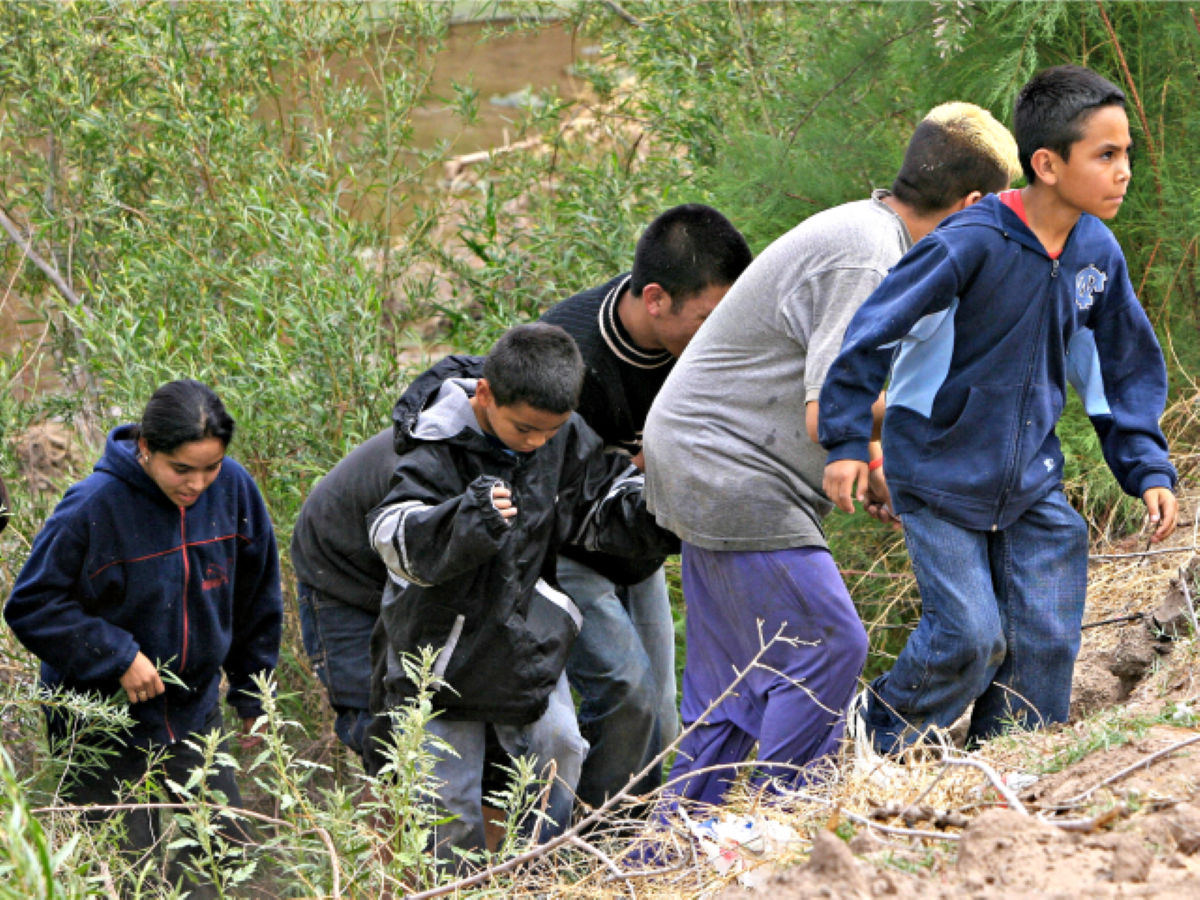
New information revealing the scale of the Biden administration’s shockingly negligent handling of unaccompanied alien children (UACs) was divulged by former senior Health and Human Services (HHS) appointee John Fabbricatore in a presentation at the Heritage Foundation last week.
Roughly 540,000 unaccompanied minors were apprehended after crossing illegally during the Biden administration. About 448,000 were released to sponsors. According to one Department of Homeland Security investigation, 233,000 were subsequently unaccounted for, with the government uncertain of their whereabouts. Fabbricatore said that HHS did not know the whereabouts of 291,000 children it had released from custody.
Fabbricatore helped lead the Trump administration’s operation to find these kids. He said that the taskforce has located 140,000 of the missing UACs.
The task is difficult, not only because of the lack of monitoring under Biden and Xavier Becerra (his secretary of HHS), but because of the rampant fraud and misrepresentation that was accepted. First, little effort was made to verify family relationships, either at the border or upon release of the child to a sponsor. According to Fabbricatore, only 300 children and alleged family members were subject to rapid DNA testing, out of 2.7 million border apprehensions. Of these 300 tests a shocking 15 percent revealed no biological relationship, implying that tens of thousands more cases of false relationship claims were missed.
About 204,000 in the UAC population are citizens of Guatemala, no doubt contributing to the enormous flow of remittances that Fabbricatore said comprises 17 percent of Guatemala's GDP. Another 133,000 came from Honduras; 53,000 are from El Salvador and 36,000 are from Mexico.
In general, UAC sponsorship cases are loaded with fraud and related problems. Fabbricatore said that among cases currently under examination, authorities have found 254,000 instances of falsified identity documents, 168,000 illegible IDs, 110,000 cases of age misrepresentation, 48,000 altered photos, and 33,000 incidents of undisclosed (and likely problematic) members of sponsor households.
Equally disturbing, among UAC sponsors, over 15,000 were classified as “super-sponsors” meaning they claimed more than three children each. In one of the most egregious cases, a single Guatemalan woman (here illegally) was able to take custody as the sponsor of 41 children, who were then trafficked for labor; she has subsequently been indicted.
Fabbricatore said that, incredibly, 65,000 calls of concern went to hotlines that Biden HHS officials left unanswered and unresolved for years under their tenure. Trump appointees have retrospectively listened to all of these calls in an effort to identify cases involving UACs requiring intervention, but in some cases intervention is nonetheless too late. Immediate investigations found that at least 37 minors who had called the hotline had already died — mostly due to violence or drugs. Adding in other known cases within the UAC population, the death toll now stands at 48.
The effort to locate and rescue UACs is further complicated by the fact that over 300,000 of the minors who crossed the border illegally have now aged out of minor status, and are likely living on their own. Approximately 80 percent of UACs under Biden were males already 14 years or older upon arrival in the United States, with a large share over the age of 17.
According to Fabbricatore, in many cases of sponsorship fraud or suspected abuse federal authorities have elected not to pursue indictments because of the difficulties and costs associated with these prosecutions. Practically speaking, it is often easier for authorities to instead rely on immigration charges against the bad sponsors, who often are also in the country illegally.
Among UACs that have aged into adulthood and remained in the United States, outcomes are often bleak. ICE has arrested 18,000 UACs after they committed crimes, with some subsequently deported. Federal authorities are likewise prosecuting hundreds of cases involving UACs who are gang members and who allegedly lied about their age upon entry.
Owing largely to hostile NGOs and legal objections brought by anti-enforcement advocates, repatriation efforts have frequently been interrupted and stalled, according to Fabbricatore. In one case, ICE attempted to deport 400 Guatemalan children whose parents had agreed to take them back with the support of the Guatemalan government, only to have a last moment lawsuit filed on behalf of the minors suspend the operation and result in the children being re-interned. Some of these minors remain in HHS care today at a cost of $500 per day. Inevitably, some will soon age into adulthood and remain in the United States.
The Trump administration’s swift success in curbing illegal border crossings is helping to better manage the UAC problem. While there are 1,700 UACs under the care of HHS today, this is far more manageable than the average of 22,000 UACs being taken in per day under the Biden administration. Besides slowing the inflow, Trump’s HHS has adopted stricter scrutiny of prospective sponsors, including more background checks and in-person interviews.
The work of locating and potentially repatriating aliens who entered as unaccompanied minors is complicated by a network of NGOs and legal advocates, at least one of which — the Acacia Center for Justice — still receives millions of dollars in contracts for legal services and other support funded by U.S. taxpayers. These groups have actively worked to undermine federal efforts to improve policies in ways that better safeguard the well-being of the kids.
Looking forward, Fabbricatore believes that the federal government will increasingly have to consider repatriation rather than deportation for UACs who arrive in the United States. Although NGOs are often eager to obstruct immigration enforcement operations, the governments of Guatemala and El Salvador have demonstrated willingness to cooperate and help manage the migration crisis originating in those countries. The most fiscally sound method of returning UACs to their native countries may prove to be financial incentives for voluntary return rather than expending the immense amount of resources needed to locate and actively remove individuals.