
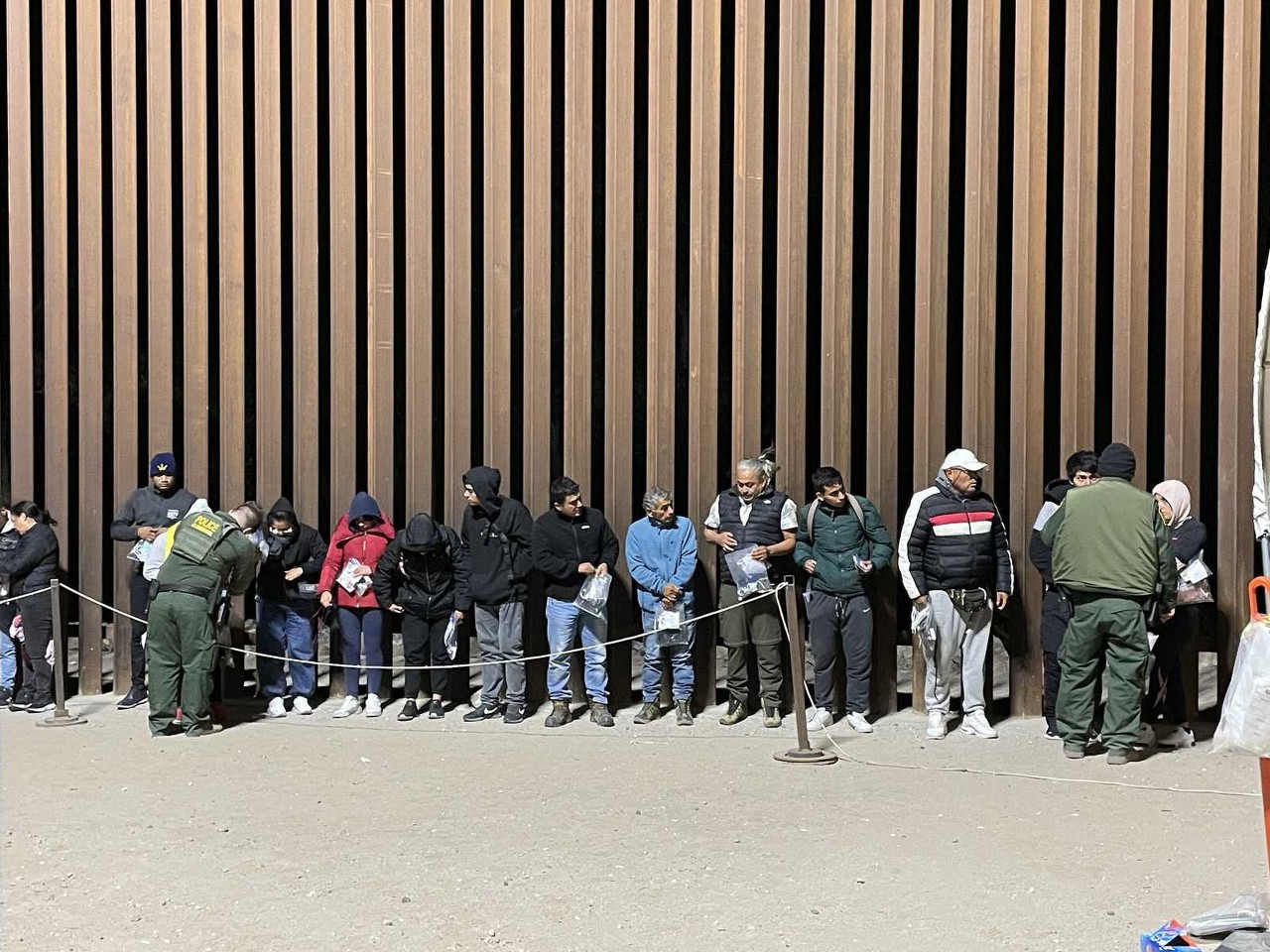
I have written often about our nation’s insane asylum laws and their outsized role in our border debacle, starting with my first piece for the Center for Immigration Studies. President Trump amazingly succeeded in bringing the debacle to an end without Congress ever fixing these laws. Did he do so in fidelity to them? Or did he do so by simply disregarding them? If the former, so much the better (tant mieux, as the French would say). If the latter, so much the worse (tant pis), as either Congress will need to finally deconstruct those dysfunctional laws, or we will face a renewed debacle.
Well, which is it? The answer lies in the Supreme Court’s hands. And if the Court ducks, as it is sometimes wont to do, then the D.C. Circuit will have already decided the matter.
On the first day of his second term, President Trump issued a proclamation declaring that “aliens engaged in the invasion across the southern border … are restricted from invoking provisions of the [Immigration and Nationality Act] INA that would permit their continued presence [here], including” seeking asylum. On April 24 of this year, the D.C. Circuit Court of Appeals ruled in Refugee and Immigrant Center for Education and Legal Services v. Mullin that “The Proclamation and [implementing] Guidance are … unlawful to the extent that they circumvent the [INA’s] removal procedures and cast aside … [aliens’] right [under the INA] to apply and be considered for asylum.”
On July 23, the D.C. Circuit denied the government’s petition or a rehearing en banc before the entire court. On July 26, the Trump administration requested a 30-day stay (to be extended if the administration were to file a petition for a writ of certiorari with the Supreme Court) of the underlying district court order vacating the proclamation and guidance regarding applications for asylum, enjoining removal of any class members without complying with the INA’s asylum provisions, and declaring the proclamation unlawful insofar as it suspends or restricts access to asylum. On August 24, the administration filed a petition for a writ of certiorari asking the Supreme Court to take up the case and decide once and for all whether the proclamation and guidance “which suspended the entry of certain aliens and precluded their access to statutory provisions that would enable their continued presence in the country, including asylum — are lawful”.
If the Supreme Court denies the government’s petition, the underlying order will take effect. If the Court grants certiorari and subsequently rules that the proclamation and guidance are unlawful, it will presumably allow the underlying order to take effect. Of course, the Court could also grant certiorari and then find the proclamation and guidance to be lawful.
As I wrote in May, the D.C. Circuit’s decision presents a unique natural experiment. Those who argued that reforming our immigration laws was not a prerequisite to ending the border debacle that had reached its nadir under the Biden administration would presumably believe that the Trump administration could keep on keeping on should the D.C. Circuit’s ruling stand. Those (like myself) who argued that reforming our immigration laws was indeed a prerequisite to ending the debacle fear that implementation of the D.C. Circuit’s ruling would have calamitous consequences.
The Trump administration certainly believes that the proclamation and guidance are a proper utilization of the president’s statutory powers. But the administration also believes that implementation of the D.C. Circuit’s ruling would bring border bedlam back. The administration’s petition to the Supreme Court stated that Secretary of Homeland Security Markwayne Mullin described the proclamation “as an ‘indispensable’ tool for controlling the border” and that “The ‘restrictions on asylum’ in particular ‘have been critical to maintaining the effectiveness of the Proclamation[.]’”
The proclamation’s effect has indeed been stunning, as the petition stated that since taking “effect, border encounters have fallen by 93 percent, dropping to the lowest levels since the 1960s”. The petition elaborated that:
Before the proclamation was issued, the “flood of aliens” attempting to illegally enter the country across the southern border had “overwhelmed the [immigration] system,” “prevented DHS from effectively controlling the border,” and “effectively prevented [the INA] from functioning as intended to protect United States sovereignty and to prevent entry of aliens who pose threats to public health, safety, or national security.” … Cartels and criminal organizations “engage[d] in widespread trafficking of illegal goods, including deadly drugs, and aliens into the United States” at “record levels.” … One of the “key magnets” for that flood of aliens was “asylum.”
The Trump administration starkly warned that “Absent th[e Supreme] Court’s review, the lower court’s ruling will take effect and threaten to upend the Administration’s single most effective policy in resolving a border crisis that had undermined our Nation’s sovereignty and created a humanitarian crisis.”
However, as I wrote in June, I believe the D.C. Circuit came to the correct legal conclusion. The D.C. Circuit performed its constitutional duty by faithfully applying the immigration laws written by Congress, regardless of their good sense or lack thereof. As the court concluded, “the Proclamation and Guidance circumvent Congress’s carefully crafted removal procedures”.
The INA provides that “Any alien who is physically present … or who arrives in the United States []whether or not at a designated port of arrival … irrespective of such alien’s status, may apply for asylum.” However, the Trump administration’s position is that, in the D.C. Circuit’s words, “the Proclamation and Guidance work to preemptively and categorically deny asylum to all individuals subject to the Proclamation”, and, in the administration’s words, “because the ultimate disposition of any asylum application is foreordained”, it may “disallow [aliens] from even filing such futile applications”.
But Congress has given aliens the right to apply for asylum even if ineligible to receive it. One can question whether this makes any sense, but it is clearly what Congress did. In President Trump’s first term, the administration agreed, as when it argued that “even if [the asylum statute] does not bar an alien from applying for asylum, he still may be categorically ineligible” from being granted asylum.
Further, the INA authorizes the government to remove removable aliens through two specified methods — removal proceedings in immigration court and expedited removal. However, the Trump administration argued that aliens subject to the proclamation could be removed through new processes that, in the D.C. Circuit’s words, “purport to supplant several statutory protections from removal as well as their corresponding administrative procedures”. The administration defended these new summary removal procedures by contending, in its own words, that the “power to exclude must include the power to expel if the former is to have any meaningful force”. But a president’s power — granted by Congress in section 212(f) of the INA — to bar aliens’ entry when “detrimental to the interests of the United States” does not grant “authority to countermand conditions Congress attached to the INA’s expressly comprehensive removal provisions” (as the D.C. Circuit concluded). In President Trump’s first term, this was the administration’s understanding, too, as when it explained that “an alien subject to a proclamation who nevertheless entered … in contravention of its terms generally would be placed in … [the INA’s] expedited-removal proceedings ... and those proceedings would allow the alien to raise any claims for protection before being removed”.
Should the Supreme Court decline to grant certiorari or rule against the Trump administration, we shall see how the border crumbles. But the blame for any new border debacle would lie with Congress, not with the courts. It is Congress’s responsibility to undo the damage caused by its “carefully crafted” procedures — procedures that directly led to the debacle of mass illegality and mass illegal immigration that President Trump inherited and was in large part elected to remedy. As the D.C. Circuit stated:
Congress enacted the asylum statute, with narrow exceptions specified by statute, to grant all foreign individuals “physically present” in the United States a right to apply for asylum and have their individual applications adjudicated. … If the Government wishes to modify this carefully structured and intricate system, it must present those arguments to the only branch of government able to amend the INA: Congress.
If our insane asylum laws are to be fixed, only Congress can do it. A president can try to limit the damage done by those laws, but he can neither disregard them nor repeal them.