
Much of the Center’s work involves poring over government websites, because they often better reflect what’s going on in immigration than official pronouncements or “expert” media analyses do. Head to the website of the Executive Office for Immigration Review (EOIR) — the DOJ component that oversees the immigration courts and the Board of Immigration Appeals (BIA) — and you’ll find reference to a secret “amnesty” of nearly 340,000 pending “administrative closure” cases, part of a much larger Biden-era scheme to protect nearly a million aliens from deportation. Those aliens are all removable, but some of their files have nonetheless been shelved for years — and in some cases, before many of you were born.
Administrative Closure
Officially, there are almost 3.8 million pending cases in the immigration court backlog, but more than eight years ago, at the outset of the first Trump administration, I suggested the true number of then-pending cases (a more modest 895,000) was higher than those official statistics displayed, thanks to a legal trick called “administrative closure”.
As the BIA has described the practice: “Administrative closure ... is used to temporarily remove a case from an Immigration Judge's active calendar or from the Board's docket.”
It continued:
[Administrative closure] is a docket management tool that is used to temporarily pause removal proceedings. Administrative closure is not a form of relief from removal and does not provide an alien with any immigration status. After a case has been administratively closed, either party may move to recalendar it before the Immigration Court ... or to reinstate the appeal before the Board. [Emphasis added.]
Put another way, administrative closure allows immigration judges and the BIA to shelve cases that it does not want to, or cannot, deal with, at least at the time of closure.
There are certain instances where closure is appropriate, such as when the alien (a “respondent” in removal proceedings) has a visa application pending with USCIS that, once adjudicated, would allow the respondent to adjust status.
But, even back in 2017, the sheer number of administratively closed cases suggested respondents and some judges were simply using that “tool” to forestall an inevitable removal order.
Or, as the BIA explained in its 1988 opinion in Matter of Amico: “When a case is administratively closed, the respondent is allowed, by simply failing to appear, to avoid an order regarding his deportability, and the consequences an order of deportation could bring.”
Jeff Sessions Tries to End Administrative Closure
Likely coincidentally, five months after I pointed out the vulnerabilities of the practice, then-Attorney General (AG) Jeff Sessions ordered a review of administrative closure, and in May 2018, issued an opinion (Matter of Castro-Tum) ending it altogether, except where required by regulation or under settlement agreements.
Importantly, he noted: “From 2011 to early 2017, DHS used administrative closure as a way to decline to prosecute low priority cases without formally terminating them.” Keep that in mind as I explain what happened next.
The Backlash
Sessions did not require immigration judges or the BIA to immediately reinstate all 350,000-plus cases that were administratively closed in Matter of Castro-Tum, explaining:
I am cognizant of the need to return these cases to the active docket so that these matters can proceed expeditiously. Requiring recalendaring of all of these cases immediately, however, would likely overwhelm the immigration courts and undercut the efficient administration of immigration law.
Nevertheless, advocates reacted to that decision much the way a toddler would when you took away his favorite toy.
In September 2018, 18 senators sent a letter to Sessions and then-DHS Secretary Kirstjen Nielsen to “express” their “concerns” that reopening those closed cases would “undeniably overwhelm the already flooded immigration court backlog” (which then stood at more than 1.039 million pending cases).
“Given the population of individuals whose cases were subject to administrative closure,” those senators argued, “this waste of resources cannot be justified.” Read that sentence closely, and it gives away the game.
In any event, aliens and advocates filed numerous lawsuits to block Matter of Castro-Tum and continue the practice of administratively closing pending removal cases.
In one of those challenges, Morales v. Barr, then-Judge (and now Supreme Court Justice) Amy Coney Barrett writing for a unanimous Seventh Circuit panel effectively overruled Sessions, holding that “immigration judges are not precluded from administratively closing cases when appropriate”.
The Biden administration was quick to resurrect administrative closure, even in those circuits that had not rejected Matter of Castro-Tum.
In July 2021, then-Attorney General Merrick Garland issued his own opinion, Matter of Cruz-Valdez, overruling Sessions’ opinion “in its entirety” and restoring prior BIA opinions that had supported the practice.
“Prosecutorial discretion” was the excuse the Biden administration relied upon in most instances to not enforce the immigration laws, so it’s noteworthy that Garland argued that administrative closure:
has served to facilitate the exercise of prosecutorial discretion, allowing government counsel to request that certain low-priority cases be removed from immigration judges’ active calendars or the Board’s docket, thereby allowing adjudicators to focus on higher-priority cases. [Emphasis added.]
Thereafter, in May 2024, Garland’s DOJ published a final rule in the Federal Register that amended the regulations governing the immigration courts and the BIA.
Among other things, that rule modified a prior regulation first implemented in 1997 (later recodified at 8 C.F.R. § 1003.18), which previously solely governed the scheduling of cases — not their closure or termination.
Specifically, the 2024 rule (titled “Efficient Case and Docket Management in Immigration Proceedings”) expanded the ability of respondents and the government to seek administrative closure, while at the same time limiting the authority of immigration judges and the BIA to deny such requests.
“Quiet Amnesty”
Five months later, in October 2024, House Judiciary staff issued a blockbuster interim report captioned “Quiet Amnesty: How the Biden-Harris Administration Uses the Nation’s Immigration Courts to Advance An Open-Borders Agenda”.
As the committee report explained: “Under the Biden-Harris Administration, more than 700,000 illegal aliens have had their cases dismissed, terminated, or administratively closed, allowing those aliens to stay in the country indefinitely without facing immigration consequences.”
Keep in mind that, by the time that interim staff report appeared, the immigration court backlog stood at nearly 3.9 million, more than double what it had been when Biden arrived in FY 2021.
The then-administration’s “catch-and-release” border policies drove nearly all of that increase, but if you add the 700,000-plus “dismissed, terminated, or administratively closed cases” identified by House Judiciary, the backlog would have topped 4.5 million — a virtually insurmountable hole.
The EOIR Statistics
Trump, CBP Commissioner Rodney Scott, and “Border Czar” Tom Homan quickly shut down the flood of illegal migrants at the Southwest border, providing sorely needed relief to the immigration courts and the BIA.
As I explained in Commonplace in November:
the backlog of active [immigration court] cases fell by more than 87,000 between the end of fiscal 2024 and the third quarter of 2025, which was the first time the figure had dropped since 2008. The biggest reason for the decrease is simple: the border is more secure under Trump, and fewer new cases are being added to the dockets.
Without any fanfare, however, EOIR under Trump II has begun quantifying the carnage left by Biden’s “Quiet Amnesty”, which the House Judiciary staff first revealed in October 2024.
A new chart, first published in November and captioned “EOIR Amnesty Cases, 2021 – 2025”, states that more than 240,000 pending removal cases were terminated, 613,000-plus more were dismissed, and an additional 129,328 were administratively closed under Biden — nearly a million cases in total over four years, or almost 300,000 more than House Judiciary had found.
Just as the Biden administration attempted to hide the disaster at the Southwest border by funneling nearly three million would-be “migrants” through illegal and fraud-riddled “parole” programs, it also tried to conceal the true scale of the immigration court backlog by dumping or closing pending cases, much as a teenager would hide beer cans and pizza boxes under seat cushions before the parents came home.
Immigration courts in California, Texas, and Florida led the way in dismissing and terminating pending cases, combined accounting for 43 percent of the total, or more than 367,000 cases. That said, smaller courts in Virginia and Maryland (where I was once an INS prosecutor) accounted for nearly 72,000 more.
Administratively Closed Cases Dating Back to 1990
Once a case is (improperly or otherwise) terminated or dismissed, ICE must expend significant resources to get them back on track.
Officers must find those aliens, serve them with “Notices to Appear” (“NTAs”, the charging documents in removal proceedings), and file those NTAs with the immigration courts.
Recalendaring an administratively closed case, on the other hand, is simpler but still time-consuming, in that it requires ICE attorneys (who represent taxpayers’ interests in removal proceedings) to draft and file motions with the respective courts.
Good luck finding the files, however, because a separate EOIR chart (also published quietly in November) captioned simply “Amnesty Cases” reveals the “average length of time a case has been administratively closed” in immigration court “is 6,126 days (approximately 17 years)”, and the average period a case has been administratively closed before the BIA “is 10,752 days (approximately 29 years)”.
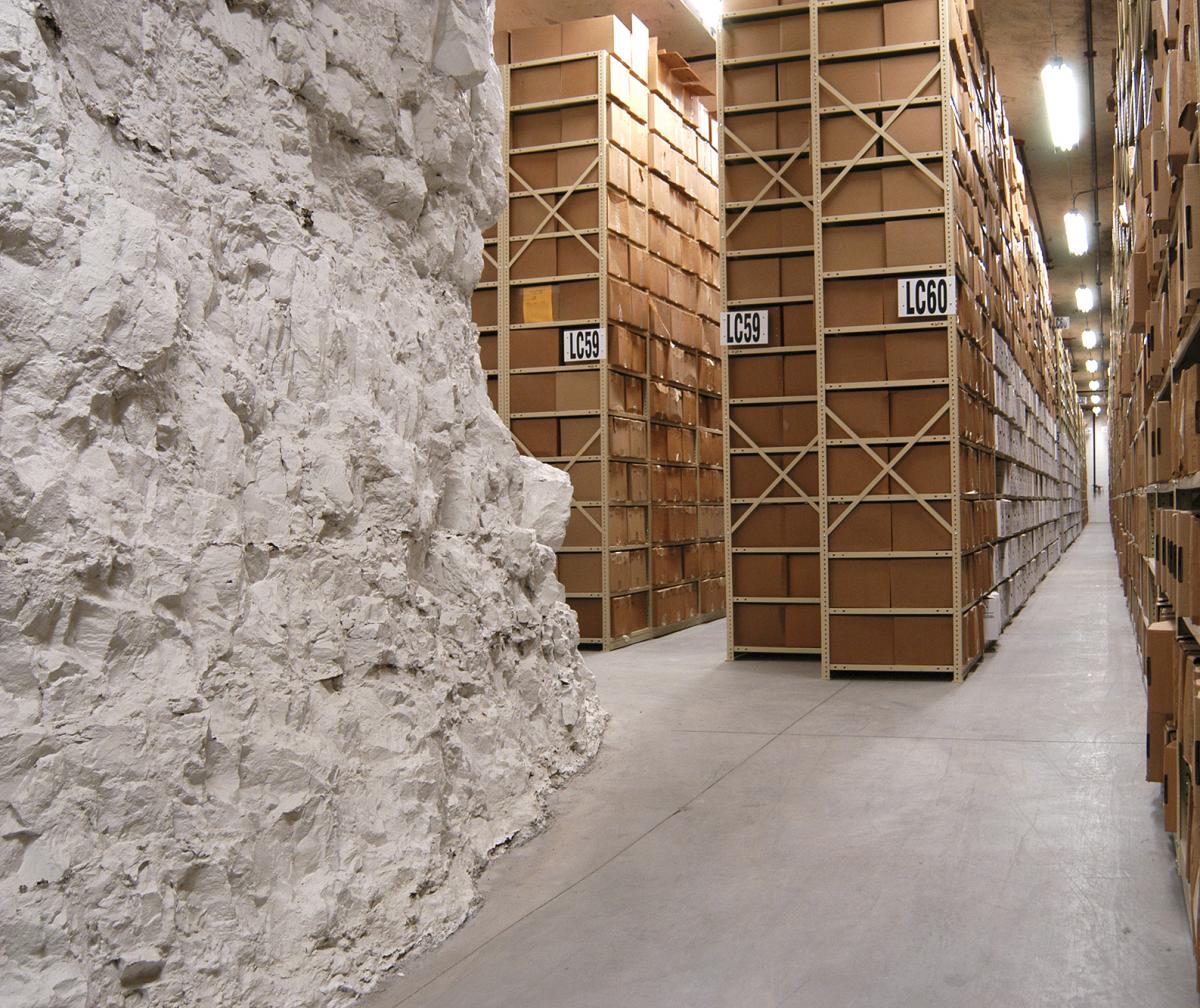
Those are averages, and given that more than a third (nearly 130,000) of the almost 340,000 currently closed cases were stashed away in the past five fiscal years, at least some of the 75,534 “deportation” and “exclusion” cases administratively closed in FY 1990 are still sitting on a shelf somewhere, likely in a limestone cave in Missouri.
Aliens with closed cases who are now eligible to receive immigration benefits have every incentive to file their own motions to recalendar with the immigration courts or BIA, so they can have an immigration judge regularize their status in this country.
Their failures to do so over the past 17 (or 29) years strongly suggest to the point of proof nearly all of them remain removable (or excludable or deportable under pre-1996 standards) and likely will never be “legally” allowed to remain here.
Perhaps, had Judge Barrett and other jurists who ruled against Sessions’ move to end administrative closure realized that it isn’t just “a docket management tool used to temporarily pause removal proceedings” but instead a de facto Potemkin-style amnesty, they would have viewed Matter of Castro-Tum differently.
And if Garland wasn’t aware of that fact when he amended the regulation, he was either a fool or being misled, but given that administrative closure statistics mysteriously disappeared from the EOIR website under Biden, perhaps the latter is closer to the truth.
What Will Pam Bondi Do?
Kudos to EOIR for revealing that Biden’s DOJ granted “amnesty” to nearly a million removable aliens by shuffling their cases into a legal dark hole, but will current-AG Pam Bondi fix it? If justice delayed is justice denied, Americans have been denied justice for decades — and in some cases, before many of you were born.